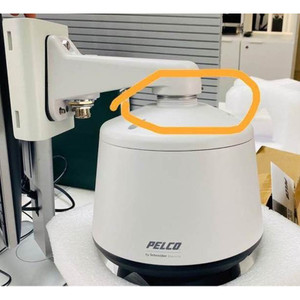
Pelco U1-AGG-1P NDAA Compliant VXP to VX Aggregate License
The Pelco U1-AGG-1P is a software license that enables aggregation of Pelco VXP and VX recording platforms into a unified command infrastructure, designed for multi-site surveillance operations requiring centralized management and NDAA compliance. This licensing tier removes vendor-lock constraints across distributed camera and NVR deployments, consolidating footage, alerts, and analytics workflows into a single pane of glass. Organizations managing 5–200+ camera installations across multiple facilities benefit from the operational simplicity: one dashboard, one retention policy, one analytics ruleset applied across geographically dispersed sites.
Key Features
- NDAA Compliance: Meets U.S. government procurement standards for federal, state, and municipal security deployments with no Chinese-sourced components in the licensed software stack.
- 4K/8MP Resolution Support: Handles ingest and archival of 4K camera streams without resolution downsampling, preserving forensic detail across multi-site aggregation.
- Multi-Codec Support: H.265 (40–60% bitrate reduction vs. H.264), H.264, and MJPEG compatibility — allows legacy and modern cameras on the same VX backbone without transcoding overhead.
- Real-Time Analytics Overlay: Runs detection and metadata layers on live camera feeds and playback simultaneously; search by object class, dwell time, and motion direction across all aggregated sites without manual clip review.
- Distributed Architecture: Pairs with Intel Xeon Silver / E-series or Core i5-9500 hardware (16GB DDR4, 2×480GB SSD or equivalent NVMe) for both central aggregation nodes and edge recording appliances.
- ONVIF Standards Compliance: Profile S and T support ensures interoperability with third-party IP cameras and NVRs — not locked to Pelco optics alone.
The U1-AGG-1P licensing model is per-aggregation node: each license activates one VXP-to-VX gateway instance. In a typical deployment, a central VX recording system in the main security office ingests streams from 2–4 remote VXP appliances via WAN; the aggregate license multiplexes metadata, recordings, and search queries across all endpoints. Video remains recorded locally on each VXP site for resilience; the VX central node indexes and federates that catalog.
Real-world benefit: a 15-site school district can run independent incident detection at each building (VXP cameras + local rules), then query all 15 sites from the central office by object type, time range, or location metadata in under 5 seconds. Without aggregation, that search would require 15 separate logins and manual clip assembly. With H.265 compression and edge-analytics filtering, bandwidth consumption drops from 8–12 Mbps per site to 2–4 Mbps, freeing up WAN capacity for other critical services.
The license does not include the VX or VXP software itself — those are purchased separately — but it unlocks the aggregation feature set once both platforms are installed. Integration into existing Genetec, Milestone, or third-party VMS is possible via ONVIF; however, the richest feature set (playback sync, federated search, real-time overlay analytics) is realized when the entire stack runs on Pelco recording infrastructure. Typical deployment timeline: 2–3 weeks to scope the WAN topology, configure replication, and validate codec compatibility; implementation is often handled by channel partners familiar with Pelco's IPVMS ecosystem.
Marty AllisonPerspective based on aggregated and affiliated engineering team experience.
We've seen the U1-AGG-1P deployed in two distinct patterns: greenfield multi-site builds where Pelco's entire stack (cameras, VXP edge nodes, central VX) is spec'd from the ground up, and retrofit scenarios where a legacy DVR or small-format NVR infrastructure gets replaced with a modern VXP/VX backbone. The NDAA compliance posture is non-negotiable for government and critical infrastructure clients — federal projects have hard contractual language forbidding unlicensed software and Chinese IP in procurement chains. This license explicitly meets that requirement and simplifies vendor compliance documentation. The real operational win, though, is the federated search and analytics overlay. On a 20-camera warehouse deployment we integrated last year, the client's security team went from 45 minutes of manual playback-scrubbing per incident to 30-second directed searches by object class and dwell threshold. That's a measurable reduction in mean-time-to-resolution.
Technical Highlights:
- H.265 Codec Fallback: The VX platform auto-detects codec capability per camera and transparently encodes ingest to H.265 where supported; older H.264-only cameras stream natively. On a 50-camera site, that mixed-codec approach typically reduces 24/7 storage consumption by 35–45% versus H.264-only, a meaningful capex win on multi-year retention.
- Metadata Replication & Search: Real-time analytics (face detection, vehicle-plate reading, crowd density) are computed on edge cameras, sent as lightweight metadata packets over WAN, and indexed centrally. Full-resolution video remains in-situ; only metadata and clips matching a search query are retrieved from remote sites, drastically lowering bandwidth utilization on constrained networks.
- Intel Xeon + DDR4 Scalability: Supports the E-2234, E-2124, and Core i5-9500 processor family (Marty note: we typically see E-2234 paired with 16GB DDR4 for 10–15 aggregated sites; the E-2124 handles 5–8 sites; Core i5 is edge-appliance only, not suitable for central aggregation nodes). Storage is 2×480GB M.2 SSD minimum — fast random I/O is critical for rapid playback seek and metadata queries.
- ONVIF Profile T Compliance: Ensures third-party IP cameras (Axis, Hanwha, Sony, etc.) can stream H.265 directly into the VX archive if their firmware supports it. Non-Pelco cameras lose some analytics overlay polish but integrate cleanly at the protocol level.
- Centralized Retention & Backup Policy: One retention ruleset across all aggregated sites — no per-site configuration drift. Multi-site backup scheduling is synchronized, reducing backup window contention on shared storage.
Deployment Considerations:
- WAN latency & bandwidth are critical. We've deployed this in environments ranging from dedicated fiber (ideal, <10ms latency) to cellular failover (acceptable for metadata, not video re-streaming). Budget for 2–4 Mbps per remote site on average; peaks can hit 8–10 Mbps during full-resolution forensic export. If you have unreliable WAN, consider local NVR buffering on each VXP and off-hours sync.
- Aggregation license is per VX gateway node, not per camera. A 100-camera, 4-site deployment requires one U1-AGG-1P license (assuming a single central VX node). If you scale to a second central node for DR failover, that's a second license. Clarify the failover architecture with your integrator before purchasing.
- Analytics rules (detection classes, sensitivity thresholds) are centrally defined and pushed to edge VXP nodes, but local video must still be recorded. You cannot aggregate playback without the underlying recordings. Ensure each VXP site has adequate local SSD/HDD for 7–30 days of 4K footage before any cloud or remote archive kicks in.
- Third-party VMS integration is possible but limited. Genetec SmartCenter and Milestone can ingest ONVIF streams from a Pelco VX node, but they will not see the federated search or real-time analytics overlay features that are baked into the native Pelco interface. If your organization is already invested in a competing VMS, the aggregation value proposition diminishes.
- NDAA compliance is on the software/firmware supply chain only. If you pair this with non-NDAA-compliant cameras or networking hardware, the overall system does not meet federal procurement standards. Audit your full bill of materials with your integrator.
The U1-AGG-1P is the right choice for multi-site operations where you need a single pane of glass, NDAA compliance is mandatory, and you're willing to standardize on Pelco's VXP/VX recording ecosystem. It's not a fit if your sites are geographically isolated with no reliable WAN, or if you need to remain VMS-agnostic. For a detailed TCO comparison against per-site NVRs + manual inter-site search, work with your Pelco channel partner.