Bosch SD-128G 128GB MicroSD Card for Surveillance Edge Storage
Overview
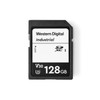
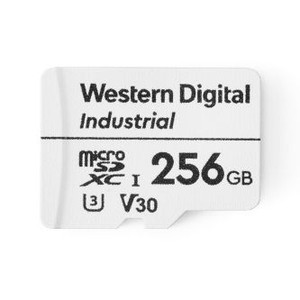
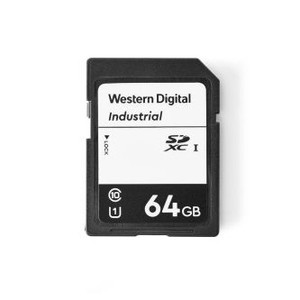
The Bosch SD-128G is a 128GB microSD card engineered specifically for continuous-write surveillance workloads — the kind of punishment that kills consumer-grade cards within months. Where standard microSD cards are rated for casual photo bursts, the SD-128G is specified at 384 TBW (terabytes written) endurance, operates across a -25°C to 85°C temperature range, and carries a 10-year data retention rating at 55°C. If you are deploying edge-recording IP cameras in outdoor enclosures, industrial environments, or any location where card replacement is costly, this is the spec sheet worth reading. For deeper context on pairing storage to your camera platform, see our IP camera selection guides.
Key Features
- 384 TBW Write Endurance: Most consumer microSD cards are rated 40–72 TBW — fine for a dashcam you swap every year. At 384 TBW, the SD-128G handles years of 24/7 continuous recording before hitting its endurance ceiling. For a single-camera deployment writing a constant stream, that translates to multi-year service life without managed replacement cycles.
- 100 MB/s Sequential Read / 50 MB/s Sequential Write: The SD6.0 UHS-I 104 interface with U3 (30 MB/s minimum write guarantee) and V30 speed class means the card keeps up with high-bitrate H.265 streams. U3/V30 certification ensures the card won't drop frames under sustained recording load — a real failure mode with under-rated cards in multi-stream cameras.
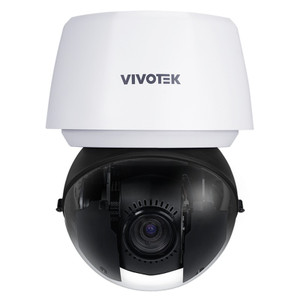
- -25°C to 85°C Operating Range: Most commercial microSD cards are rated to 70°C max. The 85°C ceiling here matters in direct-sun outdoor enclosures in summer — junction temperatures inside a sealed dome camera housing commonly exceed 60°C ambient. This card was specced for that environment; a standard card was not.
- 10-Year Data Retention at 55°C: Data retention degrades faster at elevated temperatures. A 10-year retention spec at 55°C means recorded evidence remains intact even on a card sitting in a warm enclosure through multiple summers. Relevant for installations where footage must be legally preserved over extended periods.
- Speed Class 10 / U1 / U3 / V10 / V30 Dual-Rated: Carrying both U1 and U3 ratings means compatibility is broad — older cameras specifying U1 and newer cameras requiring V30 for 4K recording are both covered by a single SKU. This simplifies spare-parts inventory for mixed fleets.
- RoHS and CE/FCC/UKCA/REACH/WEEE Compliance: The SD-128G carries the full complement of regulatory marks including CE (EU), UKCA (UK post-Brexit), FCC (US), EAC (Eurasian), and C-tick (Australia/NZ). For deployments requiring documented compliance — government contracts, healthcare, education — the paperwork trail is clean.
- 2g / 32mm x 24mm x 2.10mm Form Factor: Standard full-size SD card dimensions with the microSD adapter form factor. Fits any camera's integrated SD slot without mechanical modification — no adapter required in cameras with dedicated microSD slots.
Integration & Compatibility
The SD-128G is designed for use in Bosch IP cameras with onboard microSD storage slots, providing edge-recording and buffering capability. The UHS-I interface ensures backward compatibility with cameras that don't support UHS-II, while the U3/V30 rating supports cameras capable of recording 4K streams to card. When deploying this card in a camera paired to a network video recorder, the onboard card typically serves as a local buffer or failover recording target — configure your VMS accordingly so the SD card is used for resilience, not primary storage. For cameras writing continuously, cross-reference your camera model's maximum supported card capacity and write speed requirements against the SD-128G's 50 MB/s write throughput to confirm compatibility. For larger deployments requiring centralized storage planning, review our NVR and storage selection resources. The card's EN 55032 Class B emissions compliance and EN 61000-4-2 electrostatic discharge immunity rating (IEC 61000-4-2: 2009) are relevant for installations in electromagnetically noisy environments such as industrial floors or facilities with heavy equipment — standard Class B ensures the card won't introduce interference into nearby equipment. If you are speccing edge storage across a fleet, consider pairing this card with a PoE camera platform that supports remote card health monitoring, reducing on-site service visits.
Frequently Asked Questions
Q: What write endurance is the SD-128G rated for, and how does that translate to real-world camera deployments?
A: The SD-128G is rated at 384 TBW (terabytes written). A single camera recording a continuous 4 Mbps H.265 stream writes roughly 43 GB per day. At that rate, 384 TBW equates to approximately 24 years of continuous recording — well beyond the useful life of most camera installations. Higher-bitrate streams (8–16 Mbps) reduce that proportionally, but even at 16 Mbps the card exceeds 6 years of rated endurance.
Q: Is the SD-128G suitable for outdoor camera deployments in extreme temperatures?
A: Yes. The SD-128G is rated to operate from -25°C to 85°C. This is specifically relevant for cameras in sealed outdoor enclosures, where internal temperatures can significantly exceed ambient air temperature, particularly in direct sunlight. Most consumer-grade microSD cards are rated to 70°C maximum, making them a poor fit for summer-peak outdoor enclosures.
Q: What speed class ratings does the SD-128G carry, and which camera recording modes does it support?
A: The SD-128G carries Speed Class 10, U1, U3, V10, and V30 ratings. U3 and V30 guarantee a minimum 30 MB/s sustained write speed, which is the threshold required for 4K (UHD) video recording. For cameras recording at 1080p or lower resolutions, U1/V10 compliance is sufficient — this card exceeds that floor. The 50 MB/s sequential write speed is the actual sustained performance specification.
Q: Does the SD-128G meet RoHS and other regulatory compliance requirements?
A: Yes. The SD-128G carries CE (EU Directive 2014/30/EU), UKCA, FCC, EAC, C-tick, REACH, and WEEE marks, along with RoHS compliance under EU Directive 2011/65/EU. It also meets EN 55032:2015 Class B EMC emissions and EN 61000-4-2:2009 ESD immunity. This documentation is relevant for government, healthcare, and education deployments with compliance documentation requirements.
Q: How long does the SD-128G retain recorded data if the camera loses power or the card is removed?
A: The SD-128G carries a 10-year data retention specification measured at 55°C. This means recorded footage remains intact on the card for at least 10 years under normal storage conditions at that temperature — well above what most forensic or legal evidence retention requirements demand.
Q: Can the SD-128G be used as primary storage or only as a buffer/failover?
A: The card supports either role, depending on how the host camera is configured. In cameras without a connected NVR, it can serve as primary edge storage. In networked deployments, it is more commonly configured as a local buffer or failover recording target — recording locally when network connectivity to the NVR is interrupted, then syncing when connection is restored. Consult your camera's firmware documentation for supported SD card recording modes.
The spec that catches my attention on the SD-128G isn't the 128GB capacity — it's the 384 TBW endurance combined with the 85°C operating ceiling. Those two numbers together tell you this card was designed for the environment a surveillance camera actually lives in, not a smartphone pocket. If you've dealt with field callbacks because a consumer card failed inside a dome on a south-facing wall, this is the card that eliminates that call.
Technical Highlights:
- 384 TBW Endurance: At a typical 4 Mbps surveillance bitrate, that's over two decades of rated write life per card — practical immunity to wear-out failure within any realistic camera lifecycle.
- -25°C to 85°C Operating Range: The 85°C ceiling is the spec that differentiates this from commercial-grade consumer cards capped at 70°C. Sealed enclosure temperatures in full sun regularly hit 75–80°C internally — this card was rated for that; a standard card was not.
- U3 / V30 Dual Rating at 50 MB/s Write: The U3 floor (30 MB/s minimum guaranteed write) ensures the card won't cause frame drops even on 4K-capable cameras. The actual 50 MB/s sequential write spec gives comfortable headroom above that floor for bitrate spikes during motion-intensive scenes.
Deployment Considerations:
- Verify your target camera model's maximum supported SD card capacity before ordering — some older Bosch camera firmware versions cap SD slot support below 128GB. Check the camera's release notes for storage compatibility.
- The SD-128G's 2g weight and standard 32mm x 24mm form factor fit microSD slots directly; no adapter is included or required for microSD-native slots, but confirm your camera uses a microSD slot rather than a full-size SD slot before deployment.
This card is the right call for edge-recording cameras in thermally challenging environments — rooftop PTZ housings, parking structure bullet cameras, and any installation where getting back on a ladder to swap a failed card is a real operational cost. For climate-controlled indoor deployments with NVR failover, the endurance spec is overkill but the reliability margin doesn't hurt.