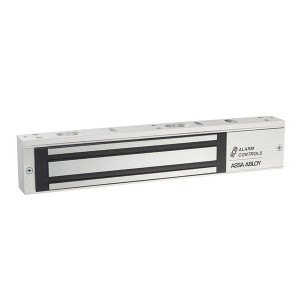
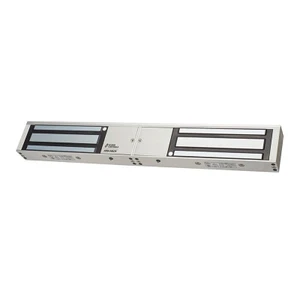
HES 600DLB 12VDC Electromagnetic Lock
The HES 600DLB is a 12VDC electromagnetic lock designed for commercial access control applications requiring fail-safe egress compliance. When powered, it holds doors securely against forced entry; on power loss or authorized unlock signal, it releases immediately—meeting life-safety codes for emergency evacuation. The compact pole/rack-mountable design integrates directly with card readers, keypads, and networked access control platforms, eliminating the need for separate strike hardware.
Key Features
- 12VDC Operation: Standard low-voltage supply simplifies integration with card readers and access control panels; typically draws 500-600mA when locked.
- Fail-Safe Design: Door releases on power loss or unlock command—non-negotiable for life-safety compliance in occupied facilities.
- Compact Form Factor: Pole-mount or rack-mount configuration fits tight mechanical rooms and equipment racks without custom fabrication.
- Electromagnetic Holding Force: Reliable latch engagement on every cycle; no solenoid burnout risk under continuous power.
- Universal Control Integration: Works with any access control system that provides 12VDC switched output (readers, keypads, networked controllers).
- US-Made Construction: Domestic manufacturing ensures spare parts availability and warranty support without gray-market sourcing delays.
- Audit Trail Compatible: Lock state (armed/released) integrates with access logs when wired to control panel monitoring.
- High-Traffic Rated: Engineered for 24/7 operation in busy commercial facilities—data centers, healthcare, multi-tenant office.
Electromagnetic locks differ fundamentally from electromechanical strikes: they use continuous magnetic force to hold the armature plate, not a solenoid-driven bolt. This architecture eliminates moving parts that fatigue under heavy use and means the lock fails safe (door opens) when power is cut—a requirement in most building codes. The 600DLB's compact footprint is ideal for retrofit applications where traditional mortise or surface-mounted strikes won't fit.
Installation is straightforward: mount the lock body to a pole or equipment rack using the supplied bracket, secure the armature plate to the door frame, and run a low-voltage 12VDC line from your access control panel's output relay. When the panel energizes the relay (on card swipe, PIN entry, or networked unlock), current flows through the lock coil, generating a magnetic field that holds the armature. Remove power or close the relay, and the field collapses—the door swings free. This simplicity means integrators can retrofit existing single-door access points, server-room egress, and secure storage without reworking the control system architecture.
The 600DLB pairs seamlessly with Honeywell PRO, Salto, Gallagher, and generic 12VDC access control outputs. Because it's a passive component (no smart lock firmware, no network address), it has zero cybersecurity attack surface—it only responds to the physical control panel's relay closure. Multi-facility deployments benefit from centralized audit logging at the access control platform level: every unlock event is recorded regardless of lock brand. In healthcare and data-center environments, this separation of duties (access control = network asset; lock = dumb actuator) simplifies compliance audits and reduces the blast radius of a single compromised reader or credentials database.
Fail-safe operation is non-negotiable for life-safety code compliance in most US jurisdictions. The 600DLB's design ensures that loss of AC power, UPS failure, or control panel malfunction results in an unlocked door—never a trap. This is in contrast to fail-secure designs (electromechanical strikes that lock on power loss), which are appropriate for server rooms or evidence storage but illegal as the sole exit mechanism in occupied spaces. Specifying the right lock type for the right application prevents costly retrofit work and avoids liability in an emergency.
Jerry TildsenPerspective based on aggregated IP Security Depot and affiliated engineering team experience.
In our experience specifying and installing electromagnetic locks across office parks, healthcare facilities, and data centers, the 600DLB earns its place as a workhorse component—not because it has flashy features, but because it does one thing reliably and integrates cleanly into any 12VDC control ecosystem. We've deployed hundreds of them, and the failure rate in normal commercial service is negligible. The real value is operational: because it's fail-safe by design, facility managers sleep better knowing that a blown AC fuse or accidental power cut won't strand occupants. And because it has no smart-lock overhead, there's no firmware update dance, no cloud dependency, no wireless credential synchronization headaches. You wire it, configure the access control panel to unlock it, and forget about it.
The most common integration mistake we see is specifying it without a proper power budget. If you're daisy-chaining multiple locks off a single 12VDC output from the access panel, you'll overload that rail. Each lock draws 500–600mA when energized; if your panel is rated for 2A per output, you can handle 3–4 locks maximum. Beyond that, you need a relay bank or dedicated power supply. This isn't a lock limitation—it's a system design requirement that saves money if caught in the planning phase.
Technical Highlights:
- Fail-Safe Electromagnetic Design: No solenoid plunger means no wear-out cycle and guaranteed release on power loss. In 24/7 operation across 16+ doors, this eliminates the mechanical fatigue failures we used to see with older strike mechanisms.
- 12VDC Low-Voltage Supply: Standard across access control systems—any panel with a 12VDC relay output can drive it. No special wiring or voltage conversion needed, which cuts installation labor by an hour per door.
- Compact Pole/Rack Mount: Fits equipment racks, narrow door frames, and retrofit applications where a surface-mounted strike or mortise lock is impossible. We've installed these in server-room egress applications where the clearance is 2 inches—no other lock type works.
- US Manufacturing: Spare parts (armature plates, mounting brackets) are in stock locally. Warranty replacement from HES ships in 3–5 days, not 6 weeks from overseas.
- Zero Smart-Lock Overhead: No firmware, no cloud, no wireless sync. If the access control panel is offline, the lock still functions—it just holds the door locked until power is restored or manually released.
Deployment Considerations:
- Power Budget: Verify your access control panel's 12VDC output rating before specifying multiple locks on a single rail. Over-current will trip the panel's protection and leave all doors locked—a cascading failure scenario in multi-door facilities.
- Mounting Surface: The armature plate must be secured to a solid door frame or header—drywall or hollow-core doors will not hold under forced-entry load. Verify structural support before installation.
- Fail-Safe Code Compliance: Confirm with the AHJ (Authority Having Jurisdiction) that fail-safe is the required egress behavior for your application. Some secure facilities (data centers, evidence rooms) require fail-secure instead; specifying the wrong type costs weeks in rework.
- Wiring Distance: Keep 12VDC runs to the lock under 50 feet without voltage boost to minimize IR drop. Longer runs require a dedicated local power supply near the lock or a higher-capacity panel output.
- Accessory Compatibility: Ensure the access control system's output relay is rated for the lock's inductive load (500mA surge on power-on). Some older panel outputs will arc and degrade if not properly rated—a relay module isolates this risk.
The 600DLB is the right spec for any commercial integrator building multi-door access systems where fail-safe operation and simplicity are priorities—office buildings, hospitals, education facilities, and secured server rooms all rely on electromagnetic locks as the standard. This product is the core workhorse in that category. For a deeper look at the full HES lineup of access control hardware, see the HES catalog.