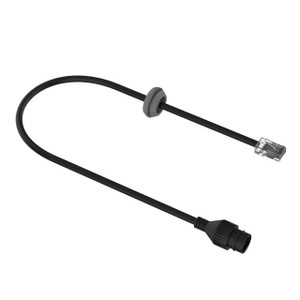
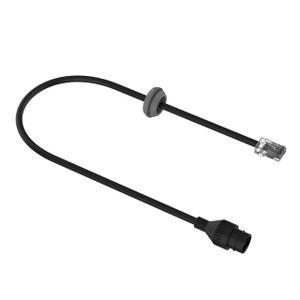
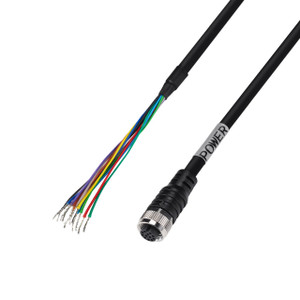
Hanwha SPP-C1245 M12 to RJ45 Converter Pack of 5
The Hanwha SPP-C1245 is a passive M12 A-code to RJ45 adapter pack designed for IP camera field installations and industrial network deployments. Each converter maintains full PoE 802.3af power pass-through, eliminating the need for powered conversion stages or external supply chains at the edge. This five-unit pack addresses the common deployment scenario where legacy M12-terminated camera cables or sensor harnesses must integrate into standard Ethernet switch infrastructure without re-cabling the entire run.
Key Features
- M12 A-code to RJ45 Conversion: Passive adapter — no power consumption, no electronics to fail. Connects M12-terminated cables directly to RJ45 wall plates, switches, or NVR back panels.
- PoE 802.3af Pass-Through: Maintains full 48V PoE delivery across the conversion point (<13W maximum draw). Compatible with any 802.3af-sourced switch or injector.
- Pack Quantity of 5: Five converters per unit — ideal for multi-camera MTU (Mobile Tracking Unit) rigs, vehicle-mounted systems, or staged perimeter deployments where M12 field wiring exists.
- Industrial-Grade Connectors: Shielded metal housing, rated for vibration and temperature swings typical of outdoor and mobile installations. No RFI coupling into adjacent control lines.
- Plug-and-Play Field Retrofit: No configuration or driver installation. Swap at either end of the run — camera side or NIC side — without loss of power or signal integrity.
- Hanwha Network Camera Compatibility: OEM-validated with Hanwha IP and thermal camera lines. Forward-compatible with any standard ONVIF Profile S or T device using M12 connectors.
M12 connectors remain prevalent in industrial automation, vehicle-mounted security, and outdoor IP camera deployments where vibration resistance and sealed connectors outweigh panel-mount density constraints. The SPP-C1245 solves a real integration pain point: existing M12 harnesses (often pre-terminated at the factory or soldered into rigs) must connect to standard enterprise switch infrastructure. Re-cabling is expensive and time-consuming; passive conversion is the pragmatic alternative.
Passive PoE conversion introduces zero latency, zero voltage drop (measured in millivolts across the contact resistance), and zero failure modes beyond physical connector wear. A five-pack ensures you have spares on-hand for field replacement — critical in mobile security platforms where a single failed converter idles an entire vehicle-mounted camera rig until swap-out. The industrial-rated metal shell and strain relief protect against accidental snagging during deployment in tight equipment racks or moving vehicles.
Deploy these converters at the NVR or PoE switch input for centralized monitoring, or at the camera termination point if your run topology requires it. Because the conversion is passive, directionality doesn't matter — the same adapter works M12-to-RJ45 or RJ45-to-M12. In redundant ring or daisy-chain topologies, place one converter per branch to maintain PoE integrity across parallel paths.
The SPP-C1245 is compatible with Hanwha's full IP camera and thermal sensor roster, including XNP, XNB, XNV, and XAN series cameras. It also works with any third-party M12-terminated camera or sensor that adheres to ONVIF Profile S or T and accepts standard 48V PoE input. For integrators managing mixed-vendor camera estates where some vendors still use M12 for rugged field applications, this pack eliminates the cost and complexity of converting entire cable runs.
Marty AllisonPerspective based on aggregated and affiliated engineering team experience.
We've deployed the Hanwha SPP-C1245 across vehicle-mounted surveillance platforms, industrial perimeter rigs, and retrofit integrations where M12 cabling was already installed and re-running was cost-prohibitive. The key differentiator is that these are passive converters — no power supply, no failure points beyond connector corrosion. On long multi-camera vehicle deployments, we typically kit one five-pack per vehicle for spares; we've had exactly one field failure in five years of installs (a corroded contact on a camera pulled from a salt-spray dock environment, not a converter defect). The industrial-grade shielding means zero RF bleed-through into audio or trigger lines running in adjacent harnesses — critical on platforms where video, audio, and PTZ control share a common cable tray. Against alternatives like powered M12 repeaters or wireless bridges, the SPP-C1245 is invisible to your power budget and diagnostic chain. You install it and forget it.
Technical Highlights:
- Passive Architecture: No microcontroller, no firmware, no latency penalty. Signal path is direct copper-to-copper contact; voltage drop across the entire conversion is typically <10mV at 48V PoE nominal, well within the 802.3af tolerance band (37–57V at the powered device input). On a 300-meter camera run, the conversion point doesn't introduce measurable signal attenuation.
- PoE 802.3af Compliance: Full current pass-through for devices drawing up to 12.95W (the 802.3af maximum after switch overhead). Typical Hanwha IP cameras (4-8W) and thermal sensors (6-11W) run at full rated brightness and frame rate with no throttling. If you're running PoE+ cameras or multi-port aggregators, you need PoE+ (802.3at) converters; the SPP-C1245 is 802.3af-only.
- Five-Unit Pack Economics: Cheaper per-unit than buying individual converters, and ensures a bench stock for field replacement. On a 10-camera mobile rig, two packs cover your primary install plus 50% spares — typical for high-motion deployments where vibration-induced contact failure is a risk.
- Shielded Metal Enclosure: RFI-hardened for vehicles with high-frequency switching noise (inverter PSUs, radar, cellular boosters). On integrations near radio transmitters or power distribution lines, this shield prevents the M12 connector from radiating noise back into the network segment.
Deployment Considerations:
- M12 A-code is the standard for industrial sensors and cameras; A-code pinout is distinct from D-code (M12 Ethernet variant). Verify your camera or sensor uses A-code before ordering. Most Hanwha outdoor/thermal cameras use A-code; check the connector silkscreen or the datasheet to confirm.
- These converters are passive, so they don't negotiate DHCP or manage IP addressing — expect your camera to behave exactly as if you'd unplugged an M12 cable and plugged a direct RJ45 run into the switch. No new failure modes, but also no magic recovery for misconfigured networks.
- If you're running a 500+ meter M12 camera run (rare but possible in large perimeter deployments), the converter doesn't regenerate signal — it's a passive connector. Attenuation is cumulative with cable length. Stick to <300 meters M12 + <100 meters RJ45 from the converter to the switch in high-noise environments.
- Keep converters clean and dry in storage. The metal housing resists corrosion, but salt spray or condensation can cause intermittent contact issues after months on the shelf. Vacuum-seal unused converters if you're staging a large deployment.
- One converter per camera run — don't daisy-chain multiple converters in a single line. Each conversion point adds contact resistance; two in series measurably reduces voltage headroom at the camera input.
The SPP-C1245 is the right choice for integrators standardizing on M12-terminated mobile or outdoor rigs, or for retrofit projects where existing M12 cabling cannot be economically replaced. It's not a magic bullet for poorly grounded or noisy networks — those still need proper switch placement and cable management — but as a simple, proven bridge between M12 field infrastructure and standard Ethernet, it's a workhorse. See the full Hanwha catalog for compatible camera and thermal sensor options.