Lenovo 4XG7A63604 AMD EPYC 7763 64-Core Processor for ThinkSystem SR665
Overview
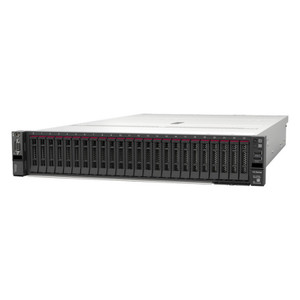
The Lenovo 4XG7A63604 is an AMD EPYC 7763 processor option for the ThinkSystem SR665 server platform — a 64-core, 128-thread chip running at a 2.45 GHz base with a 3.5 GHz boost frequency. If you're provisioning SR665 nodes for compute-intensive workloads — virtualization hosts, high-density video analytics back-ends, HPC clusters, or large-scale VMS recording servers — this processor covers the core-count and memory-bandwidth requirements that differentiate the SR665 from mid-tier two-socket alternatives. The Socket SP3 form factor and 280W TDP position it squarely as a data-center-grade component; cooling is not included, so thermal planning is a prerequisite before commissioning.
AMD's EPYC 7000-series on Socket SP3 brings octa-channel DDR4-3200 memory support, which means the platform can sustain memory-bandwidth-hungry workloads that would bottleneck on quad-channel Xeon configurations. For integrators sizing VMS infrastructure — particularly environments running simultaneous decode of dozens of high-resolution streams — memory bandwidth is often the real ceiling, not raw clock speed.
Key Features
- 64 Cores / 128 Threads at 2.45 GHz Base: With boost headroom to 3.5 GHz, this processor handles highly parallel workloads — concurrent video decoding, analytics inference, and VM consolidation — without sacrificing single-threaded responsiveness for management tasks. 128 logical processors available to a hypervisor means substantial VM density on a single two-socket SR665 node.
- 256 MB L3 Cache (Socket SP3): AMD's large last-level cache directly reduces DRAM fetch latency for working-set data. In analytics or database workloads with active data sets in the hundreds of megabytes, this translates to sustained throughput without stalling on memory latency cycles.
- Octa-Channel DDR4-3200 Memory Support: Eight independent memory channels running at 3200 MHz provide the memory bandwidth headroom that 64 active cores demand. Workloads like simultaneous multi-stream video decode or in-memory database operations will see measurably better throughput compared to platforms limited to four or six channels.
- 3.5 GHz Boost Frequency: Lightly threaded tasks — CLI management, single-threaded log processing, OS scheduler overhead — run at full boost, so responsiveness doesn't degrade on a heavily loaded host the way it can on chips tuned purely for throughput.
- 64-Bit Operating Mode: Full 64-bit instruction support means no artificial memory addressing or OS compatibility limitations. Any current enterprise Linux distribution or Windows Server release will run without mode restrictions.
- 280W TDP: This is a high-power processor. Server chassis, power supplies, and rack cooling must be spec'd for the full thermal load — especially in two-socket SR665 configurations where aggregate TDP can reach 560W from CPUs alone before adding DIMMs, drives, and GPUs. Do not undersize the PDU or CRAC capacity.
- Socket SP3 Platform: AMD's SP3 socket provides pin compatibility across multiple EPYC generations within the SR665 platform — useful context for future processor upgrade paths without a full motherboard swap, subject to Lenovo's firmware compatibility matrix.
Integration and Compatibility
The 4XG7A63604 is a Lenovo-qualified processor option for the ThinkSystem SR665, meaning it has passed Lenovo's platform validation process for that specific server chassis. When pairing with memory, consult the SR665 DIMM population guide — octa-channel operation requires balanced DIMM placement across all eight channels to achieve rated 3200 MHz throughput. Partial population will drop to lower effective speeds.
For server infrastructure deployments in physical security environments, the SR665 with EPYC 7763 is a candidate for Milestone XProtect or Genetec Security Center recording server roles where core density supports high simultaneous camera counts. Plan storage I/O alongside CPU procurement — the processor won't be the bottleneck in a well-configured node. Refer to the NVR and server platform category for complementary infrastructure options.
Cooling is explicitly not included with this part. The SR665 requires the appropriate Lenovo-specified heatsink for the 280W TDP class — verify the correct heatsink part number in Lenovo's SR665 configuration guide before ordering. Running this processor without the correct thermal solution will trigger thermal throttling and potential hardware protection shutdowns.
For buyers evaluating the full Lenovo server and compute catalog, note that the EPYC 7763 sits at the top of the SP3 core-count range — if your workload doesn't require 64 cores, a lower-TDP EPYC variant in the same SR665 platform may offer better performance-per-watt at reduced power and cooling cost.
Frequently Asked Questions
Q: What server is the Lenovo 4XG7A63604 compatible with?
A: The 4XG7A63604 is a Lenovo-qualified processor option specifically for the ThinkSystem SR665 server platform. Always verify platform compatibility in Lenovo's SR665 configuration guide before ordering.
Q: Does the 4XG7A63604 include a heatsink or cooler?
A: No. The cooler is not included with this part. You must order the appropriate Lenovo-qualified heatsink separately, sized for the 280W TDP of the EPYC 7763 processor.
Q: How many memory channels does the EPYC 7763 support?
A: The EPYC 7763 supports octa-channel (8-channel) DDR4-3200 SDRAM, providing substantial memory bandwidth for parallel and memory-intensive workloads. Full 8-channel throughput requires balanced DIMM population across all channels.
Q: What is the base and boost clock speed of the EPYC 7763?
A: The processor runs at a 2.45 GHz base frequency with a boost frequency up to 3.5 GHz, with 64 cores and 128 threads on the Socket SP3 platform.
Q: Is the 4XG7A63604 suitable for video surveillance server workloads?
A: Yes — the 64-core, 128-thread configuration with 256 MB L3 cache and octa-channel DDR4-3200 makes the EPYC 7763 well-suited for high-density VMS recording and analytics server roles where simultaneous multi-stream decode and analytics inference place heavy parallel compute and memory-bandwidth demands on the host.
Q: What is the TDP of this processor and what does that mean for rack planning?
A: The EPYC 7763 has a 280W TDP. In a two-socket SR665 configuration, CPU thermal load alone can reach 560W. Ensure PDU capacity, server power supplies, and rack cooling are all spec'd for the full platform load before deployment.
The 4XG7A63604 is one of those components where the spec that matters most often gets glossed over in conversation — the 280W TDP. Before the core count or cache size even enters the discussion, I want to know that the SR665 chassis, the power supplies, and the rack cooling are all spec'd to handle it, especially in a two-socket build. Get that wrong and you're chasing thermal throttle events at 2 AM when the analytics workload spikes.
Technical Highlights:
- 64 Cores / 128 Threads: For VMS deployments running concurrent decode across 100+ high-resolution streams, you need this kind of thread count. Single-socket EPYC nodes with the 7763 can handle workloads that previously required two mid-range Xeon servers.
- 256 MB L3 Cache: AMD's large last-level cache reduces round-trips to DRAM on working-set-heavy workloads. For analytics inference engines that repeatedly access model weights or frame buffers, this is a real throughput differentiator, not a paper spec.
- Octa-Channel DDR4-3200: Memory bandwidth is frequently the actual ceiling on multi-stream video decode — not CPU clock speed. Eight channels at 3200 MHz gives you the headroom to load DIMMs aggressively and keep all 64 cores fed without stalls.
Deployment Considerations:
- Cooler is not included — verify the correct Lenovo heatsink part for 280W TDP on the SR665 before finalizing the BOM. Missing this detail delays commissioning.
- Octa-channel memory throughput only materializes with balanced DIMM population across all eight channels. Asymmetric population drops effective memory speed and negates much of the bandwidth advantage over competing platforms.
This processor is the right call for a high-density Milestone XProtect or Genetec Security Center recording server where you're consolidating 150+ camera streams onto a minimal node count and need both the core density for parallel decode and the memory bandwidth to keep analytics pipelines from stalling — not a general-purpose departmental server role where a lower-TDP EPYC variant would deliver equivalent performance at significantly reduced power cost.