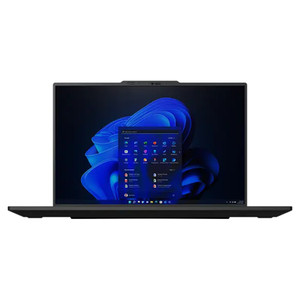
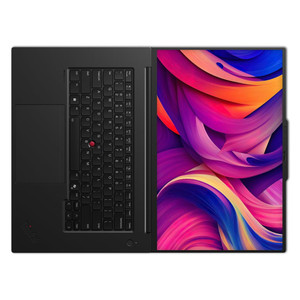
Lenovo 21KV0008US ThinkPad P1 Gen 7 Mobile Workstation
Overview
The Lenovo ThinkPad P1 Gen 7 (21KV0008US) is a 16-inch clamshell mobile workstation built around Intel's Core Ultra 7 155H processor and an NVIDIA RTX 1000 Ada Generation 6GB GPU — a combination that positions it squarely in the field-deployable engineering and security operations workstation category. Weighing 7.00 lb with an aluminium chassis, it targets integrators, architects, and VMS administrators who need real GPU compute and a calibrated display without being anchored to a desk. For buyers evaluating Lenovo commercial workstations, the P1 G7 sits at the intersection of ISV-class GPU performance and road-warrior portability.
Key Features
- Intel Core Ultra 7 155H (E-cores up to 3.80 GHz, 24MB cache): The hybrid architecture offloads background tasks — OS processes, communication threads, background indexing — to efficiency cores, preserving P-core headroom for rendering, simulation, and VMS decoding workloads. The 24MB cache reduces memory-fetch latency on large datasets, which matters when you are processing high-resolution video streams or running analytic pipelines locally.
- NVIDIA RTX 1000 Ada Generation, 6GB VRAM: The Ada Lovelace architecture brings hardware ray tracing and fourth-generation Tensor cores to a mobile form factor. For security and AV integrators, this means the GPU can handle real-time AI inferencing, 3D BIM walkthroughs, and multi-stream GPU-accelerated decoding simultaneously — workloads that would stall a standard integrated-graphics laptop. The 6GB frame buffer is sufficient for most professional visualization tasks without hitting the constraints of entry-level mobile GPUs.
- 32GB RAM, 512GB PCIe Gen4 TLC Opal SSD (M.2 2280): PCIe Gen4 sequential throughput roughly doubles Gen3 — reducing load times on large project files and VM images. The Opal-compliant SSD supports hardware-based full-disk encryption, which matters for mobile deployments handling sensitive surveillance or network infrastructure data. 32GB of system memory gives headroom to run a VMS client, a browser-based NMS, and a remote desktop session concurrently without paging. Buyers evaluating NVR and server-side storage platforms should note this unit complements rather than replaces dedicated network storage.
- 16-inch WUXGA (1920×1200) IPS Display, 400 cd/m², 100% sRGB, Anti-Glare: The 16:10 aspect ratio adds roughly 11% more vertical screen real estate compared to 16:9 at the same diagonal — meaningful when reviewing timeline-based VMS footage or working in split-screen configurations. At 400 nits with an anti-glare coating, the panel remains usable in moderately lit field environments. The 100% sRGB coverage and IPS panel type ensure colour-accurate image review without the off-axis shift you get from TN panels.
- Intel BE200 Wi-Fi 7 (vPro), Bluetooth 5.3: Wi-Fi 7 (802.11be) supports multi-link operation and wider channel widths than Wi-Fi 6E — useful in RF-dense environments like convention centres or large campus deployments where throughput consistency matters. The vPro platform enables out-of-band remote management via Intel AMT, so IT can provision, patch, or remediate the system without requiring the OS to be running. This is a meaningful ops capability for remotely deployed field units.
- Windows 11 Pro 64-bit: Ships with the Pro SKU, which includes BitLocker, Hyper-V, and domain-join capability — baseline requirements for enterprise deployment. Avoids the licensing overhead of upgrading from Home after the fact. Relevant for environments using access control or security management software with Windows domain authentication requirements.
- Aluminium Clamshell Chassis, 7.00 lb: The aluminium construction provides structural rigidity without the weight penalty of magnesium-alloy or steel alternatives. At 7.00 lb, it is on the heavier end for a 16-inch mobile workstation — acceptable for briefcase transport, less ideal for all-day carry. Factor this into deployments where the technician is moving between multiple sites in a single day.
- PCIe and Ethernet Interfaces: The Thunderbolt/PCIe expansion path allows connection of external GPU enclosures, high-speed capture cards, or NVMe RAID arrays if local project demands scale beyond the internal SSD. The wired Ethernet port means the unit does not rely solely on wireless connectivity in rack-adjacent or server-room environments where Wi-Fi may be restricted. This dual-path connectivity is worth noting for integrators setting up PoE switch configurations or structured cabling projects.
Integration and Compatibility
The 21KV0008US ships with Windows 11 Pro and Intel vPro, making it compatible with standard enterprise MDM platforms (Microsoft Intune, SCCM, Jamf for hybrid environments). The NVIDIA RTX 1000 Ada supports CUDA, OpenCL, and DirectX 12 Ultimate — covering the driver requirements for most commercial VMS platforms, CAD suites, and GIS tools used in physical security design. The Opal-compliant SSD integrates with hardware encryption management software without additional licensing. Buyers building out a complete field workstation kit should also evaluate appropriate UPS and power conditioning for the docking station or fixed deployment location.
Frequently Asked Questions
Q: What GPU does the 21KV0008US ship with, and is it sufficient for GPU-accelerated VMS decoding?
A: The 21KV0008US includes an NVIDIA RTX 1000 Ada Generation GPU with 6GB VRAM. The Ada Lovelace architecture supports hardware-accelerated video decoding and CUDA-based AI inferencing, making it capable of handling multi-stream GPU-accelerated decoding in commercial VMS platforms that support NVIDIA GPU offload.
Q: Does the 21KV0008US support hardware full-disk encryption?
A: Yes. The 512GB M.2 PCIe Gen4 SSD is Opal-compliant, meaning it supports hardware-based self-encrypting drive (SED) functionality. Combined with Windows 11 Pro and BitLocker, this enables hardware-enforced encryption without the CPU overhead of software-only solutions.
Q: What is the weight of the ThinkPad P1 Gen 7 21KV0008US?
A: The 21KV0008US weighs 7.00 lb (approximately 3.18 kg). This is typical for a 16-inch professional mobile workstation and should be factored into daily carry requirements.
Q: Does the 21KV0008US include Intel vPro for remote management?
A: Yes. The unit includes the Intel BE200 with vPro support, enabling Intel AMT-based out-of-band remote management. This allows IT administrators to perform remote provisioning, diagnostics, and remediation independent of the operating system state.
Q: What wireless standard does the 21KV0008US support?
A: The 21KV0008US is equipped with the Intel BE200 adapter, which supports Wi-Fi 7 (802.11be) — the latest wireless standard — along with Bluetooth 5.3. Wi-Fi 7 provides improved throughput and multi-link operation compared to Wi-Fi 6E, beneficial in high-density wireless environments.
Q: Is the display on the 21KV0008US touch-enabled?
A: No. The 16-inch WUXGA (1920×1200) IPS display is non-touch. It features an anti-glare coating and 400 cd/m² brightness, suited for productivity and colour-accurate review work in standard office and field lighting conditions.
The 21KV0008US is the unit I reach for when a field integrator or security operations engineer needs a workstation that can genuinely run a GPU-accelerated VMS client, a 3D site model, and a remote desktop session simultaneously — without being tethered to a tower. The NVIDIA RTX 1000 Ada with 6GB VRAM is the differentiating spec here: it is not a token GPU for display output, it is a CUDA-capable Ada Lovelace card that handles real inferencing and decoding workloads that would saturate an integrated graphics chip within minutes.
Technical Highlights:
- PCIe Gen4 SSD with Opal Compliance: Sequential throughput roughly doubles Gen3, and hardware-based encryption via the Opal standard means BitLocker operates without CPU overhead — important on a machine that may be running compute-heavy workloads continuously in the field.
- Intel BE200 vPro (Wi-Fi 7 + Bluetooth 5.3): The vPro platform gives IT out-of-band management via Intel AMT regardless of OS state — a capability that pays off immediately when a remotely deployed unit needs patching or recovery without a technician on-site. Wi-Fi 7 multi-link operation handles RF-dense venues better than Wi-Fi 6E.
- 16-inch WUXGA IPS, 400 nits, 100% sRGB, Anti-Glare: The 16:10 panel adds meaningful vertical space for timeline-based VMS review. At 400 nits with an anti-glare coating, it holds up in ambient-lit server rooms and field environments — not a glossy consumer display that washes out under overhead lighting.
Deployment Considerations:
- At 7.00 lb, factor daily transport into the deployment model — this is a briefcase machine, not a sling-bag machine. For technicians doing multi-site installs in a single day, the weight is a real consideration against lighter 14-inch alternatives.
- The RTX 1000 Ada is a workstation-class mobile GPU, not a data-centre GPU — it handles VMS GPU offload and AI-at-the-edge inferencing well, but do not size it for large-scale batch video analytics that belong on a dedicated GPU server or NVR appliance.
Best fit: a senior security integrator or physical security IT administrator running Genetec Security Center, Milestone XProtect, or equivalent VMS software locally, managing distributed camera infrastructure from the field, and needing a machine that passes enterprise MDM, hardware encryption, and remote management requirements without compromise.