Marty AllisonPerspective based on aggregated IP Security Depot and affiliated engineering team experience.
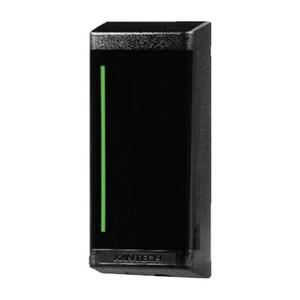
The Kantech KT-MUL-SC2 is one of the most pragmatic retrofit readers we've specified across hospitality, corporate, and healthcare deployments over the past three years. Here's the real operational story: mullion readers solve a geometry problem that other vendors either ignore or force you to work around with expensive door-frame modifications. We've walked into dozens of facilities where the architect spec'd double-pane glass doors or full-light frames with zero wall space adjacent to the door opening—ruling out traditional wall-mount readers entirely. The KT-MUL-SC2 fits in a 4.56-inch mullion cutout that facilities usually can make in a single afternoon with a router and hole saw. That's capex and labor savings right there.
Credential flexibility is the second win. Most retrofit sites have a legacy proximity card base (125kHz HID or generic prox) alongside a small group of users on smart cards or mobile devices. Rather than running two reader installations or forcing users to carry dual credentials, the KT-MUL-SC2 reads all three on one device. Paired with Kantech's EntraPass system, a cardholder can authenticate via physical card or smartphone credential—mobile unlock becomes an operational reality without additional hardware investment. In campus environments especially, we've seen mobile credential adoption rates jump 30-40% when it's available day one rather than bolted on as an afterthought.
That said, there are deployment constraints worth naming. The reader is designed for Kantech ecosystems primarily; if you're integrated into a Genetec or Salto platform, you'll rely on OSDP bridging, which adds complexity if your Kantech controllers aren't already OSDP-capable. The optional capacitive keypad is firmware-configurable but requires controller-side PIN logic—you can't just plug in a keypad and have it validate PINs locally. And the 5VDC power requirement means you must verify your Kantech panel can source adequate current before installation; if you're adding readers to an aging KT-1 or KT-2 with marginal power budget, you may need a powered expansion module.
Technical Highlights:
- AES-256 Encryption Over OSDP: Moves credential data from plaintext Wiegand to encrypted OSDP transmission. Real-world consequence: facility audits pass without question, and interception-based cloning attacks become computationally infeasible. On sites where card skimming is a documented threat (healthcare, government, financial), OSDP deployment cuts risk materially.
- Multi-Protocol Output (OSDP + Wiegand): Single reader supports both encrypted and legacy protocols. Deployment flexibility: roll out OSDP on new zones first, keep existing Wiegand readers operational, migrate incrementally without forklift upgrading the entire access control panel base.
- BLE SmartTap Credential Delivery: Smartphone credentials provisioned via EntraPass and hattrix, no additional provisioning hardware required. Operational benefit: lost or expired credentials are deleted remotely; no card retrieval needed. Onboarding contractors takes minutes instead of days.
- Firmware Field Upgrade: New credential types and protocol versions delivered via software update. Protects capex: a 7-year-old reader can support DESFire EV3 or next-gen standards without physical swap.
- Configurable LED & Buzzer Feedback: Customize visual and audio responses per door or per zone without rewiring. Operational transparency: loud buzzer for secure areas, silent LED flash for retail environments sensitive to noise.
Deployment Considerations:
- Mullion cutout sizing is critical: North American standard is 1.125" diameter, European 22mm. Oversized holes cause reader wobble and weather infiltration. Verify the cutout spec with your door frame supplier before drill; patching errors is expensive.
- 5VDC power sourcing: Kantech KT-400 panels handle multiple readers; older KT-1 and KT-2 series require power auditing. If you're stacking readers on one panel loop, use a powered reader hub or separate 5VDC supply to avoid brownout scenarios where reader response time degrades under high current draw.
- OSDP integration on Wiegand-only controllers: If your Kantech panel is Wiegand-only, the reader operates in Wiegand mode, and encryption benefits are lost. Plan OSDP migration on your control panel first if encrypted credentials are a project requirement.
- Mobile credential adoption requires EntraPass and hattrix subscription: SmartTap isn't available on standalone Kantech systems. Budget for cloud platform licensing when mobile unlock is part of the project scope.
- Outdoor mullion installations: The reader itself is rated for indoor use. If the mullion is weather-exposed (uncovered vestibule, exterior frame), consider a weatherproof housing shroud and verify drainage around the cutout to prevent water ingress into the reader cavity.
The KT-MUL-SC2 is the right fit for retrofit and upgrade projects where frame geometry rules out wall-mount readers, where credential diversity is a real constraint, and where you're already committed to Kantech infrastructure. Integrators and end-user security teams evaluating mullion readers should explore the Kantech catalog for panel and ecosystem compatibility before specifying.