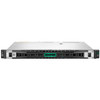
HPE P86620-B21 Dual x16 FHHL PCIe Riser Kit for ProLiant DL110 Gen12
Overview
The HPE P86620-B21 is a factory-configured PCIe riser kit designed specifically for the HPE ProLiant DL110 Gen12 platform. It delivers two full-height, half-length (FHHL) PCIe x16 slots, giving integrators and IT architects a structured path to add GPU accelerators, capture cards, or high-throughput NIC adapters without improvising with third-party riser hardware that may not seat correctly or carry HPE's firmware validation. If you're building a DL110 Gen12 node that needs to break out more than the motherboard's native expansion — video processing, AI inference at the edge, or multi-port networking — the P86620-B21 is the OEM-sourced way to do it.
At 2.36 lb, the riser assembly is light enough that it doesn't meaningfully shift the chassis center of gravity during rack installation, which matters when a single technician is sliding a 1U or 2U node into a populated rack without a lift. The PCIe interface is standard, but fit, clearance, and firmware compatibility with the DL110 Gen12 backplane are HPE-validated — you're not guessing on slot assignments or power delivery headroom. For integrators running network video recorder builds or edge compute nodes inside a server-based surveillance architecture, that validation matters more than it might seem when a misfit riser causes an intermittent PCIe link error at 2 AM.
The FHHL form factor means cards installed in this riser must be full-height, half-length — standard for most enterprise GPUs, dual-port NICs, and video capture cards used in commercial deployments. If a card in your BOM is full-height, full-length (FHFL), it will not fit, and no amount of bracket work changes the mechanical clearance inside the DL110 Gen12 chassis. Verify card dimensions before procurement.
Key Features
- Two PCIe x16 FHHL Slots: Accommodates dual full-height, half-length expansion cards simultaneously — practical for deployments that need both a GPU accelerator and a high-port-count NIC in the same node, without occupying a second chassis slot.
- OEM Platform Fit for DL110 Gen12: Engineered and validated for the ProLiant DL110 Gen12 — connector alignment, power routing, and slot addressing are confirmed by HPE, which reduces integration risk compared to generic riser alternatives.
- 2.36 lb Assembly Weight: Light enough for single-technician rack work; does not require additional support brackets during chassis insertion on a standard rack enclosure.
- PCIe Interface: Standard PCIe electrical interface ensures broad card compatibility across vendors for GPUs, NICs, capture hardware, and accelerators validated for the DL110 Gen12 platform.
Integration & Compatibility
The P86620-B21 (often searched as P86620 B21) is a platform-specific component — it is not a universal riser. It is designed and sold for the HPE ProLiant DL110 Gen12 server only. Before ordering, confirm your chassis model number matches. Mixing riser kits across Gen11 and Gen12 ProLiant families is not supported and may result in physical incompatibility or slot enumeration failures. Consult HPE's server accessory compatibility documentation or your pre-sales engineering contact to validate card and chassis pairing before the riser ships.
Frequently Asked Questions
Q: Which server platform is the HPE P86620-B21 designed for?
A: The P86620-B21 is designed specifically for the HPE ProLiant DL110 Gen12 server. It is not a universal riser and should not be assumed compatible with other ProLiant generations without HPE confirmation.
Q: What PCIe card form factor does this riser support?
A: The riser supports Full Height, Half Length (FHHL) PCIe cards. Full-height, full-length cards will not fit mechanically within the DL110 Gen12 chassis when this riser is installed.
Q: How many expansion slots does the P86620-B21 provide?
A: It provides two PCIe x16 slots, allowing simultaneous installation of two FHHL expansion cards such as GPUs, NICs, or capture cards.
Q: What does the kit weigh?
A: The P86620-B21 riser kit weighs 2.36 lb, making it manageable for single-technician rack installations without additional mechanical support.
Q: Can this riser be used in Gen11 ProLiant servers?
A: No. This riser is engineered for the Gen12 platform. Physical connector layouts and slot assignments differ across generations; using it in a Gen11 chassis is not supported.
The P86620-B21 is one of those parts that looks trivial on a BOM until you skip it and spend half a day troubleshooting a PCIe enumeration fault. The dual x16 FHHL slot configuration is what makes the DL110 Gen12 viable as a compact edge compute node — without this riser, you're limited to whatever native expansion the motherboard exposes, which rarely covers both a GPU and a second NIC simultaneously.
Technical Highlights:
- Dual x16 PCIe Slots: Running two full x16 slots rather than bifurcated x8/x8 means GPU-class cards see full bandwidth — relevant if the node is doing video analytics or AI inference where PCIe throughput is a real bottleneck.
- FHHL Form Factor Constraint: At 2.36 lb, the riser itself is light, but the FHHL restriction is a hard mechanical limit — it immediately filters out FHFL cards like many prosumer GPUs and longer NIC designs. Build your card BOM before ordering the riser, not after.
- Gen12 Platform Validation: HPE validates riser kits per chassis generation — connector pinouts, power trace routing, and slot address assignment are not interchangeable. A Gen11 riser in a Gen12 chassis is an unsupported configuration that HPE will not troubleshoot.
Deployment Considerations:
- Confirm all expansion cards are FHHL before procurement — a card that's 1mm too long physically cannot be forced into clearance, and the DL110 Gen12 chassis does not have adjustable card stops.
- This riser does not add PCIe lanes — it routes existing lanes from the Gen12 platform. If the DL110 Gen12's CPU or chipset PCIe lane budget is already saturated by NVMe or onboard devices, adding cards via this riser will require bifurcation planning in BIOS/iLO settings.
For integrators building DL110 Gen12 nodes as dedicated video analytics servers — pairing an NVIDIA capture or inference card with a dual-port 25GbE NIC — the P86620-B21 is the correct expansion path. It is not a general-purpose riser; treat it as a platform-specific component and order it alongside the chassis, not as an afterthought.