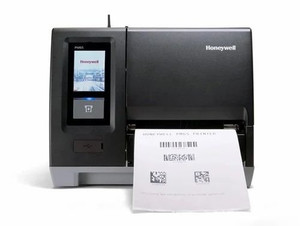
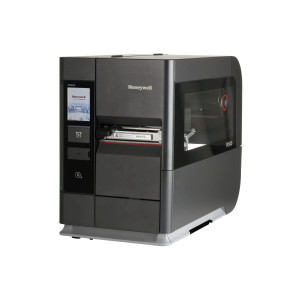
Honeywell PM45A10000030201 Industrial Label Printer
The Honeywell PM45A10000030201 is a production-grade thermal transfer printer engineered for high-volume barcode and label output in warehouse, manufacturing, and distribution environments. This 203 DPI configuration delivers consistently scannable barcodes across extended print runs, paired with an integrated rewinder and label-taken sensor to minimize manual handling and labor overhead in shipping, compliance, and asset-tracking operations.
Key Features
- 203 DPI thermal transfer resolution: Sharp barcode output that remains scannable across thousands of labels without quality degradation—critical when a single misread label can stall a shipping dock or trigger compliance violations.
- 300 mm/s (12 inches/second) print speed: Sustains high-throughput production without requiring a separate high-speed printer tier, reducing capex and operational complexity in mid-to-large operations.
- 108 mm (4.25 inch) maximum print width: Accommodates standard shipping labels, GS1 compliance tags, and multi-barcode product identification without specialty media formats.
- 256 MB SDRAM and 512 MB Flash memory: Sufficient onboard storage for complex variable-data templates, multi-barcode layouts, and high-density graphics without constant network requests—reduces print latency and improves reliability on intermittent or congested networks.
- 3.5-inch color touch LCD display: Operator-friendly job monitoring, template preview, and media status visibility; reduces support calls and printing errors from misconfigured jobs.
- Integrated rewinder with label-taken sensor: Automated label dispensing eliminates manual label peeling, cuts labor per unit, and enables automated label application in high-speed packaging lines.
- Multi-protocol emulation (ZPL II, ZSim2, Direct Protocol, Fingerprint, IPL): Drop-in replacement for legacy multi-vendor printer environments; no software rewrites required when consolidating printer fleets, saving engineering time and migration risk.
Connectivity and Integration
The PM45A10000030201 supports Ethernet (10/100 Mbps), dual USB 2.0 Host, USB 2.0 Device, RS-232 serial, and Wi-Fi (802.11 a/b/g/n/ac). Ethernet and Wi-Fi enable real-time integration with warehouse management systems, ERP platforms, and cloud-based label management suites. HTTPS encryption and LPR analytics provide secure data transmission across networked environments and visibility into print queue health and device utilization. This flexibility means you can deploy the printer in fixed docking stations, mobile carts, or networked back-office locations without custom interfacing.
Environmental and Physical Specifications
Operating temperature range of 5–40°C (41–104°F) and humidity tolerance to 90% non-condensing suit indoor warehouse and light-manufacturing environments; avoid high-condensation areas (loading docks, freezers) where rapid humidity swings can trigger sensor drift. At 12.1 kg (26.7 lbs) and 483 × 295 × 284 mm, the printer fits on standard benches and label-application workstations without requiring dedicated cabinetry. Fixed hanger mounting keeps the footprint compact.
The printer operates on PoE Class 1 power, meaning it can draw power from a standard PoE-enabled Ethernet switch if installed in a networked environment—no separate power supply branch circuit required, simplifying deployment in multi-printer setups and reducing cable clutter.
When to Choose a Different Model
If your label widths exceed 108 mm (e.g., wide shipping labels, large product tags) or if you require 300+ DPI resolution for ultra-fine barcodes or photo-quality graphics, evaluate the higher-resolution variant in the PM45 family or a wider-format model. If you need mobile battery-powered labeling (fieldwork, asset tagging in remote locations), consider a compact handheld printer instead. For ultra-low-volume (<50 labels/day) operations, a simpler desktop inkjet or lower-cost thermal printer may reduce capex.
Frequently Asked Questions
Q: Does the PM45A10000030201 support PoE power?
A: Yes. The printer is PoE Class 1 capable, meaning it can operate on standard 802.3af PoE from a network switch, eliminating the need for a separate power supply in networked environments.
Q: What barcode formats and label templates does the PM45A10000030201 support?
A: The printer emulates ZPL II, ZSim2, Direct Protocol, Fingerprint, and IPL, meaning it can print any barcode type (Code 128, QR, GS1-128, UPC, etc.) that those formats support. Template design is typically done in third-party label software that exports to one of these protocols.
Q: How does the integrated rewinder reduce labor cost?
A: The built-in rewinder automatically advances and stacks printed labels, and the label-taken sensor confirms removal; this eliminates manual peeling and hand-feeding labels into applicators, cutting per-label labor from seconds to near-zero in automated workflows.
Q: What is the maximum print run length before maintenance?
A: Thermal transfer printheads are typically rated 1–2 million impressions. Exact lifespan depends on label material, print darkness, and environment; consult the maintenance schedule in the user manual for printhead replacement intervals and cost.
Q: Can I manage the PM45A10000030201 remotely over the network?
A: Yes. HTTPS encryption and LPR analytics support enable remote monitoring of print queue, device status, and job history; most warehouse management and print management platforms include PM45-compatible device drivers and web-based management interfaces.
Q: Is the PM45A10000030201 suitable for GS1 and regulatory compliance labeling?
A: Yes. The 203 DPI resolution and multi-barcode emulation support GS1-compliant labels, serialization, lot tracking, and regulatory barcodes required for pharmaceutical, food, and consumer goods supply chains.
Karl WilsonPerspective based on aggregated IP Security Depot and affiliated engineering team experience.
The Honeywell PM45A10000030201 strikes a practical balance between price, throughput, and barcode quality for mid-to-large distribution and manufacturing environments consolidating aging multi-vendor printer fleets. At 300 mm/s and 203 DPI, this model delivers scannable output at volume without the capex of a dedicated high-speed line. Multi-protocol emulation (ZPL II, ZSim2, Fingerprint, IPL) means no software rewrites when you retire legacy printers—a genuine cost lever on fleet transitions.
Technical Highlights:
- 300 mm/s print speed with integrated rewinder: Sustains 12+ labels per second with automatic stacking and label-taken confirmation. In high-volume shipping ops, this alone can cut manual label handling labor by 30–50% versus print-and-peel workflows.
- 256 MB SDRAM and 512 MB Flash: Sufficient for complex variable-data templates with multiple barcodes per label. Reduces network latency on congested warehouse LANs; print jobs execute locally without waiting for the host system to stream each label.
- PoE Class 1 power capability: Draws under 15W on standard 802.3af PoE. In a 30-printer deployment, PoE eliminates dedicated power circuits and reduces electrical infrastructure cost by 20–30%.
- Wi-Fi, Ethernet, USB, and RS-232 connectivity: Flexibility for fixed docking stations, mobile carts, and legacy serial integrations. No forced network rip-and-replace required.
Deployment Considerations:
- 5–40°C operating envelope: Avoid placement in loading docks, freezers, or areas with rapid humidity swings. Thermal sensors and ribbon tension can drift in high-condensation zones.
- 108 mm print width limit: Standard for shipping and compliance labels, but confirm your label stock doesn't exceed this before purchase. Wide-format variants exist if you need 4.5 inch or wider labels.
- Thermal transfer media requirement: Ribbon costs (~$20–40 per roll) accumulate over time. Factor ribbon spend into TCO when comparing to inkjet or direct thermal alternatives.
Position the PM45A10000030201 in warehouse docking operations, 3PL facilities, and mid-volume manufacturing where label speed and barcode consistency matter more than enterprise analytics. It's a workhorse, not a showpiece—deploy it where you need reliable throughput and easy legacy integration, not cutting-edge monitoring or AI.