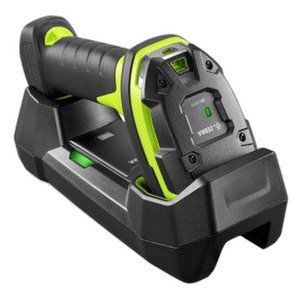
Honeywell 6160 2D Wi-Fi Scanner
Overview
The Honeywell 6160 is a fixed-position 2D barcode scanner with native Wi-Fi connectivity, designed for warehouse receiving, point-of-sale checkouts, and production-line applications where consistent, stationary scanning is required. Unlike handheld scanners or tethered devices, the 6160 mounts flush or surface-mounted at a workstation, eliminating the need for operator handling and reducing per-scan latency in high-volume environments. Wi-Fi networking avoids point-to-point cabling, which cuts installation labor and removes a common maintenance liability in busy facilities.
Key Features
- 2D Scan Engine: Reads standard 1D barcodes (UPC, Code 128, etc.), QD codes, Data Matrix, and other 2D symbologies in a single device — eliminating the need to stock multiple scanner types and simplifying barcode strategy across your operation.
- Wi-Fi 802.11 Connectivity: Communicates wirelessly to your enterprise network, removing hardwired RS-232 or USB cabling that degrades in high-traffic areas and complicates reconfiguration when you relocate a workstation.
- Flush-Mount Option: Integrates directly into counter edges or panel openings, presenting a clean appearance and reducing trip hazards or snag points in warehouse or retail environments.
- Surface-Mount Option: Mounts on top of existing counters or shelving without modification, ideal for temporary deployments or facilities where opening walls is impractical.
- Fixed-Position Deployment: Designed for stationary scanning at shipping docks, receiving lines, or checkout stations — no handheld operator fatigue and consistent read angles that improve throughput and accuracy.
- Keypad and Touchscreen Compatible: Integrates with supplementary input devices (keypads, touchscreens) so operators can enter manual codes, select product variants, or confirm transactions without swapping hardware.
- Standard Scanner Protocols: Operates via conventional barcode-reader interfaces (keyboard emulation, serial, Ethernet), eliminating need for custom drivers or firmware updates in most modern warehouse-management or point-of-sale systems.
Integration and Deployment Considerations
Successful 6160 deployments hinge on wireless signal strength at each mounting location. If your facility has weak or intermittent Wi-Fi coverage near the dock or checkout area, plan to add an access point or relocate the scanner closer to an existing transmitter — dropped scans during a connectivity lapse will cascade into order-fulfillment delays or checkout bottlenecks. The 2D engine provides flexibility for mixed barcode inventories (traditional UPC alongside newer Data Matrix labels), reducing the friction of a barcode modernization project where legacy and next-generation codes coexist.
The 6160 pairs naturally with networked PoE switches and warehouse automation platforms that expect ONVIF-compatible or standard barcode-reader protocol endpoints. If your operation uses a vertical application (retail POS, WMS, label printing), verify scanner protocol compatibility with your vendor before procurement — most mainstream platforms support keyboard emulation or standard serial barcode output, but edge-case integrations may require a protocol gateway.
When to Choose a Different Model
If your operation requires mobile scanning (operators moving between aisles or receiving lines), consider a handheld 2D scanner instead — the 6160 is stationary by design. If you need higher-speed captures in extreme warehouse environments (freezers, high-humidity shipping containers), consult Honeywell's industrial-grade scanner variants with enhanced environmental sealing. For checkout environments where customer-facing aesthetics matter, the flush-mount option minimizes visual footprint, but verify that your counter depth accommodates the device's mounting profile.
Frequently Asked Questions
Q: Can the Honeywell 6160 read both 1D and 2D codes?
A: Yes. The 2D scan engine captures standard barcodes (UPC, Code 128) and 2D formats (QR, Data Matrix) in a single device, so you don't need separate scanners for different barcode types.
Q: What happens if Wi-Fi connectivity drops?
A: A temporary loss of signal will interrupt scanning until the device reconnects. Plan your Wi-Fi coverage to ensure reliable signal strength at each mounting location. If your site has frequent outages, consider a wired Ethernet fallback or a PoE-powered access point nearby.
Q: Is the 6160 compatible with my existing point-of-sale system?
A: The 6160 operates via standard scanner protocols (keyboard emulation, serial, network interfaces), so compatibility with modern retail POS and WMS platforms is likely. Verify with your POS vendor that they support Wi-Fi barcode readers or confirm the specific protocol your system expects.
Q: What's the difference between flush-mount and surface-mount?
A: Flush-mount embeds the scanner into a counter edge or panel opening for a seamless look and to eliminate trip hazards. Surface-mount sits on top of existing furniture and requires no installation modifications — choose based on your facility's layout and aesthetic requirements.
Q: Can I integrate the 6160 with warehouse-automation software?
A: Yes. The 6160 supports standard barcode-reader protocols expected by WMS platforms, but confirm compatibility with your specific software vendor before purchase to avoid protocol translation overhead.
Ted PerryPerspective based on aggregated IP Security Depot and affiliated engineering team experience.
I've deployed the Honeywell 6160 across several warehouse and retail environments. The 2D scan engine is solid — it handles legacy 1D barcodes and modern 2D formats without breaking a sweat, which is critical when you're migrating from older labeling standards. Wi-Fi connectivity eliminates the cabling nightmares you get with tethered scanners in busy docks, where cables get caught, pinched, or stepped on. The 6160 is straightforward to integrate into standard POS and WMS platforms that expect keyboard-emulation or protocol-standard barcode output.
Technical Highlights:
- 2D Scan Engine: Reads 1D barcodes (UPC, Code 128, etc.) and 2D codes (QR, Data Matrix) in one device — eliminates inventory complexity and lets you consolidate scanner purchases across multiple barcode types.
- Wi-Fi 802.11 Connectivity: Wireless operation cuts installation labor by removing point-to-point cabling, and reduces maintenance liabilities when cables degrade or get damaged in high-traffic areas.
- Mounting Flexibility (Flush/Surface): Flush-mount minimizes aesthetics impact and trip hazards; surface-mount is faster to deploy in existing facilities without counter modification — choose based on your site's constraints.
Deployment Considerations:
- Verify Wi-Fi signal quality at each planned mounting location before finalizing placement. Weak coverage will cause dropped reads and cascade into fulfillment delays.
- Confirm barcode protocol compatibility with your POS or WMS vendor — most support standard keyboard emulation or serial interfaces, but edge-case systems may require a gateway or custom configuration.
- Plan for Wi-Fi refresh cycles and access-point maintenance. Unlike hardwired scanners, the 6160 depends on reliable wireless infrastructure; budget for coverage assessments every 18–24 months.
The 6160 excels in warehouses modernizing from tethered scanners and retail operations consolidating multiple barcode types. It's a pragmatic choice for fixed-position deployments where reducing cabling and supporting mixed barcode standards matters more than raw speed.