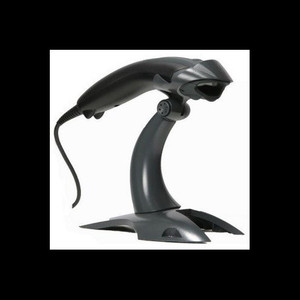
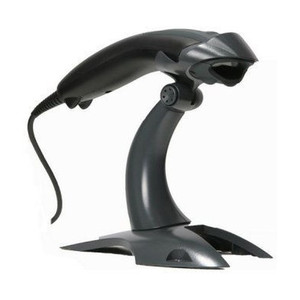
Honeywell 1400GSR-1USB-N Xenon XP 1952g Area Imager Scanner
The Honeywell 1400GSR-1USB-N is a ruggedized area imager scanner built for logistics, warehouse operations, and field service environments where both durability and barcode versatility matter. This is a general-purpose device capable of reading both 1D and 2D barcodes — meaning you can capture linear UPC codes on product labels and 2D Data Matrix or QR codes on shipping documentation without switching hardware. That flexibility reduces SKU complexity when you're standardizing a fleet across multiple facility types or workflows.
Key Features
- Area Imager (1D/2D): Reads both linear and 2D barcode symbologies. Useful when your supply chain mixes older linear labeling with newer 2D standards — you don't need separate scanners for each.
- Dual Connectivity (Bluetooth 4.2 + USB): Pair wirelessly for mobile workflows, or plug in directly to a fixed workstation. Switch modes depending on the task without replacing the device.
- IP65 Environmental Rating: Dust and moisture resistance means it survives typical warehouse humidity, light splashes, and dusty conditions. Don't rely on this in standing water — IP65 is splash/dust, not submersion.
- 2.0 m (6.5 ft) Drop Tolerance: Genuine ruggedization for field use. Dropped from shoulder height onto concrete floors — the device is engineered to survive that. Meaningful when staff work in fast-paced environments where equipment takes impact.
- Working Range 2.5–50.8 cm (1–20 in): Covers both close-range reading (handheld, touching a label) and medium-distance capture (scanning items on a conveyor or shelf up to 20 inches away). Flexible enough for both fixed-position and mobile scanning.
- Genuine Honeywell Component: Preserves Manufacturer Warranty and simplifies IT procurement. Standardizing on authentic parts reduces integration surprises and support friction when issues arise.
Deployment Context
The 1400GSR-1USB-N (often searched as 1400GSR 1USB N) is most cost-effective in environments where you scan a high volume of mixed barcode types — retail receiving, cross-docking, field asset audits, healthcare inventory. If your operation uses only 1D barcodes, a single-line laser scanner may be simpler; if you need specialized reading (damaged barcodes, extreme distances), consult your Honeywell integrator on purpose-built variants. The Bluetooth + USB pairing makes it suitable for both dock operations (wired to a stationary PC) and mobile fieldwork (paired to a warehouse handheld or tablet).
When to Choose a Different Model
Consider alternatives if: (1) your facility requires higher-speed scanning in assembly-line conveyor use (this device is general-purpose, not optimized for throughput racing); (2) you need integrated RFID capability alongside barcode reading (that requires a specialist multi-modal device); (3) you operate in extreme cold below −10°C or sustained moisture (IP65 may not be sufficient for those edge cases). Otherwise, the Xenon XP 1952g line covers most enterprise warehouse and field workflows effectively.
Fleet Standardization & Support
IT teams benefit from centralizing on a single barcode device family. Reduces training overhead (staff learn one form factor and button layout), simplifies spare-parts inventory, and streamlines warranty claims since everything is from the same vendor. The 1400GSR-1USB-N integrates with existing Honeywell scanner management platforms, simplifying firmware updates and device configuration across dozens of units.
Frequently Asked Questions
Q: Does the 1400GSR-1USB-N work with standard warehouse management systems?
A: Yes. The scanner outputs standard USB HID keyboard emulation (when wired) or Bluetooth serial data (when wireless), making it compatible with any WMS, ERP, or custom application that accepts barcode input. No special driver or integration layer is required.
Q: Can the 1400GSR-1USB-N read damaged or poorly printed barcodes?
A: Area imagers handle minor print degradation better than laser scanners because they image the entire barcode rather than scanning a single line. However, severely faded or torn labels may still fail. Test your specific label stock during evaluation.
Q: What's the Bluetooth range?
A: Bluetooth 4.2 typically operates within 30–100 meters in open warehouse space, depending on radio interference and obstacles. Verify range in your facility before rollout, as metal racks and dense radio environments reduce effective distance.
Q: Does this scanner maintain a manufacturer warranty if I use it with non-Honeywell devices?
A: Honeywell generally warrants the scanner itself regardless of host device, but pairing with incompatible or unsupported hosts may void support for integration issues. Confirm warranty scope with your specialty reseller before mixing platforms.
Q: Is the Xenon XP 1952g suitable for outdoor inventory in cold weather?
A: IP65 handles rain and dust, but the device is rated for normal operating temperatures (typically 0–40°C per standard industrial specs). Prolonged exposure to freezing temperatures may degrade battery performance and screen responsiveness. Verify temperature range in the full datasheet for your climate zone.
Q: How long does the battery last on a single charge?
A: Battery runtime depends on Bluetooth usage frequency, brightness settings, and scan volume. Check the detailed datasheet or contact your reseller for specific numbers tied to your expected workflow.
Ted PerryPerspective based on aggregated IP Security Depot and affiliated engineering team experience.
The 1400GSR-1USB-N sits in a practical middle ground for enterprise barcode operations. It's not a single-line scanner (which is faster for 1D-only workflows) and not a specialized mobile computer (which bundles scanning with compute). What makes the difference is the IP65 rating combined with the 2.0 m drop spec — those two features tell you this is built for rough handling in real warehouses, not just desk scanning.
Technical Highlights:
- Area Imager (1D/2D): Reads linear barcodes at 2.5–50.8 cm distance and 2D codes (Data Matrix, QR) at the same range. That flexibility cuts down hardware SKUs when you're upgrading from legacy single-line scanners to 2D-capable fleets.
- IP65 + 2.0 m Drop: Two independent durability specs that matter. IP65 means you can wipe it down and ignore light moisture; the 2.0 m drop tolerance means a dock worker won't destroy it on concrete. Together they justify deployment in fast-paced warehouse environments.
- Bluetooth 4.2 + USB Dual Mode: Eliminates the need to choose between mobile and fixed scanning at the hardware level. Pair to a handheld for receiving, plug into a fixed dock workstation for replenishment — same device, no redeployment.
Deployment Considerations:
- IP65 protects against incidental splashes and dust, but this is not a submersible device — avoid deliberate water exposure or high-pressure wash-down. If your warehouse operates around water systems or requires frequent cleaning, verify IP65 fits your actual environment.
- Area imagers trade some speed for versatility compared to single-line laser scanners. If your use case is high-volume 1D-only scanning on a conveyor, consider a laser-based variant instead. The 1400GSR-1USB-N is best when you're scanning mixed barcode types at human pace (receiving, audits, small-package handling).
- Bluetooth range in metal-heavy warehouse environments (racking, large equipment) is often 30–50 meters, not the theoretical maximum. Test pairing distance in your facility before committing to a wireless-primary deployment.
Deploy the 1400GSR-1USB-N in mixed 1D/2D environments where field durability and flexible connectivity matter more than throughput racing — cross-dock operations, field asset audits, receiving departments that handle both legacy and modern label formats. It's the scanner for integrators who need a robust, versatile device that doesn't require special environmental enclosures or custom firmware.