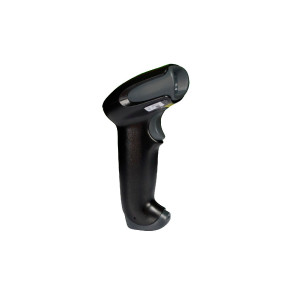
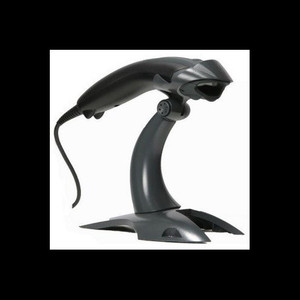
Honeywell 1250G-1 Xenon XP 1952g Area Imager Scanner
The Honeywell 1250G-1 is a genuine OEM area imager scanner built for the Xenon XP 1952g platform. It's engineered to handle continuous operation in warehouse, distribution, and field service environments where durability and first-pass read accuracy directly impact throughput and operator efficiency. Unlike single-laser designs, this 1D/2D imager reads damaged, worn, and poorly printed barcodes by analyzing the entire barcode region as a picture—cutting timeout events and rescans that slow high-volume operations.
Key Features
- Area Imager for 1D and 2D barcodes: Laser scanners fail on creased labels, faded ink, or off-angle surfaces. Area imaging sees the whole barcode region and decodes by pattern recognition—meaningful when your floor volume is high enough that a 2–3% improvement in first-pass reads translates to real labor savings. Fewer operator frustration events, fewer manual rekeys, faster throughput per shift.
- IP65 environmental rating: Dust-tight and water jet-resistant. Warehouses generate cleaning spray, forklift dust, and ambient moisture. IP65 means the 1250G-1 won't degrade or require sealing in protective cases just to survive the floor. No sealed, redundant device strategy needed—one unit works across your environment.
- 2.0 m (6.5 ft) drop tolerance: Handheld devices get dropped. A 2.0 m rating absorbs accidental drops from waist and shoulder height onto concrete without requiring immediate replacement. This directly reduces device churn and unplanned downtime in high-motion warehouse and field service settings.
- Bluetooth 4.2 wireless connectivity: Paired with a mobile computer or tablet, the 1250G-1 operates at full range across a warehouse floor without tethering to a fixed terminal. Bluetooth 4.2 specifically supports faster reconnection and lower power overhead than older versions—a real factor when managing 20+ paired scanners across a shift and needing consistent uptime between charge cycles.
- USB connectivity option: For fixed-position scanning (checkout counters, receiving docks, pack stations), USB integrates directly into kiosk terminals or in-counter PCs. Single device supports both mobile and stationary deployments—reduces SKU count and simplifies procurement and support.
- Working range 2.5 to 50.8 cm (1 to 20 in): Operator can scan from hand-hold position to arm's length without repositioning. This ergonomic span reduces bending, reaching, and repetitive strain—a real factor in high-volume operations where operators scan hundreds of items per shift. Wider range also accommodates small package labels and large pallet barcodes in a single motion.
Integration and Compatibility
The 1250G-1 maintains full electrical and mechanical compatibility with the Xenon XP 1952g scanner chassis and existing Honeywell scanner management infrastructure. Using a genuine OEM scanner preserves manufacturer warranty coverage and eliminates compatibility debugging—no risk of firmware conflicts, power delivery mismatches, or undocumented behavior with third-party components.
Bluetooth pairing integrates with any standard HID-compliant device (mobile computers, tablets, laptops running Windows, iOS, or Android). USB connection works with any standard USB Host interface. This flexibility allows mixed-device deployments across your floor without requiring dedicated base stations or proprietary receivers—lower total cost of ownership compared to closed-loop proprietary ecosystems.
Warranty and Support
Standardizing on OEM Honeywell scanners simplifies procurement—single part number, single warranty chain, single support contact. For IT teams managing large scanner fleets across multiple shifts, this eliminates the SKU explosion and support burden of mixed original and third-party accessories. Manufacturer Warranty protection also guards against costly device failures during high-season operations (holiday fulfillment, inventory peaks) when replacement lead times hurt most.
Frequently Asked Questions
Q: Is the 1250G-1 compatible with other mobile computers besides the Xenon XP 1952g?
A: The 1250G-1 is engineered for the Xenon XP 1952g platform. It supports standard Bluetooth HID pairing with any compatible mobile device and standard USB connectivity with any USB Host. For mixed-device environments, confirm pairing compatibility with your specific mobile computer model before large-scale deployment.
Q: Does the 1250G-1 support both 1D and 2D barcode formats?
A: Yes. The area imager reads 1D (UPC, Code 128, etc.) and 2D (QR, PDF417, DataMatrix) barcodes. Area imaging specifically handles damaged and worn labels where laser scanners would fail—a real advantage in distribution and returns processing.
Q: What is the difference between area imaging and laser scanning?
A: Laser scanners reflect a single line of light across a barcode and measure the reflection pattern. Area imagers capture a picture of the entire barcode region and decode by pattern recognition. Area imaging reads creased, faded, and off-angle barcodes that laser scanners cannot—improving first-pass read rates in high-volume, fast-moving environments.
Q: Is the 1250G-1 suitable for outdoor field service operations?
A: IP65 rating makes it dust-tight and water jet-resistant—suitable for outdoor light-duty field service (package delivery, field inspections, service calls). For submersion or heavy rainfall exposure, consider a higher IP rating like IP67. Verify your specific climate and handling conditions before purchase.
Q: Can I use the 1250G-1 with a fixed mount at a packing station?
A: Yes. USB connectivity allows stationary deployment on counter terminals or kiosk PCs. Bluetooth option enables mobile use with tablets. Single device supports both use cases—reduces inventory complexity compared to separate mobile and fixed models.
Q: What is the expected battery life on a single charge?
A: Battery life depends on scan frequency, Bluetooth connectivity mode, and operator usage patterns. Consult the detailed datasheet or contact the manufacturer for specific runtime estimates for your deployment model.
Ted PerryPerspective based on aggregated IP Security Depot and affiliated engineering team experience.
The 1250G-1 is a solid fit for warehouse and distribution operations where throughput matters and label quality isn't guaranteed. Area imaging on this platform reads damaged and worn barcodes that laser-only designs reject—meaning fewer timeouts and fewer operator rescans. If your floor sees high-volume, fast-moving inventory with variable label condition, the imaging approach pays for itself in operator efficiency alone.
Technical Highlights:
- Area imaging (1D and 2D): Decodes by pattern recognition, not laser reflection. This means creased labels, faded ink, and off-angle surfaces won't trigger timeouts. Real-world impact: 2–5% improvement in first-pass read rates translates to meaningful labor savings in high-volume operations.
- IP65 environmental rating: Dust-tight and water jet-resistant. Your warehouse can spray-clean floors and run humidifiers without degrading the scanner. No sealed protective cases needed just to survive the environment.
- 2.0 m (6.5 ft) drop rating: Absorbs waist-height and shoulder-height drops onto concrete. Reduces unplanned device churn in fast-paced environments where equipment gets knocked around daily.
- Bluetooth 4.2 + USB dual connectivity: Bluetooth 4.2 delivers faster reconnection and lower power overhead than older versions—meaningful when managing 20+ scanners across a shift. USB option covers stationary pack stations without requiring separate hardware.
Deployment Considerations:
- The 1250G-1 is optimized for the Xenon XP 1952g platform. Confirm Bluetooth pairing compatibility if you plan to mix devices or migrate to different mobile computers before scaling across your floor.
- IP65 handles dust and spray, but not submersion. If your operation involves wash-down tunnels or extreme moisture, IP67 is the minimum you need.
- Area imaging is faster on well-lit surfaces. In low-light zones (deep warehouse aisles, night shift), supplement with task lighting or consider a complementary lighting solution.
Deploy this scanner where barcode quality is variable and operator speed matters—distribution centers, high-velocity fulfillment, field service with worn vehicle labels, or returns processing with damaged packaging. Pair it with mobile computers running standard HID Bluetooth or USB terminals at pack stations, and you'll see measurable gains in read accuracy and operator throughput.