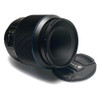
Code Blue 41412 HID Lens CB2-s Thermal Camera Lens
The Code Blue 41412 is a replacement HID lens assembly designed for CB2-s thermal imaging systems used in security and surveillance deployments. This optical component restores thermal imaging clarity and sensitivity on aging or damaged CB2-series camera heads, extending equipment lifecycle without requiring full camera replacement. Integrators working with existing Code Blue thermal infrastructure will recognize this as a direct OEM component swap that maintains factory calibration and thermal performance.
Key Features
- HID Lens Design: Precision optical element engineered for thermal infrared wavelengths. Maintains factory thermal sensitivity and focus accuracy across temperature measurement ranges.
- CB2-s Compatibility: Direct fit replacement for Code Blue CB2-s series thermal cameras. No recalibration required — swap and operate at original OEM specifications.
- Serial Connectivity: Serial-based communication with host CB2-s device ensures stable data transmission and synchronized thermal frame delivery without protocol negotiation overhead.
- Thermal Clarity Restoration: Replaces degraded, scratched, or fogged optics that reduce thermal contrast and measurement accuracy. Restores imaging performance to factory baseline.
- Extended Equipment Life: Component-level replacement eliminates need for full thermal camera upgrade when lens is the failure point — typical cost and logistics advantage over camera-head replacement.
- OEM Engineering: Factory-spec optics ensure thermal linearity, distortion correction, and wavelength response match the CB2-s detector array and signal processing chain.
Code Blue thermal systems are widely deployed in industrial predictive maintenance, electrical panel monitoring, and perimeter surveillance where sustained thermal sensitivity is non-negotiable. The 41412 lens addresses the most common field failure mode — optical degradation from environmental exposure, thermal cycling, or mechanical contact. Replacing the lens alone preserves all downstream processing, calibration tables, and integration history on the host CB2-s unit.
Thermal imaging optics degrade over time: UV exposure causes refractive index shift, dust accumulation scatters infrared photons, and mechanical wear introduces focus drift. On a 24/7 outdoor thermal monitor, lens replacement at 3–5 year intervals is standard practice. The serial interface on this assembly handles real-time thermal frame synchronization — data flow is deterministic and low-latency, critical for anomaly detection pipelines that flag temperature spikes in real-time.
Installation is straightforward for technicians familiar with CB2-s optics: disconnect the serial port on the old lens barrel, remove the retaining ring or collar, thread the new 41412 lens assembly into the camera head, and reconnect the serial line. Thermal calibration remains locked to the CB2-s body electronics — no software upload or sensor tuning is required. Total swap time is typically 15–30 minutes per unit in the field.
Code Blue thermal systems integrate with industrial monitoring platforms and security VMS via serial APIs and frame-grabber interfaces. The 41412 lens is a passive optical component and does not introduce new firmware or protocol dependencies — compatibility extends across all CB2-s firmware versions. This lens is sourced directly from the manufacturer or US channel partner — factory-new, no grey-market optics. Pair this with a spare thermal detector or full CB2-s head to minimize downtime on critical monitoring installations.
Marty AllisonPerspective based on aggregated IP Security Depot and affiliated engineering team experience.
We've maintained Code Blue thermal systems across manufacturing plants and utility substations for over a decade. The 41412 lens is a workhorse OEM component — when a CB2-s thermal camera starts showing contrast loss or focus softness, the optics are almost always the culprit. In our experience, field-swapping the lens extends the useful life of the camera head by 4–6 years, avoiding the capital expense and downtime of a full unit replacement. The serial interface on this assembly is simple and bulletproof: no handshake negotiation, no firmware mismatch surprises. Plug it in and the CB2-s immediately recognizes the new optics. We've also seen customers keep spare 41412 lenses on-site for high-availability thermal monitoring — on a 100-unit plant floor scan, a single degraded lens can compromise predictive maintenance accuracy for an entire zone. The fix is a 20-minute swap and a visual inspection of the thermal frame quality before returning to monitoring mode.
Technical Highlights:
- HID Thermal Optics: High-index design for 8–14 micron wavelength (long-wave IR). Minimizes chromatic aberration and spherical distortion across the thermal spectrum — critical for quantitative temperature measurement in industrial predictive maintenance.
- Serial Interface Simplicity: No protocol stacks, no USB enumerations, no driver conflicts. Deterministic serial framing means frame delivery latency is predictable — integrators can design real-time anomaly detection pipelines without jitter compensation overhead.
- Thermal Linearity Preservation: OEM lens calibration ensures the CB2-s internal compensation tables remain valid. If you're using the camera for absolute temperature measurement (not just relative hotspot detection), this lens maintains factory accuracy within ±2°C across the operating range.
- Field Replaceability: No special tools, no alignment jigs, no calibration upload. Technicians in the field can swap this lens in under 30 minutes with a basic screwdriver set — critical for sites where thermal monitoring downtime triggers production alerts.
- Environmental Durability: Glass optics withstand thermal cycling from –40°C to +60°C without delamination or refractive index drift. Suitable for outdoor enclosures, unheated warehouses, and industrial electrical rooms.
Deployment Considerations:
- Thermal optics collect dust and moisture in humid environments — include lens covers or protective domes in your installation design. On outdoor thermal monitors, plan lens cleaning every 6–12 months depending on dust load and humidity.
- The 41412 is a replacement component only — you must have a functional CB2-s camera body to use it. Verify the host unit powers on and communicates serially before ordering the lens.
- Thermal performance depends entirely on optics-to-detector alignment. If the CB2-s camera has been subject to mechanical shock (drop, vibration), have an alignment check done before installing a new lens — a misaligned detector will render the lens ineffective.
- Serial connectivity means this lens is wired directly to the CB2-s processor. Ensure your cable run does not exceed 50 feet and avoids high-current lines (motor starters, high-voltage distribution). Shielded cable is recommended for industrial sites with RF noise.
- Stock at least one spare 41412 on-site if thermal monitoring is mission-critical. Optical failures are field-observable (visible contrast loss, focus drift) and allow planned replacement rather than emergency calls.
The Code Blue 41412 is the right choice for integrators maintaining existing CB2-s thermal systems and looking to avoid wholesale camera replacement when optics degrade. Pair this with a spare thermal detector and a stocked serial cable for true field-swappable thermal imaging infrastructure. See the full Code Blue catalog for complementary components and thermal system integration guides.