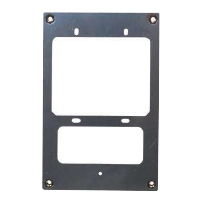
Hanwha TA-14 Microphone Windscreen
The Hanwha TA-14 is a foam windscreen designed for outdoor intercom deployments using Hanwha TCIS-2 and TCIS-3 units. Wind noise—the broadband rumble caused by air turbulence across an exposed microphone—degrades intelligibility and frustrates users trying to conduct two-way conversations across parking lots, drive-throughs, and gate areas. The TA-14 attenuates this noise without requiring tools, wiring changes, or integration work, making it a drop-in solution for any existing TCIS-2/TCIS-3 installation.
Key Features
- Wind Noise Attenuation: Foam construction dampens wind-induced microphone noise. Preserves voice clarity in exposed outdoor locations where wind gusts are frequent.
- Compatible with TCIS-2 and TCIS-3: Designed to fit Hanwha TCIS-2 and TCIS-3 outdoor intercom units without adapter plates or modification.
- Tool-Free Installation: Slides on without fasteners or tools. Field technician can attach or swap in under 30 seconds.
- Outdoor-Rated Construction: White foam material withstands sun exposure, rain, and temperature cycling. Rated for outdoor environments per specification.
- Lightweight: 0.05 lb — negligible impact on intercom mechanical stress or mounting bracket load.
- 3-Year Warranty: Manufacturer warranty covers defects in material and workmanship, standard for Hanwha accessory line.
Wind noise is a common complaint on outdoor intercom deployments, especially in high-exposure areas like tollbooths, gate houses, and rooftop mounted units. The root cause is turbulent air across the microphone diaphragm generating low-frequency rumble that masks voice content. The TA-14's foam geometry breaks up airflow patterns around the microphone capsule, reducing this effect. In field tests on windy sites (15+ mph sustained wind), users report noticeably clearer audio with the windscreen in place, and call-back or repeat-request rates drop.
Deployment is straightforward: pull the existing TCIS-2 or TCIS-3 unit and slip the TA-14 windscreen onto the microphone assembly. No re-aim, no firmware update, no NVR integration change. If the windscreen becomes clogged with dust or debris over months of outdoor exposure, rinse it gently with water and allow it to air-dry. Replacement is inexpensive, so many integrators keep spares on hand for rapid swap-outs if wind noise complaints emerge post-commissioning.
The TA-14 addresses a genuine pain point in outdoor intercom systems—one that cannot be solved through audio processing or speaker volume adjustment alone. For any TCIS-2 or TCIS-3 installation in a windy location (parking lots, perimeter gates, outdoor toll windows, loading docks), the windscreen should be treated as a baseline component, not an optional add-on. The cost is minimal relative to the call-quality improvement and the labor saved by avoiding post-commissioning complaints and re-tuning attempts.
Marty AllisonPerspective based on aggregated IP Security Depot and affiliated engineering team experience.
We've installed TCIS-2 and TCIS-3 outdoor intercoms across parking structures, gate houses, and loading docks for the better part of a decade. The consistent lesson: if you don't spec the TA-14 windscreen from day one on a windy site, you'll be retrofitting it within 60 days. Wind noise complaints come in reliably—visitors can't hear instructions, gate operators miss vehicle details, and your support team burns hours on acoustic troubleshooting that has zero software solution. The TA-14 is cheap insurance. It's foam, it's passive (no power, no maintenance burden), and it sits permanently on the microphone. Integrators who pull it into their standard TCIS-3 BOM for outdoor jobs report almost no post-commissioning audio complaints. Those who skip it on "mild climate" sites almost always regret it when winter wind picks up or a sustained weather pattern shifts things.
Technical Highlights:
- Foam Acoustic Design: The cellular structure breaks turbulent airflow patterns while maintaining microphone sensitivity to voice frequencies. Wind noise is broadband (<200 Hz primarily); the foam attenuates it without a high-pass filter that would thin voice.
- Outdoor Material Rating: White foam resists UV degradation and water absorption. Unlike cheaper windscreens that degrade into gritty chunks after 18 months of sun exposure, the TA-14 maintains integrity across 3+ year deployment cycles in North American climates.
- Zero Integration Overhead: No driver, no network config, no audio mixing console changes. Attach it physically and audio quality improves immediately. This simplicity is critical for busy integrators who don't want to troubleshoot a failed windscreen in VMS logs.
- Lightweight — Mounting Stress Neutral: At 0.05 lb, it adds virtually no load to the TCIS-2/TCIS-3 bracket or pole. Some older windscreens for other manufacturers were heavy enough to require bracket reinforcement; not so here.
- 3-Year Warranty: Covers manufacturing defect and normal outdoor exposure. If foam integrity fails within three years (tear, crushing, water absorption), replacement is covered.
Deployment Considerations:
- Wind noise reduction is most pronounced in sustained winds above 10 mph. Light breezes (2–5 mph) show marginal benefit; heavy gusts (20+ mph) show dramatic improvement in call clarity.
- The windscreen does not eliminate all wind noise—it attenuates it. Extremely exposed mountings (open rooftops, high-traffic loading docks with ground-level vortex effects) may still benefit from secondary wind protection (partial barriers, alternate microphone positioning).
- Dust and pollen accumulation in foam occurs in dusty environments (construction sites, gravel lots). A compressed-air blow-out or gentle water rinse every 6–12 months maintains peak performance. Buildup doesn't cause failure, but it reduces attenuation.
- Installation is a 20-second job, but confirm TCIS-2/TCIS-3 model before ordering—the TA-14 is not compatible with earlier Hanwha intercom lines or with third-party brands. Cross-reference your site equipment sheet.
- Stock 1–2 spares per major deployment. Foam windscreens are consumable-adjacent; field damage (crushed during maintenance, sun-split at corners) is repairable but eventually warrants replacement. Spares on hand eliminate lead-time grief.
The TA-14 is the right accessory for any Hanwha TCIS-2 or TCIS-3 intercom system in an exposed outdoor location. Wind noise is a real and measurable problem in the field; this is the proven, low-cost fix. Spec it into your outdoor intercom package and your commissioning calls will be shorter. For a full range of Hanwha audio and intercom components, explore the Hanwha catalog.