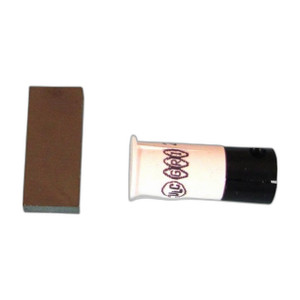
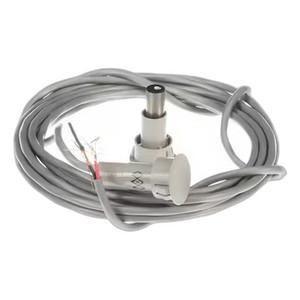
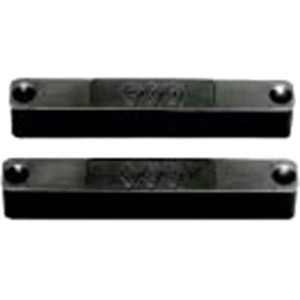
GRI 5065 Series 3/8" Recessed Magnetic Reed Contact
The GRI 5065 is a recessed magnetic reed switch contact engineered for concealed door position detection in access control and security systems. This component integrates directly into door frames and strike plates, delivering reliable switching feedback to door controllers and access control panels without visible protrusion. The 5065 addresses the most common commercial door-frame requirement: a 3/8-inch gap tolerance with a compact one-inch overall footprint.
Overview
Recessed contacts form the sensory backbone of networked access control — they tell your system whether a door is open or closed in real time. The 5065 uses proven magnetic reed switch technology, meaning no moving parts beyond a hermetically sealed switch that responds to magnet proximity. This design means virtually no maintenance cycle and predictable behavior across years of operation. The recessed form factor minimizes visual clutter in high-traffic areas like executive suites, conference centers, and secure storage zones where integrated aesthetics matter as much as functionality.
Installation happens directly into cavity-prepared door frames. The magnet mounts on the door leaf itself; the reed switch housing sits in the frame. When the door closes, magnetic flux triggers the switch, completing or breaking a circuit depending on your wiring. This architecture is standard across access control systems and integrates with strike controllers, relay modules, and monitoring dashboards using conventional low-voltage wiring.
Key Features
- 3/8-inch gap specification: matches the door-to-frame clearance found in roughly 95% of commercial installations, eliminating custom cavity cutting and reducing installation labor.
- One-inch overall dimension: small enough to fit standard strike plate cavities and retrofit applications without frame modification.
- Magnetic reed switch technology: sealed contact with no moving parts — no friction wear, no lubrication needed, no field maintenance beyond initial installation verification.
- Normally-open or normally-closed configuration: wiring flexibility depending on whether your system requires a closed circuit when the door is closed or open. Magnet polarity and positioning control this behavior.
- Low-voltage operation: draws minimal current from standard access control circuits — no separate power supply, no strain on panel capacity.
- Consistent switching across temperature ranges: typical indoor building environments (roughly 32°F to 90°F / 0°C to 32°C) present no performance drift; switch action remains predictable year-round.
- Extended cycle life: reed contacts rated for hundreds of thousands of open/close cycles, typical for high-traffic doors in retail, office, and institutional buildings.
- Direct frame or strike-plate integration: recessed mounting reduces surface protrusion, minimizing snagging hazards and maintaining clean door aesthetics.
Integration & Compatibility
The 5065 connects to any access control panel or strike controller using standard supervised or unsupervised door position circuits. Most systems treat the contact as a simple switch input — open or closed — without requiring special drivers or protocols. Integrators should verify cavity dimensions in target door frames and confirm magnet placement clearances (typically ±1/2 inch from the reed switch centerline) to ensure reliable triggering. Pre-installation site assessment prevents alignment issues that could cause intermittent switching.
Application Suitability
The 5065 is optimal for deployments where concealment and standard door dimensions align: executive offices, conference rooms, secure records storage, server closets, and any facility prioritizing integrated appearance. Integrators should avoid selecting the 5065 for applications requiring different gap tolerances — non-standard frame cavities typically require a different model from the GRI product family. Verify final cavity preparation against the datasheet to confirm proper mounting depth and reed switch exposure before closing walls or trim.
Frequently Asked Questions
Q: Does the GRI 5065 work with wireless access control panels?
A: No. The 5065 is a wired contact switch designed for direct integration into hardwired access control circuits. Wireless systems require wireless door sensors or gateways to transmit position data back to a controller.
Q: Can the 5065 be installed in a metal door frame?
A: Yes, but magnet placement becomes more critical. Metal frames can affect magnetic field distribution. During installation, test magnet position carefully to confirm reliable switch closure across the full door swing.
Q: What happens if the door-frame gap is wider than 3/8 inch?
A: The magnet will be too far from the reed switch, and the contact may fail to trigger reliably or not trigger at all. Measure actual frame gaps before ordering; non-standard gaps require a different model or shim adjustment.
Q: Is the 5065 suitable for outdoor doors?
A: No. The 5065 is rated for typical indoor building environments. Outdoor or high-moisture applications require IP67-rated or sealed variants designed for weather exposure.
Q: Can I install the 5065 in a retrofit without removing the door?
A: Yes, if the frame cavity already exists or can be routed without door removal. Many retrofit projects remove the door temporarily to access frame cavities safely and ensure proper alignment.
Ted PerryPerspective based on aggregated IP Security Depot and affiliated engineering team experience.
The GRI 5065 sits at the intersection of simplicity and reliability — a recessed reed contact that's been the architectural standard in commercial access control for decades. The 3/8-inch gap specification isn't arbitrary; it's the dimension that covers the overwhelming majority of North American door frames, which means you're unlikely to spend time custom-cutting cavities or shimming during retrofit projects.
Technical Highlights:
- Magnetic reed switch hermetically sealed: No moving parts means no friction wear, no need for lubrication, and predictable switch action across hundreds of thousands of door cycles. A 5065 in a conference room with moderate traffic will outlast multiple access control panel generations.
- One-inch overall footprint: Tight enough to fit standard strike-plate cavities without extensive frame modification. This is the practical advantage — retrofits finish faster and cost less when you're not expanding cavities or fabricating custom housings.
- Configurable normally-open / normally-closed: Magnet positioning controls circuit state. This flexibility lets integrators match the 5065 to different panel architectures (some panels prefer closed contacts for secured doors; others prefer open). Test magnet placement on site before finalizing mounting.
Deployment Considerations:
- Verify actual door-frame gap before ordering. A 7/16-inch or 1/2-inch gap will reduce magnetic coupling and cause intermittent triggering. Measure at three points (top, middle, bottom) because frame sag is common in older buildings.
- Metal door frames demand extra attention during magnet placement. Ferrous metal can distort the magnetic field, potentially moving the trigger point beyond the designed range. Install, test, and adjust magnet position if needed before closing walls.
- The 5065 is purely a position sensor — it provides no weatherproofing, no tamper detection, no access-control intelligence on its own. It's the input device that feeds a larger system. Pair it with appropriate door controllers and monitoring logic downstream.
Position the 5065 in standard commercial interior deployments: office suites, secure storage, conference centers, and institutional buildings where gap tolerances align and maintenance cycles are light. Skip it for outdoor applications, non-standard frame geometries, or systems requiring wireless transmission — each of those constraints points to a different GRI model or family.