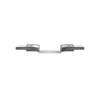
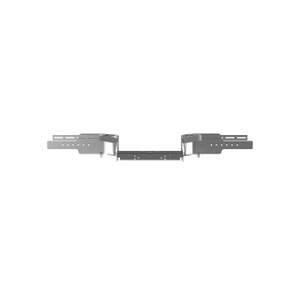
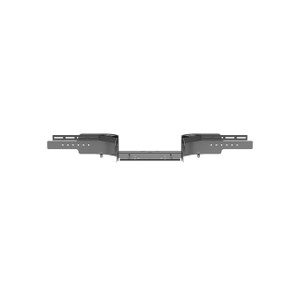
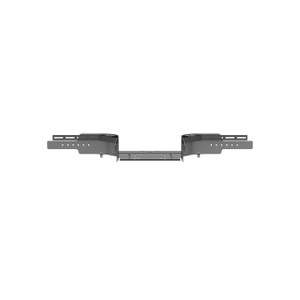
Panduit PWBPF2X24WH Wire Basket Tee-Intersection Bracket
The Panduit PWBPF2X24WH tee-intersection bracket creates compliant, load-rated 90-degree branch connections in wire basket cable tray runs. Powder-coated steel construction delivers UL-classified equipment grounding per NEC 392.3(C) and 392.7(B), eliminating the need for separate bonding jumpers at tee junctions. When your data center, telecom closet, or industrial facility requires a perpendicular cable route off the main tray run, this fitting mechanically joins three basket sections while maintaining continuous grounding path and structural integrity under load. White finish integrates with Panduit's PanelMax and FiberRunner systems for consistent ceiling aesthetics in exposed-infrastructure environments.
Key Features
- UL-classified equipment grounding conductor per NEC 392.3(C) and 392.7(B) — satisfies code without auxiliary bonding wire
- Powder-coated steel construction resists corrosion in climate-controlled and light-industrial spaces
- 90-degree tee geometry supports perpendicular branch routing from main cable tray backbone
- White finish matches Panduit wire basket tray systems for cohesive overhead installations
- Mechanical splice design distributes load across the intersection, preventing sag at junction points
Wire basket tray systems require code-compliant fittings at every direction change to preserve grounding continuity and load rating. This tee bracket addresses the specific case where a branch run intersects the main pathway at 90 degrees — common in server rows feeding perpendicular equipment racks, horizontal distribution feeding vertical cable managers, or main hallway tray serving individual equipment rooms. The UL classification confirms that the bracket itself functions as an equipment grounding conductor when properly installed, which means your tray system maintains a continuous low-impedance ground path without supplementary bonding jumpers. Inspectors verify this during rough-in; using non-classified fittings typically triggers a correction notice and delays occupancy. Powder-coated steel withstands the humidity swings and airborne particulates typical of telecom closets and light manufacturing areas, while the white finish keeps the installation visually clean in spaces with open ceilings or customer-facing areas.
Install workflow: mechanically fasten the bracket to the ends of three basket tray sections (one inline, two forming the branch), verify metal-to-metal contact at all splice points, and torque fasteners per Panduit's installation guide to achieve the published load rating. The bracket's rigid steel frame prevents the basket weave from deforming under cable weight, which is critical when the tee carries heavy copper trunk cables or dense fiber bundles. In retrofit scenarios, measure existing tray width and confirm compatibility with Panduit's wire basket family before ordering — mixing manufacturers at fittings often creates gaps that fail inspection or reduce load capacity. Pair with Panduit's wire basket straight sections, vertical risers, and radius bends to build a complete pathway system that meets NFPA 70 (NEC) Article 392 and BICSI TDMM standards.
NEC Section 392.7(B) explicitly permits cable tray systems to serve as equipment grounding conductors when all fittings meet UL listing requirements and installation follows manufacturer torque specs. This bracket's UL classification closes that compliance loop at tee intersections, ensuring your installation passes inspection on the first walk-through and delivers reliable grounding for the life of the facility. For mission-critical environments where pathway integrity directly impacts uptime — data centers, hospitals, financial trading floors — using code-compliant, manufacturer-matched fittings is the difference between a system that works and one that fails audit.