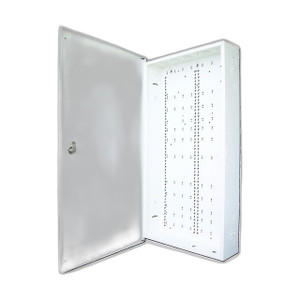
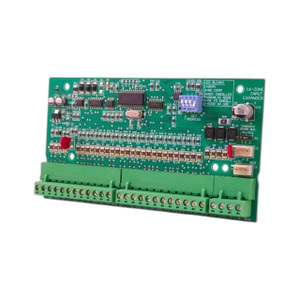
ELK Products ELK-SWD1 Structured Wiring Door
Overview
The ELK-SWD1 is a structured wiring door solution engineered for access control installations where credential flexibility and reader diversity matter. Rather than forcing a single authentication standard across your deployment, the ELK-SWD1 accommodates multiple reader types and mixed credential formats — meaning you can deploy proximity cards in one area, biometric readers in another, and mobile credential systems elsewhere without architectural rework. This matters in real deployments: warehouses expanding across phases, enterprises integrating newly acquired facilities, or environments where different user populations require different authentication methods.
Key Features
- Multi-Reader Support: The ability to integrate multiple reader types in a single door frame eliminates the need to standardize credentials across your entire facility. Deploy RFID readers, keypads, card readers, and biometric systems on the same access point without infrastructure conflicts — a significant simplification for mixed-credential environments.
- Mixed Credential Format Compatibility: Support for varied credential types (proximity, smart card, mobile, biometric) means you're not locked into a single vendor's ecosystem. This flexibility reduces vendor lock-in and allows phased credential migration without requiring door replacement.
- Standard Access Control Protocol Integration: The ELK-SWD1 (often searched as ELK SWD1) works with standard access control protocols, enabling integration with enterprise access control management systems, visitor management workflows, and third-party analytics platforms without custom development.
- Scalable Credential Management: Multi-reader configuration supports user populations with different security profiles — contractors may use temporary proximity cards while full-time employees use smart cards or mobile credentials, all managed from a centralized access control panel.
- Simplified Retrofit Installations: Structured wiring design minimizes field rewiring, reducing labor cost and installation time when retrofitting into existing door frames. This is particularly valuable in active facilities where downtime carries operational cost.
- Diverse Security Environment Deployment: Whether you're covering retail access points, warehouse loading docks, data center corridors, or office areas, the ability to deploy the same door hardware with different reader configurations means faster procurement and standardized maintenance across mixed-use facilities.
Integration and Compatibility
The ELK-SWD1 integrates with standard access control protocols, making it compatible with enterprise access control systems and diverse third-party platforms. This protocol-level compatibility means you can configure the door within your existing access control architecture — no separate subsystem, no bridging infrastructure required. Multi-reader configurations allow installers to provision different authentication methods per user role without hardware substitution.
Deployment Considerations
The structured wiring approach prioritizes credential flexibility over single-reader optimization. If your deployment requires a simple single-credential standard (all proximity, all smart card), a dedicated single-reader door may be more cost-effective. However, if your facility spans multiple security zones, tenant spaces, or user populations with different authentication requirements, the credential diversity and reader flexibility of the ELK-SWD1 delivers real operational simplification.
Confirm your access control system's protocol support (standard access control integration) before final specification. Validate that your existing panel or management platform can provision and audit mixed-credential readers on the same door hardware.
Frequently Asked Questions
Q: Can I integrate the ELK-SWD1 with my existing access control system?
A: Yes — the ELK-SWD1 supports standard access control protocols and is designed for integration with enterprise access control management systems. Verify protocol compatibility with your specific access control platform before deployment.
Q: Does the ELK-SWD1 support mobile credential readers?
A: The ELK-SWD1 supports mixed credential formats, which can include mobile credential readers provided your access control system and reader hardware support that standard. Consult your access control vendor for specific mobile credential compatibility.
Q: Can I use different reader types on a single ELK-SWD1 door?
A: Yes — multi-reader configuration is a core capability of the ELK-SWD1. You can deploy proximity, smart card, biometric, or keypad readers on the same door frame.
Q: Is the ELK-SWD1 suitable for outdoor environments?
A: The ELK-SWD1 is specified as a structured wiring door solution; environmental rating data is not included in available documentation. Confirm outdoor suitability and weatherproofing requirements with the manufacturer or your integrator.
Q: What access control panel brands does the ELK-SWD1 work with?
A: The ELK-SWD1 integrates with systems supporting standard access control protocols. Specific panel compatibility depends on your system's protocol support — verify with your access control platform before specification.
Q: Can the ELK-SWD1 be installed in existing door frames?
A: The structured wiring design is intended to minimize field rewiring, supporting retrofit installations. Confirm door frame compatibility and required modifications with your integrator or the manufacturer.
Ted PerryPerspective based on aggregated IP Security Depot and affiliated engineering team experience.
The ELK-SWD1 solves a specific integration problem: deployments where forcing a single credential standard across multiple zones creates operational friction. Multi-reader support means you're not designing your access architecture around a door's constraints — you're designing the door around your actual credential requirements. That's a meaningful distinction when you're integrating facilities with differing security postures or phasing in new authentication methods without wholesale hardware replacement.
Technical Highlights:
- Multi-Reader Architecture: Support for multiple reader types on a single door eliminates the need to standardize credentials globally. Proximity readers for visitors, smart card readers for employees, biometric for high-security areas — all on the same access point without separate hardware or protocol translation.
- Mixed Credential Format Support: Flexibility across credential types (proximity, smart card, mobile, biometric) reduces vendor lock-in and enables phased credential migration. You're not forced to rip-and-replace doors when you shift from proximity to mobile credentials.
- Standard Protocol Integration: Access control protocol compatibility means the ELK-SWD1 sits naturally in enterprise architectures. No custom bridging, no separate subsystems — the door integrates into your existing access management workflow.
Deployment Considerations:
- Multi-reader flexibility comes with a slight tradeoff: if you need a single, optimized reader implementation, a dedicated single-reader door may be more cost-effective and simpler to maintain.
- Verify your access control system's protocol support before final specification. Not all legacy panels handle mixed-reader configurations equally — confirm auditing, provisioning, and failover behavior with your platform vendor.
- Structured wiring minimizes field rewiring, but retrofit feasibility depends on existing frame geometry. Get a physical inspection before committing to retrofit deployment.
Typical fit: multi-facility enterprises integrating buildings with different security histories, warehouse operations with progressive automation (visitor proximity at gates, employee mobile at internal doors, biometric at critical storage), and tenant-mixed buildings requiring per-zone credential standards — anywhere forcing credential uniformity creates operational overhead that the ELK-SWD1 eliminates.