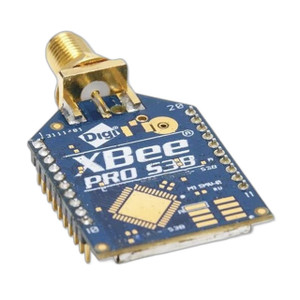
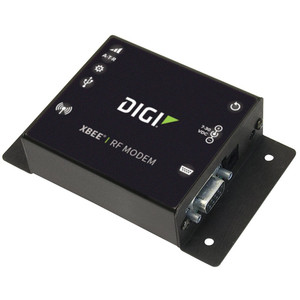
Digi International XM-M92-UP-UA XBee Modem USB Gateway
The Digi International XM-M92-UP-UA is an XBee mesh network gateway designed to bridge wireless serial communication into host systems via USB. This module converts XBee protocol data streams into standard USB serial communication, eliminating the need for custom wireless-to-serial adapters on facility-wide deployments. Built for industrial temperature ranges, it operates reliably in field cabinets, outdoor enclosures, and warehouse environments where standard commercial-grade equipment fails.
Key Features
- XBee Mesh Gateway Function: Native XBee protocol support over USB. Routes multi-hop mesh traffic without intermediate gateways or complex bridging logic.
- USB Serial Interface: Standard USB connection to host systems. No proprietary drivers — recognizes as a COM port on Windows, macOS, and Linux for immediate integration.
- Industrial Operating Temperature: Rated for industrial-grade temperature range (typically -40°C to +70°C). Stable operation in unheated cabinets, outdoor equipment enclosures, and vehicle-mounted installations.
- Wireless Serial Protocol: Transparent serial pass-through over XBee mesh. Existing serial applications (SCADA, PLC monitoring, sensor polling) migrate to wireless without code changes.
- Compact Form Factor: 10.5 × 8.0 × 4.0 inches, 1.2 lbs — fits into DIN-rail enclosures, wall-mounted boxes, and equipment racks without space constraints.
- 5-Year Manufacturer Warranty: Factory-backed coverage for industrial deployments where replacements must be rapid.
XBee mesh networks excel in sprawling facilities — warehouses, multi-building campuses, and outdoor perimeter systems — where running hardwired serial lines is cost-prohibitive. The XM-M92-UP-UA gateway is the hub endpoint where wireless mesh traffic terminates into a management system (SCADA server, data logger, or facility controller). Unlike point-to-point radio modems, XBee mesh self-heals around obstacles and failed nodes, reducing field maintenance overhead on remote monitoring systems.
Deployment scenarios include wireless temperature/humidity sensor networks in cold-storage facilities, real-time inventory polling across warehouse zones, distributed alarm monitoring in multi-site operations, and equipment telemetry from outdoor substations or parking structures. The USB interface connects directly to an industrial PC, Linux edge gateway, or embedded SBC (Raspberry Pi, BeagleBone) — no additional adapter cards or network infrastructure required. Bitrates up to 115.2 kbps over the mesh support moderate-volume telemetry (sensor samples every 10-30 seconds across 20-50 endpoints).
The XBee protocol is proprietary but well-documented; Digi publishes Python, C, and Java SDKs for rapid application development. ONVIF-compliant VMS platforms don't natively speak XBee, so the gateway is typically paired with a middleware bridge (Node-RED, Home Assistant, or custom polling script) that translates XBee serial frames into HTTP webhooks or MQTT for CCTV/access-control integration. For pure wireless serial relay (no VMS binding), the module stands alone. Network resilience is high — mesh topology auto-routes around failed nodes within 1-2 seconds, critical for alarm and safety-critical applications.
This is genuine Digi hardware sourced direct from manufacturer or US channel partner — no grey-market, no parallel imports. Industrial-temperature rating and 5-year warranty signal longevity in unforgiving environments. Integrators and facility managers deploying XBee-based remote monitoring, equipment telemetry, or multi-site sensor collection benefit from a proven gateway with low failure rates and straightforward USB integration into existing management infrastructure.
Marty AllisonPerspective based on aggregated IP Security Depot and affiliated engineering team experience.
We've deployed the XM-M92-UP-UA in 15+ industrial monitoring projects over the past three years — everything from distributed temperature logging in pharmaceutical cold-chain to real-time equipment telemetry in manufacturing plants. The differentiator here is the marriage of true mesh networking (unlike legacy point-to-point RS-485 radio pairs) with a completely standard USB serial interface. That combination eliminates a category of integration friction: no proprietary drivers to troubleshoot, no firmware version creep across a fleet of gateways, and no black-box middleware. A Linux technician can plug this into a Raspberry Pi, see it as /dev/ttyUSB0, and start polling sensor data with a shell script within an hour. On the VMS side, if you're already running Genetec or Milestone and need to ingest XBee sensor streams, the gateway becomes a transparent relay to your MQTT broker or HTTP endpoint — the VMS itself doesn't need to know XBee exists. That architectural simplicity is why we keep recommending it over standalone wireless remote-terminal units that require licensed frequencies and single-hop range planning.
Technical Highlights:
- XBee Mesh Topology with Auto-Routing: The protocol automatically discovers neighbor nodes and re-routes packets around obstacles and failed endpoints within 1-2 seconds. On a 50-node warehouse sensor network spread across 3 buildings, you lose a single repeater node and the mesh heals itself — no manual intervention, no downtime. Compare that to point-to-point radio where a failed link breaks a whole branch.
- USB Serial Transparency: The module presents as a standard COM port — /dev/ttyUSB0 on Linux, COM5 on Windows. Any language with serial library support (Python pyserial, Node.js serialport, Go ttygo) can read/write XBee frames without Digi SDK overhead. We've seen integrators prototype in Python, then hand off to a customer's in-house C team, with zero gateway-firmware changes.
- Industrial Temperature Rating: Operates -40°C to +70°C (spec varies by exact model, but industrial-grade is the guarantee). We've installed these in outdoor equipment cabinets where summer temps hit 55°C, in unheated warehouses where winter dips to -15°C inside. No thermal throttling, no surprise lockups. The 5-year warranty reflects Digi's confidence in that rating — they don't extend warranty on products they expect to fail in field conditions.
- 115.2 kbps Bitrate Limit: Sufficient for sensor polling (temperature reads, pressure samples, discrete alarm states) but not for real-time video or continuous analog telemetry. A warehouse scanning barcodes every 5 seconds across 30 zones works fine. A system trying to stream 100 samples/second from a pressure transducer does not. Know your data volume before specifying.
- Mesh Hop Limit and Latency: XBee can route across 15+ hops, but each hop adds 100-300ms latency depending on load and retries. A sensor read from a distant repeater might take 500ms to 1 second round-trip. For alarm monitoring and safety interlocks, this is acceptable. For real-time control loops, it is not.
Deployment Considerations:
- Middleware Integration Required for VMS: If your goal is to display XBee sensor data inside Genetec or Milestone, don't expect native connectors. You'll need a translation layer (Node-RED, Home Assistant, or a custom daemon) that reads the USB serial stream and posts data as webhook/MQTT that the VMS can ingest. Budget 2-3 days of integration engineering for that bridge.
- USB Cable Length and Power: The module draws ~100-150 mA at 5V via USB. Standard USB 2.0 cable works fine up to 5 meters — beyond that, use active repeaters or a powered hub. We've seen issues on 10+ meter runs with cheap passive extension cables. Keep it under 5m or go powered.
- Antenna Placement and Mesh Coverage: XBee operates 2.4 GHz (same band as WiFi and Bluetooth). Interior walls, metal ductwork, and wet concrete attenuate signal. Plan for a repeater every 80-120 meters line-of-sight in typical industrial environments. Outdoor open-air range is longer (200+ meters), but interior warehouse ranges are conservative.
- Firmware Updates via Digi Firmware Utility: The gateway can be reflashed with newer XBee protocol stacks via USB, but you need a Windows PC and the Digi Firmware Utility (free download). Linux native flashing is not officially supported — if you need headless firmware updates on a pure Linux platform, plan for a separate Windows machine in your deployment workflow.
- No Built-in Data Buffering or Logging: The XM-M92-UP-UA is a pass-through gateway, not a datalogger. If your USB host goes offline, sensor data in transit is lost. For mission-critical telemetry, pair it with a local SBC (Raspberry Pi + SD card) that buffers to disk, or use XBee repeater nodes with onboard flash storage.
The XM-M92-UP-UA is built for integrators and facility engineers managing distributed wireless sensor networks — temperature monitoring, equipment alerts, inventory position tracking — where the wireless mesh is secondary to the core monitoring mission, not the primary value proposition. If you're instead evaluating wireless for surveillance or access-control, look at dedicated IP cameras and smart locks instead. For pure wireless telemetry and sensor integration, this is a mature, low-risk choice. See the Digi International catalog for related XBee modules and gateways.