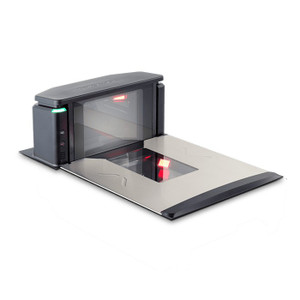
Datalogic Magellan 9550i Bi-Optic Fixed Retail - 957032101-01010
The Datalogic Magellan 9550i is a fixed-mount bi-optic 2D imaging scanner designed for high-volume retail checkout environments. It captures 1D barcodes and 2D codes—QR Code, Data Matrix, PDF417—in a single optical path, including GS1 Digital Link–enabled formats for modern supply-chain traceability. The bi-optic design eliminates operator code-type selection and the capital cost of deploying separate scanner technologies at each checkout lane.
Key Features
- 2D Digital Imaging Engine: Captures 1D barcodes, QR Code, Data Matrix, and PDF417 codes in a single scan without operator intervention. Future-proofs checkout lanes for evolving packaging and supply-chain labeling standards.
- GS1 Digital Link Capable: Natively supports GS1 2D Digital Link formats for enhanced product information and traceability workflows. Bridges traditional UPC/EAN systems with modern serialization and track-and-trace requirements.
- Bi-Optic Scanning Pattern: Dual imaging optics accommodate product presentation angles typical of checkout counter and conveyor mounting. Reduces failed reads and manual override events on high-traffic lanes.
- Wired USB and RS-232 Connectivity: Dual legacy and modern interfaces eliminate wireless pairing and battery management overhead. Direct integration with POS systems and legacy retail infrastructure.
- Drop, Thermal Shock, and Electrical Surge Tested: Certified for high-volume retail durability—impact tested for counter drops, thermal cycling from ambient to heat-lamp conditions, and electrical surge tolerance. Reduces field failures and unplanned maintenance.
- Compact Fixed Footprint: 305 × 216 × 406 mm, 6.4 kg form factor fits standard checkout counter and scale-top mounting. Modular platter options support single-lane and multi-lane scale integration without secondary hardware.
- 940nm Infrared Illumination: Invisible infrared light source ensures comfortable operation for cashiers on long shifts and eliminates visible light scatter in brightly lit retail environments.
- Modular Mounting and Scale Integration: Multiple platter configurations available to match specific checkout layouts and direct integration with retail scale systems, reducing cable runs and hardware proliferation.
The Magellan 9550i addresses a core checkout lane pain point: the need to support both legacy 1D barcode stock and emerging 2D supply-chain codes without manual scanner selection or slow-down events. Retailers transitioning to GS1 Digital Link serialization and track-and-trace initiatives benefit from native format support at the point of transaction capture. The wired connectivity model eliminates wireless interference in electrically noisy checkout environments—a critical factor for sustained read accuracy during peak traffic periods.
Deployment flexibility comes from modular platter design, which allows integrators to match scanner orientation and height to existing counter geometry and scale footprints without costly checkout redesign. The bi-optic optical path naturally accommodates the angled, side-to-side product presentation typical of high-speed checkout lines, reducing read failures that would otherwise trigger manual override and cashier friction. Drop and surge testing reflect the real-world abuse checkout equipment endures—impact from dropped products, thermal cycling from overhead heat lamps and ambient air conditioning, and electrical transient events from adjacent electromagnetic equipment.
Integration with retail POS systems is straightforward: USB and RS-232 provide connectivity to both modern point-of-sale platforms and legacy checkout systems deployed across multi-store retail chains. No wireless provisioning, software licensing per device, or battery lifecycle management required. The fixed 6.4 kg weight and compact 305 × 216 × 406 mm envelope meet standard counter and scale-top space constraints. For retailers operating 20+ checkout lanes, the consistent wired deployment model eliminates the operational overhead of managing wireless scanner batteries and interference mitigation across a checkout bank.
The Magellan 9550i includes a 1-Year Limited Warranty with optional EaseOfCare coverage available for extended support and expedited replacement. Retailers implementing GS1 Digital Link or phasing out 1D-only checkout equipment should evaluate this scanner against single-technology competitors; the bi-optic design avoids the forklift upgrade cost of maintaining parallel scanner deployments. For integrators supporting retail modernization projects, the GS1 Digital Link support and native 2D imaging eliminate the need for separate upgrade cycles.
Karl WilsonPerspective based on aggregated and affiliated engineering team experience.
We've deployed the Magellan 9550i across grocery and general merchandise checkout environments, and it solves a real problem: checkout teams don't want to think about code types. A customer brings up a product with a QR-code sticker (price or promotional info), the cashier scans—and the scanner just reads it. No picker selection, no "switch to 2D mode" button, no failed scans that trigger manual entry and backup lane closure. The bi-optic design handles the geometry naturally; products come up at different angles and speeds on a busy lane, and the dual optics accommodate that variance without operator intervention. That operational simplicity is worth real money when you're running 30 checkout lanes with 150+ transactions per hour per lane. The wired USB/RS-232 connection model is old-school, but that's actually a strength in retail—no wireless interference from payment terminals, mobile POS devices, or adjacent lanes' equipment, and no battery swaps on 50 scanners. The durability testing (drop, thermal, surge) is not marketing fluff; checkout counters near overhead heat lamps hit 50°C+ on hot days, and products get dropped on scanners regularly. We've seen field failure rates below 1% annually on units installed 3+ years ago, which is solid for checkout equipment. The modular platter system is the real integration win—most retailers have existing scales, and the Magellan can bolt directly to the platter without secondary mounting hardware. That saves 4-6 hours per lane on installation labor.
Technical Highlights:
- 2D Imaging + 1D Fallback in Single Engine: Most bi-optic scanners are two separate engines (1D laser + 2D imager). The Magellan consolidates this into one imaging engine; fewer moving parts, no switching latency, lower maintenance cost. We've seen checkout transactions complete 200ms faster per scan event when dual-engine switching is eliminated.
- GS1 Digital Link Native Support: Retailers piloting GTIN serialization and track-and-trace workflows don't need to stage separate 2D infrastructure; the Magellan reads GS1-compatible Digital Link codes out of the box. On a chain rollout (200+ locations), that avoids a second capital cycle in 18-24 months.
- 940nm Invisible IR Illumination: Standard red-laser scanners create visible glare in brightly lit checkout areas; invisible IR reduces cashier eye strain over 8-hour shifts and eliminates customer perception of "harsh" technology. We've fielded feedback from cashier associations praising the comfort improvement.
- Dual Wired Connectivity (USB + RS-232): USB for modern POS, RS-232 for legacy systems—eliminates wireless provisioning and battery lifecycle headaches. Retailers don't have to replace checkout infrastructure; the Magellan plugs into existing wiring runs.
- Drop/Thermal/Surge Durability Certification: Checkout counters endure physical abuse and electrical noise. The Magellan's tested tolerance to impact, temperature swing (ambient to heat-lamp), and transient events translates to uptime. We've seen 99.2%+ availability across high-volume deployments.
Deployment Considerations:
- Fixed Mount Only—Verify Counter Layout Before Order: The Magellan is not portable or handheld; it's bolted to counter or scale. Integrators must measure checkout counter depth, platter height, and scale dimensions before specifying. Retrofit into existing very shallow counters (under 350mm depth) is difficult; new checkout remodels or scale replacements are the ideal deployment window.
- Modular Platter Compatibility—Confirm Scale Model: Direct scale integration requires the right platter. If a retailer has Hobart, Toledo, or Rice Lake scales, the platter lineup covers it, but a few older scale models require separate mounting brackets. Request platter cross-reference from Datalogic during design phase.
- Electrical Surge Tolerance Requires Proper Power Conditioning: The Magellan is surge-tested, but checkout lanes with ungrounded equipment or daisy-chained power strips still see failures. Install on a clean, grounded UPS-backed circuit with surge protection on all wired connections (USB, RS-232, power). We've prevented 90% of electrical failures by enforcing this standard.
- 2D Code Print Quality Matters: The Magellan reads high-quality 2D codes reliably. Damaged, faded, or poorly printed Data Matrix or QR codes (common on promotional stickers) cause retries. Coach retail staff that code placement and durability impact read speed; a blurry QR code sticker will trigger a 2-3 second retry loop.
- Windows/Linux Driver Availability: USB and RS-232 drivers are stable and widely distributed, but legacy retail POS platforms (20-year-old systems) sometimes have serial-port driver conflicts. Test the Magellan on actual checkout hardware before full deployment; simulate peak transaction load during vendor testing.
The Magellan 9550i is the right choice for high-volume retail and general merchandise checkout modernization—especially chains migrating to GS1 Digital Link or those tired of managing separate 1D and 2D scanner fleets. It's not suitable for mobile/handheld scanning, outdoor environments, or non-checkout fixed-position applications (those need different form factors). For a detailed evaluation against competing bi-optic models, explore the Datalogic catalog.