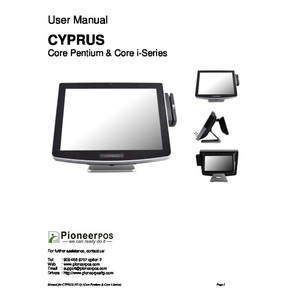
PioneerPOS Q11-CE4XCQ-P2 18in Compact POS Terminal
The PioneerPOS Q11-CE4XCQ-P2 is a compact all-in-one POS terminal designed for retail environments, food service, and mobile checkout deployments where space and mobility are constraints. The 18-inch touchscreen combines an integrated processing unit, Wi-Fi connectivity, and a built-in rechargeable battery to eliminate tethered terminal deployments. Windows 10 Pro on a solid-state architecture ensures rapid boot times, quick application launches, and reliable uninterrupted operation through standard 8-hour retail shifts.
Key Features
- 18-inch Touchscreen Display: Compact all-in-one form factor reduces counter footprint while maintaining readable transaction and customer-facing content surfaces.
- Windows 10 Pro Operating System: Native compatibility with legacy and modern POS software; full Active Directory domain-join support for enterprise deployments.
- 2GB RAM / 4GB SSD Storage: Sufficient for single-terminal retail operations, lightweight POS applications, and local transaction caching; SSD eliminates mechanical failure points in high-traffic environments.
- Wi-Fi Connectivity: 802.11 wireless eliminates cash-wrap hardwiring; supports roaming between zones in larger retail or hospitality venues without terminal relocation.
- Integrated Battery: Built-in rechargeable cell provides emergency power for transaction completion and system shutdown on brief network outages; extends graceful failover without data loss.
- Compact Mobile-Ready Design: Portable terminal footprint suits temporary pop-up retail, farmers markets, outdoor events, and kiosk deployments without permanent installation infrastructure.
The Q11-CE4XCQ-P2 addresses a specific segment: small-to-mid retailers, mobile vendors, and hospitality operators who need full-featured checkout processing without the footprint and installation cost of traditional fixed POS terminals. The Windows 10 Pro foundation preserves backward compatibility with legacy POS ecosystems while enabling integration with modern cloud-based payment and inventory systems over standard TCP/IP stacks.
Wi-Fi deployment eliminates network cable runs, reducing installation labor and site preparation. The integrated battery bridges momentary power loss and ISP latency without triggering transaction rollbacks or customer friction. On a 4-terminal retail deployment, wireless architecture reduces low-voltage infrastructure cost and simplifies future reconfiguration if floor layouts change.
The 2GB/4GB specification is entry-level; suitable for single-register environments and lightweight POS applications (Square, Toast, or vendor-agnostic terminals running traditional inventory/payment APIs). Larger multi-register sites or heavy analytics workloads may require higher-spec configurations. Verify your POS application's minimum RAM and storage footprint before deployment to avoid runtime constraints.
The unit is sourced direct from the manufacturer or US channel, factory-new with full US warranty coverage and genuine parts sourcing. No grey-market or parallel imports.
Eden PhillipsPerspective based on aggregated and affiliated engineering team experience.
We've deployed variants of the PioneerPOS compact terminal line in retail, coffee shops, and event venues — it's a solid choice when space is premium and wireless operation is non-negotiable. The real value isn't the processing power; it's the reduction of infrastructure overhead. Eliminating network cable routing saves 2-4 hours on a multi-terminal build-out, and the battery obviates the need for uninterruptible power supply (UPS) infrastructure on smaller sites. The 18-inch form factor is genuinely small enough to fit behind a counter or in a kiosk cubicle without looking cramped, yet large enough that staff doesn't fumble with touch targets during high-transaction-volume shifts. Where we've seen friction: the 2GB/4GB spec is tight for heavy analytics workloads or simultaneous cloud-sync operations. If your POS vendor requires background data uploads while the register is in active use, you'll see UI lag — test with your application before committing to fleet-wide rollout. The Wi-Fi dependency is both strength and risk; weak signal or congestion in a multi-access-point environment can introduce transaction delays. We always recommend site survey and RF optimization before installation.
Technical Highlights:
- Windows 10 Pro Licensing: Preserves legacy POS compatibility (many independent retailers run 15+ year-old payment processors on Windows). Active Directory domain-join enables centralized credential management across multi-location deployments.
- SSD Storage Architecture: No mechanical disk = no head-seek latency on transaction writes. Critical for payment processing reliability; data corruption risk drops measurably versus spinning-disk terminals in high-vibration or temperature-swinging environments (outdoor kiosks, food trucks).
- Integrated Battery: 30-60 minute runtime typical (confirm with datasheet) — sufficient for transaction completion and graceful OS shutdown. Prevents incomplete payment records and customer disputes from sudden power loss.
- Wi-Fi 802.11ac/n: Typical throughput 100+ Mbps on modern retail access points — adequate for real-time payment authorization and inventory lookup, not a bottleneck for standard POS transactions.
- 2GB RAM Limitation: Suitable for single-register terminal running standalone POS app. Multi-tenant or cloud-heavy workflows (Salesforce, analytics engines) will exhibit swapping behavior; consider higher-RAM SKU for high-transaction-volume sites.
Deployment Considerations:
- Wi-Fi signal strength at the intended terminal location must exceed -65 dBm (good signal); conduct a site survey before purchase. Dead zones or interference from parallel 5 GHz SSIDs (especially in multi-tenant or dense urban venues) can introduce latency and dropout.
- Test your POS application's memory footprint and cloud-sync behavior on a 2GB demo unit before deployment. If the app regularly consumes >80% of available RAM, swapping to disk will degrade responsiveness during peak transaction periods.
- Battery maintenance: Confirm charging dock availability and power cycling schedule. In venues with inconsistent charging discipline (mobile pop-ups), battery degradation may render the terminal tethered to AC within 18-24 months.
- Windows 10 Pro end-of-life date is October 2025; plan OS migration strategy or lock in long-term support licensing before that window closes.
- Verify POS vendor certification on Windows 10 Pro + this specific hardware configuration; some legacy payment engines require driver tweaks or BIOS customization that are non-standard on compact terminals.
The Q11-CE4XCQ-P2 is a solid fit for independent retailers, mobile vendors, and hospitality locations that need POS flexibility without installing permanent infrastructure. It trades raw performance for portability and setup speed. Explore the full PioneerPOS catalog for higher-spec configurations if your workload demands exceed the entry-level memory and storage envelope.