
Speco Technologies N128NR8TB vs Speco Technologies N128NR: Specification Comparison
Both the Speco Technologies N128NR8TB and N128NR are 128-channel 4K NVR units from the same manufacturer, targeting enterprise and large-site IP camera deployments. This comparison examines the three dimensions buyers weigh most heavily when choosing between them: storage capacity and configuration flexibility, analytics depth and resolution ceiling, and power, environmental, and mounting considerations. Neither unit is a camera or accessory — both are rack-mount network video recorders designed for the same channel tier and codec stack.
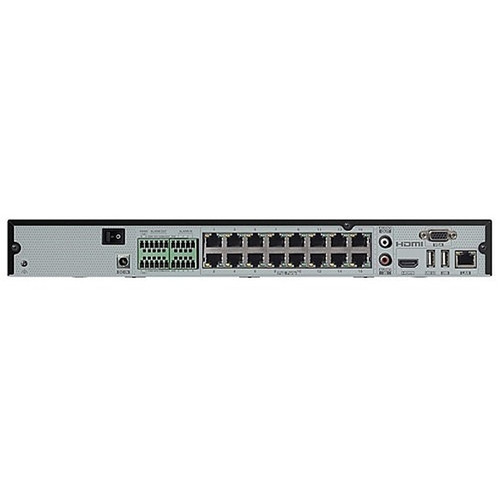
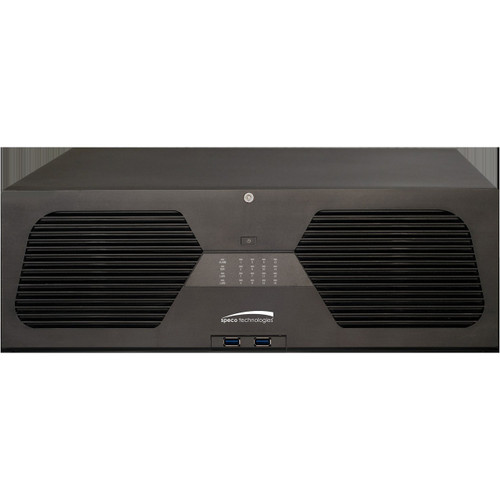
In This Guide
- Which NVR gives you more storage capacity and configuration flexibility?
- Which NVR supports higher resolution inputs and more specific analytics functions?
- How do the two NVRs differ in power delivery, operating environment, and physical installation?
- Which should you choose: the N128NR8TB or the N128NR?
- Side-by-Side Specs
- FAQ
Which NVR gives you more storage capacity and configuration flexibility?
The N128NR8TB ships with 8TB of pre-installed storage in a configuration that is not further described in the provided specs — bay count is not disclosed for this model. The N128NR, by contrast, arrives with no pre-installed drives but offers 16 SATA HDD bays, giving integrators direct control over drive selection, capacity per bay, and RAID configuration. For a 128-channel 4K deployment, total raw storage potential is determined by drive count multiplied by drive capacity; with 16 bays the N128NR can, depending on drive size chosen, substantially exceed the N128NR8TB's fixed 8TB.
Buyers who need a ready-to-record appliance with zero procurement complexity may prefer the N128NR8TB's bundled 8TB. Buyers managing retention-day SLAs across 128 4K feeds will almost certainly find 8TB insufficient and will need to evaluate the N128NR's 16-bay expandability — or external NAS/SAN — more seriously. Drive type (SATA HDD) is confirmed only for the N128NR; the N128NR8TB's storage interface spec is not provided.
Which NVR supports higher resolution inputs and more specific analytics functions?
On resolution, the N128NR8TB is specified at 4K UHD with a secondary callout of 5MP. The N128NR is specified at 20MP maximum (2592×1944 is actually a 5MP pixel count — note the spec lists both '20MP+' and '2592×1944', which are inconsistent; buyers should verify with Speco directly). Both units share H.265 and H.264 codec support, and the N128NR adds a 30fps frame rate figure that is absent from the N128NR8TB's spec sheet.
On analytics, the N128NR8TB lists an 'onboard integrated engine' without naming specific functions. The N128NR explicitly names three embedded analytics: line crossing detection, license plate recognition (LPR), and vehicle detection. For deployments where analytics drive evidentiary or operational value — access control correlation, parking enforcement, perimeter intrusion — the N128NR's named analytics are a concrete, verifiable differentiator. The N128NR8TB's analytics capability cannot be evaluated beyond the generic descriptor provided.
How do the two NVRs differ in power delivery, operating environment, and physical installation?
The N128NR specifies PoE (802.3af) power delivery to connected cameras and an operating temperature range of 14°F to 122°F (−10°C to 50°C). The N128NR8TB lists PoE+ (802.3at) — a higher power budget per port (up to 30W vs. 15.4W) — which matters when connecting cameras with built-in IR illuminators, pan-tilt-zoom motors, or onboard heaters. Operating temperature for the N128NR8TB is not specified in the provided data.
On mounting, both units support rack installation. The N128NR8TB additionally lists wall, ceiling, pole, pendant, and corner mount options — though it is atypical for a 128-channel NVR chassis to support those mount types; buyers should confirm with Speco whether those mount specs reflect the NVR body or an associated camera bundle. The N128NR8TB also specifies IK10 impact resistance and WDR and IR/940nm day-night specs, which are camera-class attributes and likely describe a bundled or referenced camera rather than the NVR enclosure itself. Warranty differs: N128NR8TB carries a 3-year term; N128NR carries a 2-year term.
Which should you choose: the N128NR8TB or the N128NR?
Our take: The N128NR is the stronger choice when integrators need explicitly named analytics functions, drive-selection flexibility, and a confirmed operating temperature range. Three concrete spec deltas: (1) Storage — the N128NR's 16 SATA bays offer scalable capacity versus the N128NR8TB's fixed 8TB, a significant gap on 128-channel 4K retention requirements. (2) Analytics — the N128NR names LPR, vehicle detection, and line crossing; the N128NR8TB lists only a generic 'onboard integrated engine,' leaving analytics capability unverifiable from spec alone. (3) PoE standard — the N128NR8TB specifies PoE+ (802.3at, up to 30W/port), which supports higher-draw cameras; the N128NR specifies PoE (802.3af, up to 15.4W/port). The N128NR8TB's longer 3-year warranty and PoE+ advantage may favor appliance-style deployments with pre-defined camera types. Platform qualifier: verify the N128NR's stated '20MP' resolution figure against Speco documentation, as the paired pixel dimension (2592×1944) resolves to approximately 5MP.
Side-by-Side Comparison
Spec-for-spec, from manufacturer data.
| Specification | Speco Technologies N128NR8TB | Speco Technologies N128NR |
|---|---|---|
| Recording Channels | 128 | 128 |
| Max Resolution | 4K UHD / 5MP (per spec) | 20MP+ / 2592×1944 (verify with Speco) |
| Video Codec | H.265, H.264 | H.265, H.264 |
| Frame Rate | — | 30fps |
| Pre-installed Storage | 8TB | — |
| Storage Bays | — | 16 SATA HDD bays |
| Analytics Functions | Onboard engine (functions not specified) | Line crossing, LPR, vehicle detection |
| PoE Standard | PoE+ (802.3at) | PoE (802.3af) |
| Operating Temperature | — | 14°F to 122°F (−10°C to 50°C) |
| Warranty | 3-year | 2-year |
| Housing Color | White | White |
| Mount Type | Rack (plus others — verify for NVR) | Rack |
| ONVIF | Yes | Yes |
| Two-Way Audio | Yes (built-in mic noted) | Yes (audio input noted) |
| Impact Rating | IK10 (verify applies to NVR) | — |
| Day/Night | IR; 940nm invisible; Day/Night | Day/Night |
Frequently Asked Questions
Which should you choose: the N128NR8TB or the N128NR?
The N128NR is the stronger choice when integrators need explicitly named analytics functions, drive-selection flexibility, and a confirmed operating temperature range. Three concrete spec deltas: (1) Storage — the N128NR's 16 SATA bays offer scalable capacity versus the N128NR8TB's fixed 8TB, a significant gap on 128-channel 4K retention requirements. (2) Analytics — the N128NR names LPR, vehicle detection, and line crossing; the N128NR8TB lists only a generic 'onboard integrated engine,' leaving analytics capability unverifiable from spec alone. (3) PoE standard — the N128NR8TB specifies PoE+ (802.3at, up to 30W/port), which supports higher-draw cameras; the N128NR specifies PoE (802.3af, up to 15.4W/port). The N128NR8TB's longer 3-year warranty and PoE+ advantage may favor appliance-style deployments with pre-defined camera types. Platform qualifier: verify the N128NR's stated '20MP' resolution figure against Speco documentation, as the paired pixel dimension (2592×1944) resolves to approximately 5MP.
Is the N128NR8TB or N128NR better for larger deployments where storage retention is critical?
The N128NR is better suited for high-retention deployments. Its 16 SATA HDD bays allow integrators to size storage precisely — installing high-capacity drives to meet specific retention-day targets across all 128 channels. The N128NR8TB ships with a fixed 8TB, which may be insufficient for extended 4K retention at full channel count. Bay count for the N128NR8TB is not disclosed in the available specs.
Does either NVR support license plate recognition out of the box?
Yes — but only the N128NR explicitly lists license plate recognition (LPR) as a named embedded analytic, alongside line crossing and vehicle detection. The N128NR8TB describes an 'onboard integrated analytics engine' without specifying which functions are included. Buyers requiring confirmed LPR capability should choose the N128NR or request a Speco feature matrix for the N128NR8TB before specifying it.
Which NVR is the better choice if my cameras require PoE+ power?
The N128NR8TB specifies PoE+ (802.3at), which delivers up to 30W per port and supports cameras with higher power draws such as PTZ units, IR illuminators, or cameras with onboard heaters. The N128NR specifies standard PoE (802.3af), limited to 15.4W per port. If your camera selection includes devices that exceed 802.3af limits, the N128NR8TB's PoE+ specification is the differentiating factor — subject to confirmation of port count and total PoE budget from Speco.
More NVR Comparisons
- Speco Technologies N128NR vs Speco Technologies N128NR32TB
- Speco Technologies N128NR vs Speco Technologies N128NR128TB
- Speco Technologies N128NR32TB vs Speco Technologies N128NR128TB
- Speco Technologies N128NR160TB vs Speco Technologies N128NR
- Speco Technologies N128NR160TB vs Speco Technologies N128NR32TB
- Speco Technologies N128NR30TB vs Speco Technologies N128NR
Get a Second Opinion on Your Camera Choice
Share your site layout, coverage goals, and budget. Our team will validate the camera selection, flag anything we would change, and recommend products that match the use case.