
QNAP VS-4112U-RP-PRO vs Speco Technologies H12HRN2TB: Specification Comparison
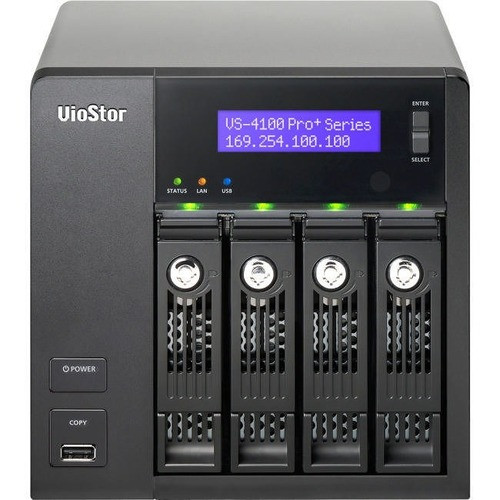
Both the QNAP VS-4112U-RP-PRO+US and the Speco Technologies H12HRN2TB are 12-channel video recorders aimed at small-to-mid enterprise surveillance deployments. The QNAP is a pure-IP NVR in a 1U rackmount chassis with four hot-swappable SATA bays, redundant power, and an open storage architecture. The Speco is a hybrid DVR supporting both analog TVI and IP cameras, arriving with 2TB pre-installed. Buyers weighing these models are typically deciding between a scalable IP-only rack platform and a hybrid appliance that preserves existing analog camera investments.
In This Guide
- Which recorder offers more headroom for channels and storage expansion?
- How do the two units compare in physical build, power design, and operating environment?
- Which unit offers broader camera compatibility, codec support, and compliance credentials?
- Which should you choose: the VS-4112U-RP-PRO or the H12HRN2TB?
- Side-by-Side Specs
- FAQ
Which recorder offers more headroom for channels and storage expansion?
The QNAP VS-4112U-RP-PRO+US supports up to 12 IP channels and provides four hot-swappable, lockable 3.5-inch SATA II / 2.5-inch SATA / SSD bays with no pre-installed drives — the buyer provisions storage to fit the deployment. Multi-server aggregation extends monitoring to 128 channels across servers. Remote playback supports up to 4 simultaneous views, and the local display supports up to 12-channel split layouts; remote monitoring extends to 42-channel layouts.
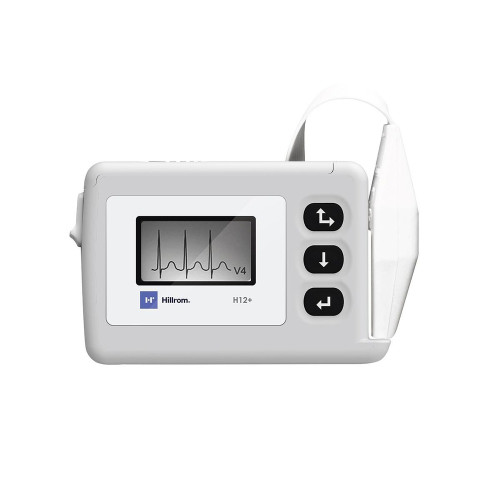
The Speco H12HRN2TB delivers 12 recording channels in a hybrid architecture: 8 ports are switchable between TVI analog and IP, and 4 ports are dedicated IP-only. It ships with a 2TB internal hard drive already installed. Internal storage bay count and expandability are not specified in the provided data. The recorder supports up to 5MP resolution on IP channels and TurboHD on TVI channels.
For pure storage scalability, the QNAP's four-bay open architecture gives installers direct control over drive selection and total capacity, but requires sourcing drives separately. The Speco's 2TB pre-installed drive provides immediate out-of-box readiness, though the maximum internal storage ceiling is not documented in the provided specifications.
How do the two units compare in physical build, power design, and operating environment?
The QNAP VS-4112U-RP-PRO+US is a 1U rackmount unit measuring 44 × 439 × 499 mm and weighing 7.63 kg net (12.1 kg gross). It draws 62W under operation and 40W in sleep mode, powered by a 100–240V AC, 50/60Hz universal input with a 250W redundant power supply — the redundant PSU is a direct resiliency differentiator for 24/7 mission-critical installations. Three internal cooling fans manage thermals. Operating temperature range is 0–40°C at 0–95% relative humidity (non-condensing). Certifications include CE, FCC, VCCI, and BSMI.
The Speco H12HRN2TB is a desktop/rack-convertible chassis in white, weighing 6.0 lbs (approximately 2.7 kg) and measuring 17.6 × 4.0 × 13.0 inches (approximately 447 × 102 × 330 mm). Power supply specifications, operating temperature range, humidity tolerance, fan count, and electrical certifications are not provided in the available specifications. Form factor appears to be a desktop/mini-tower profile rather than a standard 1U rack chassis.
The QNAP's redundant PSU and 1U rackmount form factor make it the better-documented choice for rack-based, high-availability environments. The Speco's lighter build suits desktop or wall-mount installations. For IT buyers requiring documented environmental operating ranges and power redundancy, only the QNAP provides those figures in the available spec data.
Which unit offers broader camera compatibility, codec support, and compliance credentials?
The QNAP VS-4112U-RP-PRO+US records exclusively from IP cameras and supports H.264, MPEG-4, M-JPEG, and MxPEG codecs. It records at up to 30fps at D1/VGA resolution and supports up to 8-megapixel cameras. Pre- and post-event recording buffers each reach 300 seconds. Built-in Intelligent Video Analytics include motion detection, missing object, foreign object, out-of-focus, and camera occlusion detection. Network connectivity is via dual Gigabit RJ-45 ports. ONVIF compatibility is not explicitly stated in the provided specifications.
The Speco H12HRN2TB is NDAA-compliant and certified for federal procurement and critical infrastructure use — a specification the QNAP data does not address. It supports TurboHD (TVI analog) and ONVIF-compatible IP cameras, recording at up to 5MP. Codecs listed are H.265, H.264, and MJPEG. H.265 support is explicitly noted to reduce storage and bandwidth consumption by approximately 40% versus H.264. Two-way audio with a built-in microphone is documented. ONVIF compliance is confirmed.
The Speco's hybrid TVI+IP architecture and explicit NDAA compliance give it a clear edge for deployments retaining analog cameras or operating in federal/regulated environments. The QNAP's multi-codec IP platform with onboard IVA and 8MP ceiling suits pure-IP greenfield deployments where advanced analytics and scalable multi-server monitoring matter more than analog backward compatibility.
Which should you choose: the VS-4112U-RP-PRO or the H12HRN2TB?
Our take: The VS-4112U-RP-PRO is the stronger choice when deploying a scalable, rack-integrated, pure-IP NVR infrastructure with high-availability requirements. Its redundant 250W power supply, four hot-swappable SATA bays, dual Gigabit LAN ports, and multi-server aggregation to 128 channels directly address enterprise continuity and capacity growth that the Speco does not document equivalent specs for. The Speco H12HRN2TB is the more capable option for hybrid TVI-plus-IP migrations: its 8 switchable TVI/IP ports preserve existing analog camera assets, NDAA certification opens federal and critical-infrastructure procurements, H.265 codec support cuts storage overhead by approximately 40%, and 2TB ships pre-installed for faster commissioning. Buyers running a greenfield IP-only rack environment with IVA requirements should favor the QNAP; buyers bridging legacy analog cameras into an IP system — or operating under federal compliance mandates — should favor the Speco.
Side-by-Side Comparison
Spec-for-spec, from manufacturer data.
| Specification | QNAP VS-4112U-RP-PRO | Speco Technologies H12HRN2TB |
|---|---|---|
| Recording Channels | 12 IP channels | 12 (8 TVI/IP switchable + 4 dedicated IP) |
| Camera Type Support | IP only | TVI analog + IP (hybrid) |
| Pre-installed Storage | None (buyer-supplied) | 2TB internal HDD |
| Storage Bays | 4 x 3.5" SATA II / 2.5" SATA / SSD (hot-swap) | — |
| Max Resolution | Up to 8MP | Up to 5MP |
| Video Codecs | H.264, MPEG-4, M-JPEG, MxPEG | H.265, H.264, MJPEG |
| Max Recording Frame Rate | Up to 30fps at D1/VGA | — |
| ONVIF Support | — | Yes |
| NDAA Compliance | — | Yes |
| Redundant Power Supply | Yes (250W, 100–240V AC) | — |
| LAN Ports | 2 x Gigabit RJ-45 | — |
| USB Ports | 5 x USB 2.0 | — |
| Form Factor | 1U rackmount | Desktop (17.6 x 4.0 x 13.0 in) |
| Dimensions | 44 x 439 x 499 mm | 447 x 102 x 330 mm (approx.) |
| Net Weight | 7.63 kg | 2.72 kg (6.0 lbs) |
| Operating Temperature | 0–40°C | — |
| Power Consumption (Operation) | 62W | — |
| Onboard IVA / Analytics | Motion, missing object, foreign object, out-of-focus, occlusion | — |
| Pre/Post-Event Buffer | Up to 300 sec each | — |
| Warranty | — | 3 years |
| Certifications | CE, FCC, VCCI, BSMI | — |
Frequently Asked Questions
Which should you choose: the VS-4112U-RP-PRO or the H12HRN2TB?
The VS-4112U-RP-PRO is the stronger choice when deploying a scalable, rack-integrated, pure-IP NVR infrastructure with high-availability requirements. Its redundant 250W power supply, four hot-swappable SATA bays, dual Gigabit LAN ports, and multi-server aggregation to 128 channels directly address enterprise continuity and capacity growth that the Speco does not document equivalent specs for. The Speco H12HRN2TB is the more capable option for hybrid TVI-plus-IP migrations: its 8 switchable TVI/IP ports preserve existing analog camera assets, NDAA certification opens federal and critical-infrastructure procurements, H.265 codec support cuts storage overhead by approximately 40%, and 2TB ships pre-installed for faster commissioning. Buyers running a greenfield IP-only rack environment with IVA requirements should favor the QNAP; buyers bridging legacy analog cameras into an IP system — or operating under federal compliance mandates — should favor the Speco.
Is the QNAP VS-4112U-RP-PRO+US or the Speco H12HRN2TB better for larger or growing deployments?
The QNAP has a documented advantage for scaling: its four hot-swappable SATA bays allow storage to be sized and expanded independently, and multi-server monitoring aggregates up to 128 channels across units. The Speco ships with 2TB pre-installed but its maximum storage expandability is not specified in the available data. For multi-site or growing channel counts on a pure-IP platform, the QNAP's architecture is better documented for that use case.
Can the Speco H12HRN2TB work with existing analog cameras, and does the QNAP support them too?
Yes — the Speco H12HRN2TB is specifically designed as a hybrid recorder: 8 of its 12 channels are switchable between TVI analog and IP, allowing existing TVI cameras to remain in service alongside IP cameras. The QNAP VS-4112U-RP-PRO+US is a pure-IP NVR and does not support analog TVI cameras based on the provided specifications. If retaining analog cameras is a requirement, only the Speco accommodates that.
Which recorder is suitable for federal government or NDAA-regulated projects?
The Speco H12HRN2TB is explicitly documented as NDAA-compliant and certified for federal procurement and critical infrastructure use. The QNAP VS-4112U-RP-PRO+US specifications provided do not include any reference to NDAA compliance. For projects with federal procurement mandates or NDAA Section 889 restrictions, the Speco is the only unit of the two with documented compliance.
Get a Second Opinion on Your Camera Choice
Share your site layout, coverage goals, and budget. Our team will validate the camera selection, flag anything we would change, and recommend products that match the use case.