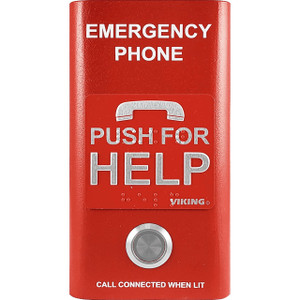
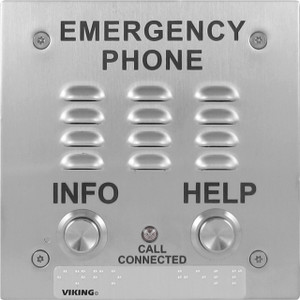
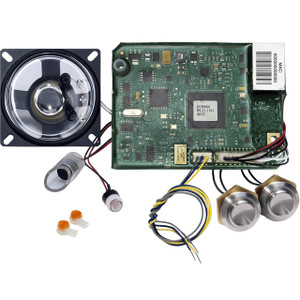
Viking Electronics E-1600-SS-IPEWP Compact ADA VoIP Emergency Phone with Enhanced Weather Protection
Overview
The Viking Electronics E-1600-SS-IPEWP is a compact, single-button VoIP emergency phone built for outdoor and harsh-environment installations where standard IP66 moisture resistance isn't enough. The Enhanced Weather Protection (EWP) rating extends humidity tolerance to 100% — meaning this unit survives direct condensation, driving rain, and the kind of relentless moisture exposure that kills standard units over time. If you're installing emergency call points at parking structures, transit platforms, loading docks, or exposed building perimeters in regions with freeze-thaw cycling, the E-1600-SS-IPEWP is the variant to specify.
Powered entirely via PoE (IEEE 802.3af) at under 4 Watts (Class 1), it eliminates local power runs — one Cat5e/Cat6 cable handles both power and voice. The brushed stainless finish resists corrosion and vandal abuse while meeting Viking Electronics ADA compliance requirements for emergency communication accessibility.
Key Features
- Enhanced Weather Protection (EWP) — up to 100% humidity: Standard IP66 units handle dust and rain jets but aren't rated for full condensation saturation. The EWP designation on this model raises humidity tolerance to 100% non-condensing-to-condensing conditions, making it the correct pick for unenclosed outdoor mounting where pooling moisture or freeze-thaw condensation is a real factor. The non-EWP stainless variant is fine for sheltered or semi-exposed locations; if the phone will be fully exposed, this is the one to order.
- IP66 ingress protection: Dust-tight and protected against powerful water jets from any direction — the rating that satisfies most outdoor emergency phone specifications without overengineering for submersion. You won't need an additional housing or enclosure for standard exterior wall or column mounting.
- PoE Class 1 — under 4 Watts: Draws less than 4W from any 802.3af-capable switch port. At that load, a single 24-port 802.3af switch can comfortably power the full building perimeter of emergency phones without approaching the switch's PoE budget ceiling. No separate transformer, no conduit for 120VAC — clean, single-cable installation.
- 95 dB SPL at 1 meter: That's loud enough to be heard over HVAC noise, light industrial ambient sound, and parking structure echo. For particularly loud environments (heavy machinery, active loading areas), confirm ambient noise levels against this figure — 95dB SPL @ 1m is the baseline, not a guarantee for all industrial settings.
- Up to 5 emergency numbers + 5 non-emergency numbers: The phone stores and sequences through up to five emergency destinations and five non-emergency numbers. This is useful where primary dispatch may be unreachable — the unit moves down the list automatically. It also handles non-emergency calls, so the same device covers routine facility communication without a separate intercom installation.
- 28-second voice memory: On-board voice message storage lets you pre-record location identifiers, instructions, or status announcements — useful in unmanned facilities where the callee needs immediate context on which phone activated and where the caller is standing.
- G.711u / G.711a / G.722 audio codecs: G.722 provides HD-quality audio (7kHz bandwidth vs. G.711's 3.4kHz), which noticeably improves intelligibility in noisy outdoor environments. If your SIP infrastructure supports G.722, configure it first — the difference in a windy parking structure is meaningful.
- SIP 2.0 (RFC 3261) compliance: Registers to any SIP-compliant PBX, hosted UCaaS platform, or dedicated emergency call server. No proprietary gateway required. Pair with VoIP infrastructure you already have in place or a standalone SIP server dedicated to life-safety devices.
- 2 Amp relay contacts: The onboard relay can trigger door strikes, strobe lights, or auxiliary alert systems when a call is initiated — letting a single phone activation unlock an emergency egress door or fire up a visual alarm simultaneously.
- Operating range -40°F to 140°F (-40°C to 60°C): The full industrial temperature band. This covers arctic winters and desert summers without derating — relevant for uncontrolled outdoor enclosures in climate extremes.
- Automatic polling and programming software included: Viking's included software allows remote configuration and periodic health polling across all deployed units. For multi-phone campuses, this eliminates manual physical access to each phone for routine programming changes.
- CE, FCC Part 15, Canada ICES-003 Class A: Ships with the regulatory certifications needed for commercial deployment in the US and Canada without additional compliance testing overhead.
Integration and Compatibility
The E-1600-SS-IPEWP registers as a standard SIP endpoint (SIP 2.0, RFC 3261) on any compliant PBX or hosted SIP platform. Network integration uses 100BASE-Tx over standard Cat5e or Cat6. The unit pulls configuration via Viking's automatic polling software, which can manage multiple phones from a central location — useful when deploying across a campus or multi-building site where physical access to each phone for programming changes is impractical.
The 2-amp relay output integrates directly with door access controllers, visual alert strobes, or facility alarm panels without an intermediate relay board. For sites requiring ADA-compliant emergency communication, this unit meets those standards in a compact form factor that fits standard single-gang and utility-box mounting positions.
Frequently Asked Questions
Q: What is the difference between the E-1600-SS-IPEWP and the standard (non-EWP) stainless model?
A: The EWP (Enhanced Weather Protection) variant is rated for humidity up to 100%, covering full condensation and sustained precipitation exposure. The standard stainless model is rated for 5%–95% non-condensing humidity. If the phone will be fully exposed to outdoor weather — unenclosed parking structures, transit platforms, building exteriors — specify the EWP model. For sheltered or indoor installations, the non-EWP variant is sufficient.
Q: Does the E-1600-SS-IPEWP require a separate power supply?
A: No. It runs on PoE Class 1 (IEEE 802.3af) and draws under 4 Watts. Any standard 802.3af-capable switch port will power it. No local AC wiring is needed.
Q: How many emergency destinations can be programmed?
A: Up to five emergency numbers and up to five non-emergency numbers. The unit sequences through emergency destinations if the primary line is unavailable.
Q: What SIP infrastructure does the E-1600-SS-IPEWP require?
A: Any SIP 2.0 (RFC 3261)-compliant PBX, hosted UCaaS platform, or dedicated emergency call server. No proprietary gateway is required. It connects over standard 100BASE-Tx Ethernet.
Q: Can the relay output trigger a door strike or strobe light?
A: Yes. The onboard relay is rated at 2 Amps and can directly drive low-current door strikes, visual alert strobes, or auxiliary alarm inputs when a call is placed.
Q: What is the operating temperature range of the E-1600-SS-IPEWP?
A: -40°F to 140°F (-40°C to 60°C), covering the full outdoor temperature range for most North American climates including extreme cold and high-heat installations.
The spec that drives the E-1600-SS-IPEWP selection decision is the EWP humidity rating — 100% versus the 95% non-condensing ceiling on the standard variant. On paper that sounds marginal, but in practice it's the difference between a phone that survives five winters in an exposed parking structure and one that starts failing relay contacts and speaker elements after the first freeze-thaw season. If you're spec'ing this for any location without a protective canopy or enclosure, the EWP model is the correct line item, not a premium option.
Technical Highlights:
- G.722 HD audio codec: 7kHz bandwidth versus G.711's 3.4kHz — a real intelligibility improvement in windy or echo-prone outdoor spaces. Configure G.722 as the preferred codec on your SIP server if the platform supports it; the call quality difference is audible in field conditions.
- PoE Class 1 under 4W: The lowest PoE class draw available. At a full 24-port deployment, you're pulling under 96W total from your switch's PoE budget for the entire emergency phone network — leaving headroom for IP cameras and access readers sharing the same switch.
- 2-Amp relay output: Rated to drive door strikes and strobe lights directly without an intermediate relay board. Wire it to a 12VDC door strike at the emergency egress point and the call activation doubles as an immediate door release — one cable run does both jobs.
Deployment Considerations:
- The 95dB SPL @ 1m rating is adequate for most outdoor ambient environments but may not cut through sustained heavy machinery noise above 85–90dB ambient. Measure your ambient levels before finalizing placement in active industrial yards or compressor rooms.
- The unit ships with automatic polling and programming software, but confirm your network allows UDP/TCP SIP traffic and that any firewall rules permit the polling protocol before commissioning — SIP ALG on managed switches is a common cause of registration failure on first-time deployments.
This unit is the right specification for transit authority platforms, university campus call points, and municipal parking structure deployments where the phone must survive uncontrolled outdoor exposure year-round. The E-1600-SS-IPEWP (often searched as E 1600 SS IPEWP) is purpose-built for that category of installation — not a general-purpose intercom pressed into emergency service.