Ted PerryPerspective based on aggregated and affiliated engineering team experience.
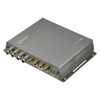
We've deployed the Hanwha CMVR 420 across financial services back-offices, university campuses, and multi-site retail networks where IT and security operations converge. The recorder's real strength is operational simplicity: IT teams already manage rack power, cooling, and network segmentation, so adding a surveillance recorder into that existing framework is straightforward. No separate UPS, no dedicated environmental monitoring, no isolated network segment required—just a rack slot, a PoE switch port, and network connectivity. We've seen the on-device analytics (10-channel processing) eliminate 30–50% of unnecessary motion-detection events from tree-sway and vehicle headlight glare, which directly reduces alert fatigue and archive search time. The mixed-resolution support is genuinely useful: pair 1MP cameras on hallways and outdoor perimeter with 4MP units on badge readers and ATMs, and the recorder manages the bitrate math transparently. That said, the PoE power model and the 802.3af constraint mean this unit isn't suited for extreme-scale deployments or sites with undersized power infrastructure—if you're running 50+ cameras, you'll need multiple recorders or a separate high-power PoE backbone.
Technical Highlights:
- H.264 / H.265 Multi-Codec Ingestion: Recorder accepts simultaneous H.264 and H.265 streams from mixed-vendor cameras without transcoding. This matters for storage: a 4MP H.265 camera stream uses roughly 40% less disk space than H.264 on the same quality target. Across 20–30 cameras, that translates to 2–3 extra months of retention from the same 10TB disk.
- 10-Channel Analytics Engine: Motion, crowd density, and object-detection processing happens on the recorder, not on the camera or backend VMS. Reduces CPU load on your Genetec or Milestone server and keeps alerting responsive even if WAN links are saturated.
- Dual Gigabit Ethernet with Network Failover: Two 1GbE ports allow active-passive failover—if your primary LAN switch fails, the recorder can automatically failover to a secondary network segment without manual intervention. Critical for sites where security recording can't drop offline.
- ONVIF Profile S Compliance: Works with any VMS that speaks standard ONVIF—Genetec Omnicast, Milestone Xprotect, ExacqVision, Axis Camera Station, and dozens of third-party platforms. No proprietary client software required.
- Flexible Recording Policies: Bitrate-adaptive recording, schedule-based retention, and event-triggered archival reduce wasted disk space on low-motion periods. We typically see 20–30% disk savings compared to fixed-bitrate recording.
Deployment Considerations:
- PoE Power Budget Is Shared: The recorder draws minimal PoE power, but if you're also powering Hanwha IP cameras on the same switch, verify total PoE budget. A 48-port 802.3at switch can comfortably supply 15–20 cameras plus the recorder; beyond that, you'll need a second PoE switch or inline injectors.
- Storage Scaling Requires Planning: 10TB is roughly 6–8 months of 24/7 recording on a 20-camera mixed-resolution mix. If your retention requirement is 12+ months, budget for external NAS or archive strategy upfront—the recorder supports iSCSI and SMB, so integration is native.
- Rack Space and Cooling: The unit fits standard 19-inch racks, but confirm CRAC/HVAC capacity if you're retrofitting into an existing server room. Storage-intensive recorders generate sustained heat; ensure airflow isn't constrained by adjacent equipment.
- Network Segmentation Best Practice: Although the recorder supports ONVIF, isolate it on a dedicated VLAN from production IT networks if possible. Surveillance traffic can saturate shared corporate links during high bitrate recording or export operations.
- Backup and Disaster Recovery: Plan for off-site archive—10TB of footage has compliance and forensic value. The recorder supports network-based backup; integrate with your IT backup schedule (nightly incremental snapshots to NAS, weekly full archives to cold storage).
The CMVR 420 is purpose-built for IT-savvy organizations that want surveillance recording co-located with server infrastructure rather than isolated in a dedicated security closet. If your environment already has Hanwha IP cameras deployed and IT-managed PoE switching, this recorder fills the gap cleanly. For mixed-vendor camera environments or facilities requiring high-density recording beyond 50 cameras, evaluate multi-recorder architectures or dedicated rack-mounted NVR platforms. For more options and competitive recorders, see the Hanwha catalog.