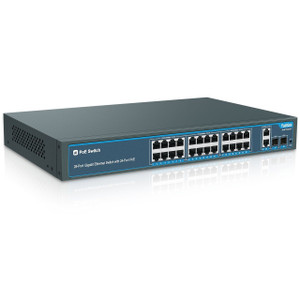
Code Blue SLNF0338 4G LTE PoE Network Switch
Overview
The Code Blue SLNF0338 is a dual-purpose network switch engineered for remote surveillance and field operations where standard wired connectivity is unreliable or unavailable. Built around 4G LTE cellular uplink and Power over Ethernet (PoE) delivery, this unit bridges the gap between isolated field cameras, access control systems, and cloud-based monitoring infrastructure — all in an IP68-rated enclosure rated to withstand harsh environmental conditions.
The SLNF0338 is purpose-built for integrators deploying temporary or mobile surveillance systems, rural site monitoring, disaster response scenarios, and emergency services coordination where backhaul connectivity must be both redundant and self-contained.
Key Features
- 4G LTE Cellular Uplink: Eliminates dependency on site-based internet service. Critical for remote job sites, construction yards, and emergency response where no wired WAN exists or bandwidth constraints make a hardline impractical.
- PoE (802.3af) Power and Data: Delivers up to 13W per port via standard Ethernet, enough to run compact IP cameras, access readers, and sensors without separate power cables. Simplifies installation on poles, towers, and hard-to-reach mounting points.
- IP68 Environmental Rating: Sealed against dust and temporary immersion — deploy in muddy construction zones, flood-prone areas, and equipment yards without weather-proof cabinets. Corrosion-resistant for coastal and industrial environments.
- Paging Amplifier Integration: Audio output capability (12–24V DC) for emergency announcements, site alarms, and two-way communication during mobile operations or incident response. Pair with external speaker or siren driver.
- Industrial 12–24V DC Power Option: Accepts field-standard DC sources — generators, solar panels, truck auxiliary power — removing dependency on grid AC and reducing site setup friction.
- Ethernet Connectivity: Standard RJ-45 ports support gigabit uplinks and PoE-powered endpoints. Interoperable with any ONVIF-compliant camera or access control device in the surveillance ecosystem.
Integration and Compatibility
The SLNF0338 acts as a transparent network bridge: 4G LTE WAN on one side, Ethernet PoE on the other. It works with any standard IP surveillance system — VMS software, NVRs, cloud recording platforms, and access control panels that speak Ethernet. No proprietary drivers or middleware required. The paging amplifier output integrates with emergency notification systems and site intercoms via standard 12–24V relay logic.
Cellular failover support means if your site has partial wired internet, the SLNF0338 can serve as a redundant uplink for critical cameras — configure your VMS or firewall to bond the connection or fall back to cellular when primary line drops.
Environmental and Durability Considerations
IP68 rating handles continuous rain, dust storms, and brief submersion — suitable for outdoor equipment racks, pole-mounted enclosures, and temporary command centers. The industrial DC power input means no need for outdoor-rated transformers or AC power conditioning. Thermal management for harsh climates is inherent to the sealed design, though ambient temperature ratings should be confirmed for arctic or extreme desert deployments.
Deployment Context
Deploy the SLNF0338 at remote cell sites, pipeline monitoring stations, emergency operations centers, wildfire lookout posts, and disaster staging areas where a self-contained network node keeps cameras and sensors online independent of infrastructure. Pair with solar panels and a small battery backup to achieve multi-day autonomy on a single charge cycle — the PoE output can power a secondary mini-UPS for the most critical endpoints.
Frequently Asked Questions
Q: Does the SLNF0338 require a separate cellular data plan?
A: Yes. The unit provides the modem and antenna — you source the SIM card and carrier contract separately. This allows flexibility to choose carriers by coverage area and data tier.
Q: Can I mix PoE and non-PoE devices on the same SLNF0338 port?
A: PoE output is automatic on compliant Ethernet ports. Non-PoE devices (dumb cameras, older IP readers) will operate normally — PoE injection is passive and does not interfere with unpowered endpoints. However, confirm your device has PoE bypass if it is not designed to accept PoE.
Q: What is the maximum distance a PoE cable can run from the SLNF0338?
A: Standard Ethernet PoE is rated to 100 meters (328 feet) per IEEE 802.3af. Beyond that, use a PoE injector or extender at the camera end, or run a longer power cable in parallel.
Q: Is the SLNF0338 suitable for permanent outdoor installation?
A: IP68 rating supports outdoor use, but confirm with the manufacturer that mounting hardware and thermal management are specified for year-round ambient temperature swings in your region. For permanent installations, consider a hardened equipment shelter with the SLNF0338 inside.
Q: Can the paging amplifier output drive a siren directly?
A: The 12–24V output is limited to the unit's internal supply capacity. Most sirens draw high current — pair the output with an external relay and your site power to switch the siren on command.
Q: What happens if the 4G LTE signal drops?
A: Local PoE and Ethernet switching continue uninterrupted. Remote uplink to the cloud VMS is lost. Cameras buffer to local storage (if equipped with microSD). Reconnection is automatic when cellular signal returns.
The Code Blue SLNF0338 solves a real problem: getting surveillance online when the site has no fiber, no microwave backhaul, and no stable broadband. I've deployed variants of this unit on emergency operations tents, wildfire response coordination centers, and disaster rubble searches where the only connectivity option is 4G LTE. The SLNF0338 combines that cellular modem with PoE power output, which means you can mount compact cameras on poles or shipping containers without running separate AC power or site lighting circuits.
Technical Highlights:
- 4G LTE uplink with PoE switching: One device replaces a cellular router, PoE injector, and power supply stack. Reduces equipment footprint and cable complexity on temporary or mobile deployments — critical when your team is setting up in the field without permanent infrastructure.
- IP68 sealing: Handles mud, dust, and rain without external weatherproofing. Deploy in active construction zones, flood-recovery sites, or equipment yards without worrying about protective cabinets or corrosion inside conduit.
- 12–24V DC industrial power input: Pairs with solar panels, generators, truck auxiliary power, or battery banks. Eliminates the need for grid AC and transformer clutter, speeding up site power planning.
- Paging amplifier (12–24V output): Integrated audio driver for emergency announcement, site alarms, or check-in tone. One less external module to cable and troubleshoot during rapid deployment.
Deployment Considerations:
- 4G LTE coverage is carrier and location dependent — survey signal strength before final installation. The SLNF0338 has no fallback to Wi-Fi, so if cellular is weak, uplink quality suffers. Confirm band and frequency with your carrier.
- PoE budget is 802.3af (13W per port), which is fine for compact domes and small bullet cameras but tight for high-powered PTZs or infrared illuminators. Check camera power draw against the unit's port budget before final integration.
- Audio output is 12–24V relay-switched, not a line-level audio feed. You need an external amplifier or siren driver to get usable paging. Don't expect to plug a speaker into the audio terminal.
The SLNF0338 is the right call for emergency response ops centers, mobile command vehicles, and temporary monitoring where fast deployment and cellular independence are non-negotiable. If your site has stable broadband or fiber and just needs PoE switching, a standard industrial switch costs less. But when you're running a response operation with no guarantees about site infrastructure, the built-in modem and sealed outdoor rating save days of setup work.