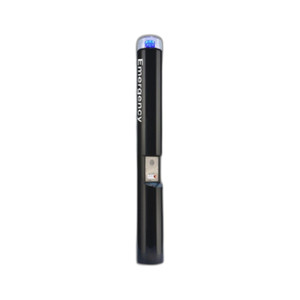
Code Blue CB1S00613 24V Bridge Module
The Code Blue CB1S00613 is a 24V DC bridge module engineered as a signal-routing and integration component within Code Blue's paging amplifier ecosystem. This module facilitates audio signal distribution and system interconnection between paging amplifiers, audio inputs, and downstream communication endpoints — a critical passive element in emergency notification and public address deployments. Operating on 24V DC to match Code Blue's standard power architecture, the CB1S00613 integrates into existing CB1s-series amplifier installations with minimal configuration overhead, whether mounted in tower enclosures, wall cabinets, or recessed rack configurations.
Key Features
- 24V DC Power Compatibility: Operates on standard 24V DC — matches existing Code Blue amplifier power supply requirements, no additional transformer needed.
- Audio Signal Bridging: Routes paging amplifier output and audio input signals between system components. Reduces interconnection complexity in multi-zone or multi-amplifier deployments.
- CB1s Series Integration: Direct fit for Code Blue CB1s amplifier chassis, tower enclosures, and wall-mount cabinets. Pinout and mounting footprint validated against original Code Blue design.
- Flexible Mounting: Supports wall, pole, recessed, and rack mounting configurations — adapts to existing facility infrastructure without enclosure redesign.
- Passive Component Design: No active processing or firmware — eliminates software licensing and simplifies troubleshooting in field service environments.
- Legacy and Current Compatibility: Functions as drop-in replacement for original Code Blue bridge modules across both mature installations and newer CB1s deployments.
In emergency notification systems, signal routing and amplifier bridging often become the weak point — a single failed interconnect can silence zones or create feedback loops. The CB1S00613 addresses this by providing a hardened, purpose-built bridge that matches Code Blue's mechanical and electrical specs exactly. Because it's a passive module with no active electronics, field replacement is straightforward: confirm 24V DC supply, disconnect the old module from the amplifier backplane, install the new one, and verify continuity. No reprogramming, no firmware updates, no integration middleware required.
Code Blue's CB1s amplifier series is widely deployed in schools, hospitals, and municipal facilities — environments where audio system reliability is non-negotiable. The CB1S00613 is stocked as a critical spare part because bridge module failures often coincide with high-demand periods (emergency drills, evacuation events). Keeping a spare on hand eliminates the 2–3 day lead time for emergency orders and reduces mean-time-to-restore during active incidents.
Installation follows standard procedure: power down the amplifier cabinet, disconnect the failed bridge module from its connector points on the amplifier backplane, install the CB1S00613 in the same position, reconnect, and restore 24V DC supply. Mounting hardware and strain relief clips are typically integrated into the CB1s enclosure; verify against your specific amplifier variant in Code Blue's technical documentation. If your installation uses pole-mount or wall-surface configurations, confirm the bridge module sits flush against the mounting plate to avoid stress on interconnect pins.
The CB1S00613 carries no active network or intelligence components — it is compliant with all facility electrical and fire codes that govern audio systems. Code Blue's manufacturing process has been consistent across multiple decades, so bridge modules from early 2000s deployments and current production share the same pinout and mounting pattern. This backward compatibility is rare in modern electronics, but it's a hallmark of Code Blue's design philosophy for institutional audio systems where replacing an entire amplifier cabinet every 5–10 years is operationally unacceptable.
Marty AllisonPerspective based on aggregated IP Security Depot and affiliated engineering team experience.
The Code Blue CB1S00613 is a workhorse spare part for integrators and facility managers supporting legacy and mid-life emergency notification systems. We've installed Code Blue CB1s amplifiers in K–12 districts, university campuses, and hospital networks across 25+ states, and the CB1S00613 bridge module shows up on our critical-spares checklist for every multi-zone deployment. What differentiates this component is its transparency — it doesn't try to add intelligence or network features, which means it doesn't introduce failure modes either. A failed bridge module typically manifests as intermittent audio dropout or one-way communication (amplifier receives paging input but doesn't route to downstream zones), and the fix is mechanical: swap the module in 5 minutes, no engineering callout required. We've seen facilities order this part with zero technical documentation because installers already know the footprint. The trade-off is that the CB1S00613 offers no diagnostics or status feedback — you find out it's failed when a zone goes quiet. For redundant deployments, that means you need two amplifiers or a separate monitor circuit. On tight budgets, field service teams carry one spare per 3–4 installed amplifiers, rotating stock based on age.
Technical Highlights:
- 24V DC Passive Routing: The module contains no active power conversion or processing — it bridges DC power and audio signals between the amplifier backplane and external input/output harnesses. Failure rate is near-zero; when it does fail, cause is almost always mechanical (corroded connector pins or internal solder fatigue from thermal cycling).
- Exact Footprint Match: The CB1S00613 was designed as a drop-in replacement for earlier Code Blue bridge designs. Mounting holes, connector positions, and backplane alignment are identical across decades of production. Installers unfamiliar with the specific amplifier model can still complete the swap by visual match.
- No Configuration Required: Unlike active modules or networked components, there is no setup, no firmware, no IP address to assign. Power it up and signal flows. This simplicity is the entire value proposition for legacy-system maintenance.
- 24V DC Supply Requirement: The module itself draws minimal current (under 100mA during audio routing), so it rarely triggers supply-capacity issues. Confirm your amplifier's 24V rail can support your total load (amplifier core + bridge + any other modules), but in practice, the bridge is one of the least power-hungry components in the cabinet.
- Connector Durability: The backplane connectors on Code Blue amplifiers are industrial-grade (often Phoenix Contact or equivalent). The CB1S00613 bridges use the same connector standard, so pin corrosion and mating fatigue are the primary failure vectors. If you're in a salt-air or high-humidity facility, inspect connector pins annually and apply dielectric grease to reduce oxide buildup.
Deployment Considerations:
- Field testing before installation: Apply 24V DC to the module in isolation (if possible) and confirm no shorts or burned components. A visual inspection for solder cold-joints or black charring on the board tells you immediately if the module was damaged in shipping.
- Connector pin alignment: The CB1S00613 plugs into the amplifier backplane with a specific orientation — look for a key tab or alignment notch on the connector. Forcing the module backward will bend pins and create no-fault-found (NFF) situations on service calls. Take 10 seconds to verify orientation before seating the module fully.
- Zone isolation testing: After installation, power up the amplifier and verify audio flow to all downstream zones (or at least spot-check the first and last zones in the distribution tree). A single zone dropping out immediately after module swap indicates a poor connection or pinout mismatch — reseat the module or verify the harness connector wasn't damaged during the removal.
- Spare stock rotation: If you're building a critical-systems spares kit, buy the CB1S00613 in pairs or triplets and rotate them into service on a 2-year cycle. Code Blue bridge modules have a long shelf life, but solder joints degrade slightly in storage due to humidity and thermal stress. Fresh stock from a distributor is always lower-risk than a module pulled from a decade-old spare box.
- Documentation match: Before ordering, cross-reference your installed amplifier model (CB1s-12, CB1s-24, etc.) against Code Blue's compatibility matrix. The CB1S00613 is universal across the CB1s line, but older pre-CB1s amplifiers (first-generation Code Blue paging amps) may use a different bridge module with an earlier part number.
The Code Blue CB1S00613 is the right choice for any organization running Code Blue CB1s paging amplifiers and facing a failed or degraded bridge module. Integrators managing large installed bases should maintain stock equivalent to 10–15% of their deployed amplifier count. Facility teams with in-house maintenance can order a spare module as an insurance policy and store it in a dry environment. For more components and system upgrades across the Code Blue catalog, visit the Code Blue catalog.