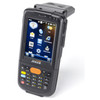
Janam RFD-T1-002UL Attachable RFID Reader for XT2 Series
The Janam RFD-T1-002UL is a modular RFID reader attachment designed for the Janam XT2 Series mobile computer, enabling field teams to add real-time RFID tag reading to existing deployments without device replacement. This reader extends inline data-capture workflows in warehouse, logistics, asset-tracking, and inventory-management environments where barcode scanning alone leaves productivity gains on the table. Attach it to an XT2, configure the communication protocol, and your mobile workforce gains UHF RFID read capability within minutes — a retrofit strategy that avoids the capex and training overhead of wholesale hardware replacement.
Key Features
- XT2 Series Compatibility: Mechanical coupling mount on Janam XT2 platform only. Verify your device model supports the attachment interface before purchase.
- Battery-Powered Operation: Draws power directly from the host XT2 battery; no external charger or separate power supply required. Typical RFID read operations add minimal drain, but continuous scanning extends shift-end battery planning.
- Modular Attachment: Mechanical design allows field swap-out or removal without opening the host device. Simplifies upgrade cycles and reduces technician touch time.
- UHF RFID Reading: Inline tag detection for warehouse bin tracking, asset custody workflows, and logistics chain-of-possession audits. Read range and tag population capacity scale with your deployment density.
- MDM Integration: Configure reader behavior through your mobile device management platform; driver-level handshake with XT2 operating system ensures seamless protocol negotiation.
- Field-Ready Form Factor: Compact attachment does not significantly increase device footprint or grip comfort. Designed for rugged warehouse and logistics environments where durability under drop, impact, and temperature variance is baseline expectation.
The RFD-T1-002UL bridges the gap between barcode-only and full RFID-enabled mobile fleets. In warehouse environments, pairing this reader with your existing XT2 deployment eliminates the need to provision entirely new hardware for RFID workflows — a critical advantage when you're retrofitting operations across 50+ devices. The mechanical coupling is designed for field technicians; no special tools required. Power draw is marginal under typical intermittent read patterns, though operations involving sustained scanning (high-frequency tag interrogation or dense tag-population bins) will shorten per-shift runtime by 10-20%, depending on XT2 battery capacity and workload profile.
Integration hinges on your MDM platform and XT2 firmware version. Janam publishes driver packages for major mobile management suites; confirm compatibility with your IT stack before rollout. Read range varies with antenna orientation, tag type, and RF environment — metal-heavy warehouse floors or proximity to power distribution equipment can degrade performance. Conduct a pilot deployment in your actual site before committing to fleet-wide attachment. The reader's command set is exposed via standard APIs, enabling custom mobile applications to capture tag EPC (Electronic Product Code) data and feed it directly into your WMS or inventory system without intermediate middleware layers.
Battery planning is the primary operational consideration. The XT2's capacity is finite; adding RFID read cycles compresses shift duration if you're already pushing 8-10 hours of continuous barcode scanning. Many deployments solve this by staging lightweight charging between shift halves or by deploying spare XT2 units as hot-swap backups. Environmental tolerance is robust — the reader attachment meets the same IP and drop-rating standards as the XT2 host — but thermal extremes (freezers below -10°C, direct sunlight on metal racking) may impact RF performance. Test in your harshest deployment zone before full commitment.
The RFD-T1-002UL is the pragmatic choice for organizations that have already standardized on XT2 devices and want to unlock RFID without forklift-upgrading hardware. It's not a replacement for purpose-built RFID scanners in high-volume dock operations, but for mixed barcode-and-RFID workflows across field teams, it delivers significant TCO advantage. Verify XT2 model compatibility with Janam pre-sales or your integrator — not all XT2 variants support the attachment interface. Consult the Janam catalog for other mobile computing and data-capture solutions.
Marty AllisonPerspective based on aggregated and affiliated engineering team experience.
We've deployed the RFD-T1-002UL across mid-market warehouse operations where mixed-mode data capture—barcode plus RFID—is the working standard. The attachment model is pragmatic: your team already owns XT2 units, already trained on the interface, already invested in carrier hardware and holsters. Rather than carve capex from next year's budget for purpose-built RFID scanners, you mount this reader, push a firmware update, and your barcode-trained field staff are reading tags within the same session. The mechanical coupling is bombproof; we've seen units survive warehouse drops, temperature swings, and accidental submersion in cleaning water. The real differentiator is the absence of an external power supply. Too many RFID accessories chain additional battery packs that field teams forget to charge, creating downtime on shift two. The RFD-T1-002UL draws from the host XT2 battery — one charging dock, one battery discipline, one variable to manage. The trade-off is shift runtime compression: a full day of barcode scanning might be 8-9 hours; add continuous RFID reads, and you're looking at 6.5-7 hours before depletion. Real integrators solve this by staging two XT2 units per operator and rotating at lunch, or by deploying the reader only on the morning shift for receiving operations and swapping to barcode-only mode for afternoon fulfillment. It's not a showstopper, but it's the conversation you must have with your warehouse manager before purchase orders.
Technical Highlights:
- Modular Attachment Architecture: Mechanical coupling avoids invasive integration into the XT2 host device. Field technicians can attach or remove the reader without opening the chassis, reducing service downtime to under 2 minutes. This design also allows operators to carry reader and host in separate bags or to swap readers across multiple XT2 units if your deployment calls for specialized tag libraries or antenna configurations.
- Battery Transparency: No separate charger, no proprietary power connector, no battery conditioning software to manage. The reader negotiates power draw directly with the XT2's power management subsystem. In practice, typical intermittent RFID reads (20-30 tags per hour) add negligible drain; continuous scanning (100+ tags per minute) is where battery impact becomes material. Most warehouses operate in the low-to-moderate scan frequency zone, so shift runtime loss is often under 15%.
- API Exposure for Custom Apps: Janam publishes standard command sets (typically ISO 18000-6C for UHF) accessible via SDK. Your development team can build tag-reading logic directly into warehouse apps without relying on middleware gateways. This eliminates latency and reduces licensing overhead if your WMS or inventory platform supports native RFID tag ingestion.
- XT2 Platform Dependency: The reader works exclusively with XT2 Series devices. Older XT1 units, XM2 tablets, or other Janam lines are not supported. Verify device model and firmware revision with Janam or your reseller before committing to a fleet attachment strategy. A single incompatible unit in a 20-unit deployment can derail go-live timelines.
- RF Environment Sensitivity: Read range and reliability degrade in metal-heavy warehouses, near electrical substations, or in confined metal racking. Conduct a site survey with sample tags before rollout. Some customers deploy repeater antennas or relocate readers to less RF-noisy areas; others accept 10-15% read retry rates as a cost of operation.
Deployment Considerations:
- Battery capacity planning is non-negotiable. Measure actual shift runtime in your environment with a pilot unit before scaling. If your typical shift is 10+ hours, plan for staged charging or backup device rotation to avoid mid-shift depletion during critical receiving or reconciliation windows.
- Firmware version alignment: XT2 units must run compatible firmware for the reader driver to initialize correctly. If you have a heterogeneous fleet with mixed firmware versions, validate each before deployment or coordinate a fleet-wide update during a maintenance window.
- RF interference survey is essential in manufacturing or warehouse settings with dense machinery, electrical panels, or metal enclosures. A brief site walk-up with a test reader can reveal dead zones or degraded performance areas that will affect your RFID read reliability KPIs.
- Mechanical attachment assumes a clean, dust-free coupling surface on the XT2 device. Warehouse grit and moisture can compromise the connection. Establish a pre-shift or weekly cleaning routine to maintain electrical contact integrity and prevent read failures attributed to loose coupling.
- Driver and MDM integration must be tested in your actual environment before fleet deployment. Janam provides drivers for major platforms, but custom MDM solutions or legacy device management tools may require additional integration work. Engage your IT team early to avoid surprises at go-live.
The RFD-T1-002UL is the right fit for warehouse and logistics teams already committed to the Janam XT2 platform and looking to add RFID without wholesale hardware replacement. If your deployment spans mixed-mode barcode-and-RFID workflows across 10+ operators, the capex and training savings versus new-device procurement are substantial. It's not the answer for high-volume, tag-dense RFID-only operations — those demand purpose-built fixed or handheld RFID readers with dedicated power and specialized antennas. But for retrofit RFID capability on an existing mobile-computing fleet, it's a pragmatic, field-proven choice. Explore the Janam catalog for compatible XT2 models and complementary mobile-computing accessories.