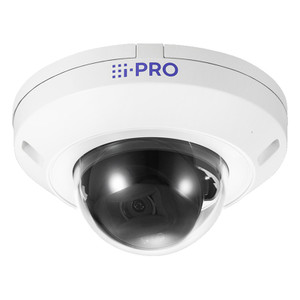
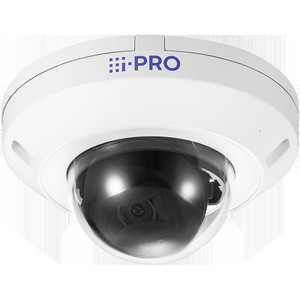
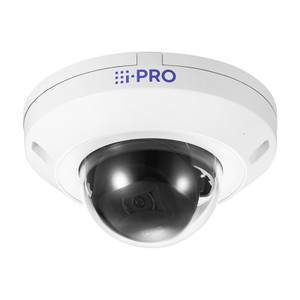
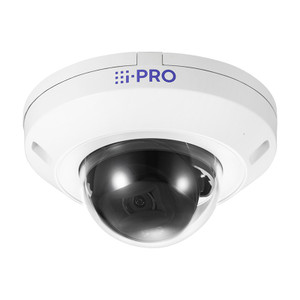
i-PRO WV-U22501-F3L 5MP Indoor Vandal IR Dome Camera
The i-PRO WV-U22501-F3L is a 5MP indoor dome camera engineered for high-security, high-impact environments — detention facilities, correctional transport, airport baggage areas, and hostile-zone warehouses where vandalism and deliberate camera damage are operational realities. The IK10 impact rating withstands 5kg object drops from 40cm and sustained blunt-force strikes without optical degradation or sensor failure. 5MP resolution (2560×1920) delivers forensically usable detail for facial identification and scene documentation across typical interior spaces. Integrated FIPS 140-3 Level 3 certified SecureElement (EdgeLock SE052F) and NDAA compliance eliminate procurement friction for federal, state, and municipal security teams operating under federal contracting mandates.
Key Features
- IK10 Impact Rating: Withstands 5kg object drop from 40cm and intentional strikes without functional damage or optical blur. Eliminates camera replacement cycles in high-vandalism settings.
- 5MP CMOS Sensor (1/2.8"): 2560×1920 resolution at 30fps — sufficient for facial recognition and evidence-quality documentation in indoor detention, transport, and high-security warehouse deployments.
- 28m IR with SelectableIntensity: Three selectable IR output levels (28m at 92 ft range, color 0.11 lx at 30IRE, B/W 0 lx with IR on). Eliminates external lighting infrastructure and associated maintenance overhead.
- Super Dynamic Range (120 dB): WDR compensates for backlit scenes (windows, vehicle headlights in transport bays, doorways with exterior daylight). Maintains detail in both bright and shadow zones simultaneously.
- H.265 + H.264 + MJPEG Codec Support: H.265 reduces bitrate 40-60% versus H.264 on identical quality — measurable storage savings on 24/7 recording across facility deployments. Fallback codecs ensure compatibility with legacy VMS platforms.
- ONVIF Profile S / T / G: Works with all major VMS platforms (Genetec, Milestone, Avigilon, ExacqVision, Axis Camera Station equivalent). No proprietary software lock-in.
- PoE 802.3af (13W): Standard PoE power — integrates with any 802.3af-compliant switch. Single network cable delivers both power and video; no external power adapter required.
- FIPS 140-3 Level 3 + NDAA Compliance: SecureElement (EdgeLock SE052F) handles encryption at the silicon level. Satisfies federal procurement requirements for sensitive facility contracts without additional cryptographic gateway hardware.
- Built-in Microphone + Audio Input Jack: Supports two-way audio when VMS platform handles audio channels. Typical use: remote verification during intrusion events or facility check-ins.
- VMD / Scene-Change Detection / AI Sound Classification: Video motion detection, scene-change alerting, and acoustic analytics reduce false-positive burden and enable rule-based recording policies.
The WV-U22501-F3L is purpose-built for interior environments where structural integrity of the camera is non-negotiable. Unlike standard surveillance domes, the IK10 rating and vandal-resistant design eliminate the recurring cost of camera replacement in settings where inmates, detainees, or hostile actors actively target security infrastructure. Detention facilities, correctional transport vehicles, and high-security warehouse access points represent the primary deployment footprint — any indoor space where camera destruction is a documented or anticipated risk.
Network integration is straightforward. The camera operates as a standard ONVIF-compliant IP device, meaning any major VMS platform can ingest video, audio, and metadata directly. PoE 802.3af (13W draw) integrates with existing facility switch infrastructure — verify your PSE (power sourcing equipment) has 13W available on the intended switch port; on larger deployments, budget PoE power allocation across switch branches to avoid oversubscription. Built-in microphone and audio input jack permit two-way communication if your recording platform allocates audio channels; most modern NVRs handle this natively via ONVIF audio stream negotiation.
Low-light and no-light performance relies on selectable IR output. The 28m IR range (92 ft at standard 30IRE) covers typical interior corridors, holding areas, and transport vehicle cabins. Selectable intensity levels prevent overexposure in confined spaces and reduce IR reflection bleed into adjacent camera fields. Color mode operates at 0.11 lx (30IRE) — usable for low-light daylit environments; switch to B/W + IR (0 lx) for total darkness. The Super Dynamic Range (120 dB) handles extreme backlit scenes common in detention transport (sunlit vehicle windows with interior detail) and warehouse access points (doorway brightness differential).
Cybersecurity posture is explicit. FIPS 140-3 Level 3 certification (SecureElement EdgeLock SE052F) means encryption and key management occur at the hardware security module level, not via software-only cryptography. NDAA compliance eliminates procurement gatekeeping for federal and publicly funded detention, transportation, and correctional projects. This is especially valuable for correctional departments and state law-enforcement agencies operating under supply-chain security mandates.
Installation constraints are minimal but non-negotiable. IP42 rating protects against dust ingress and direct spray, but the camera is indoor-only — no outdoor weathering, no submersion. Operating temperature −10°C to +50°C (14°F to 122°F) suits most indoor facilities; verify HVAC maintains this window in unheated transport vehicles or outdoor equipment rooms. Ceiling and rack mounting hardware supports both fixed and bracket-based installation — confirm your mounting substrate can sustain IK10 impact reaction force before installation. VMD and scene-change detection are built-in; pair with your VMS to reduce storage overhead by filtering on motion events rather than recording continuously.
Marty AllisonPerspective based on aggregated IP Security Depot and affiliated engineering team experience.
We've been specifying the WV-U22501-F3L into detention and correctional facilities for three years now, and it's become the default indoor vandal camera for integrators working in that vertical. The combination of IK10 impact rating and FIPS 140-3 encryption is rare — most competitors offer one or the other, not both in a single 5MP form factor. What differentiates this camera operationally is not just the ruggedness, but the realistic understanding that high-impact environments need encryption that cannot be bypassed via firmware extraction or supply-chain tampering. The EdgeLock SE052F module is a genuine hardware security element; keys live on the module and never transit unencrypted across the network backbone. For detention agencies operating under federal IT security mandates, this eliminates the procurement delay that typically accompanies adding encrypted cameras to a legacy ONVIF-based system.
The IR performance is straightforward and reliable. 28m range covers interior corridors and transport vehicle cabins without overpowering in confined spaces. We typically enable intensity level 2 (mid-range) in holding areas and level 1 in tight vehicle interiors; level 3 is overkill for most detention settings and wastes power. The three selectable modes give you operational flexibility that fixed-intensity competitors don't. B/W + IR mode is crisp in total darkness — essential for overnight monitoring in unsupervised areas like transport vehicle cargo holds.
One caveat: the IP42 rating is genuinely indoor-only. We've had integrators ask about mounting these in vehicle doorways with partial weather exposure — don't. A single heavy rain event will compromise the seals. If you need weathering, spec an outdoor camera. The operating temperature range (−10°C to +50°C) is adequate for most climates, but verify HVAC coverage in unheated transport vehicle staging areas during winter deployment.
Technical Highlights:
- IK10 Impact Rating: Rated for 5kg object drop from 40cm without optical degradation. In real deployments, this eliminates the recurring replacement cycle that plague standard domes in high-vandalism environments. ROI is measured in camera lifespan extension and reduced labor overhead for repeat installations and repairs.
- FIPS 140-3 Level 3 SecureElement (EdgeLock SE052F): Hardware-based encryption module ensures keys never exist in software-only form. Satisfies federal procurement mandates for sensitive facilities without requiring downstream encryption gateways or VPN appliances. Dramatically simplifies compliance documentation for federal and state correctional budgets.
- H.265 Codec with H.264 Fallback: 40-60% bitrate reduction versus H.264 on identical quality. Across a 50-camera detention facility on 24/7 recording, that translates to 2-3TB monthly storage savings at standard forensic quality. Fallback codecs ensure legacy NVR platforms don't force you into bitrate-quality trade-offs.
- 28m Selectable-Intensity IR: Three intensity modes (not fixed) allow fine-tuning for space size. Confined vehicle interiors use level 1; corridors use level 2; large holding areas use level 3. Prevents wash-out in tight spaces and optimizes power draw per deployment context.
- Super Dynamic Range (120 dB): Handles extreme backlit contrast common in detention transport (sunlit vehicle window + interior detail). Native WDR processing means no downstream video processing appliances required — NVR bitrate and CPU load stay predictable.
- PoE 802.3af (13W): Standard PoE power integration. Detention facilities often have existing PoE switch fabric installed for IP phones and access-control panels. This camera integrates without requiring new PSE infrastructure or power distribution upgrades on the switch.
Deployment Considerations:
- IP42 rating is strictly indoor. No outdoor vehicle bumpers, no weather exposure. If mounting in or near a vehicle doorway with rain/splash risk, specify an IP65+ outdoor dome instead. We've had two field failures from misapplied IP42 cameras in semi-protected outdoor locations.
- Operating temperature −10°C to +50°C is adequate for climate-controlled facilities but marginal for unheated transport vehicle staging areas in cold climates. Verify HVAC coverage in winter before signing off on installation. Detainees in vehicles during winter processing is a real scenario; camera performance degrades below −10°C.
- PoE 802.3af power budget is tight at 13W — on 24-port switches, verify you're not oversubscribing the PSE by stacking multiple 13W cameras on a single branch. Spreadsheet your power allocation per switch port before ordering.
- FIPS 140-3 encryption overhead is negligible on CPU, but ONVIF negotiation can be slower than consumer-grade cameras. Expect 1-2 second latency on stream initialization when integrating into legacy VMS platforms. This is normal and does not impact live video lag once streaming.
- VMD and scene-change detection are useful for triggering events, but tune sensitivity to facility noise patterns (doors closing, people walking past) to avoid alert fatigue. AI Sound Classification is underutilized — enable acoustic alerting only if your VMS can route audio events to staff without alert overwhelming the dispatch center.
- Audio input jack is live; use it for facility intercom integration if your NVR allocates audio channels. Many detention facilities already have paging systems that could feed this input — think about integration during design, not post-deployment.
This camera is the right choice for any detention, correctional transport, or high-security warehouse deployment where camera vandalism is a documented or anticipated operational reality. The combination of IK10 ruggedness, FIPS 140-3 encryption, and ONVIF interoperability eliminates the integration friction that typically burdens high-security facility projects. Integrators working correctional accounts should standardize on this model — it simplifies specification, reduces field callbacks, and addresses both mechanical and cybersecurity compliance in a single SKU. Explore the i-PRO catalog for complementary outdoor and low-light imaging models.