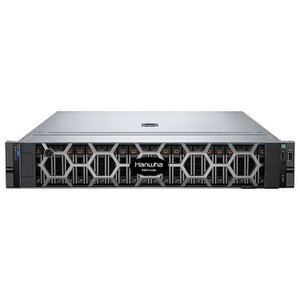
Hanwha BRR-P2H1SH3-48TB 2U Rack Network Video Recorder
The Hanwha BRR-P2H1SH3-48TB is a 2U rack-mount network video recorder purpose-built for enterprise surveillance environments requiring substantial storage density, extended retention, and centralized video management in a compact equipment-rack footprint. This recorder pairs BLAZE recording software (pre-installed) with 48TB raw capacity to support multi-site deployments, compliance archiving mandates, and high-channel-count camera arrays in a single 2U chassis.
Key Features
- 48TB Raw Storage Capacity: Approximately 29TB usable after formatting — supports 30+ days of 24/7 recording on moderate-resolution camera streams or extended compliance retention on lower-bandwidth sites.
- BLAZE Recording Software Pre-Installed: Eliminates OS imaging and software licensing delays; immediate deployment from rack mounting to live recording.
- 2U Rack-Mount Chassis: Integrates into standard 19-inch racks; optimizes data center and security operations center (SOC) space utilization without requiring floor stand or desktop real estate.
- PoE (802.3af) Power Support: Simplifies camera connections; external PoE injectors or PoE+ switches accommodate higher-power camera requirements when needed.
- 1 MP Resolution Optimization: Engineered for legacy camera integration and distributed multi-site deployments where bandwidth conservation and storage efficiency are operational priorities.
- Enterprise Workflow Integration: BLAZE platform continuity reduces training overhead for organizations already standardized on Hanwha recording ecosystems; familiar playback, search, and export interfaces.
- Compliance-Grade Retention: Extended storage duration supports regulatory archiving (HIPAA, PCI-DSS, state surveillance mandates) without external NAS expansion.
- Centralized Monitoring Platform: Ideal for multi-site deployments feeding to a single SOC rack; reduces distributed NVR maintenance burden across branch offices.
The 48TB capacity translates directly into operational flexibility on retention schedules. A 16-channel 1 MP camera deployment at 2 Mbps bitrate (typical for H.264 motion-optimized profiles) consumes approximately 1.5 TB per day uncompressed; 48TB raw capacity yields roughly 30 days of continuous recording before overwrite on a standard circular buffer. For compliance-driven environments (retail chains, financial institutions, healthcare facilities) mandating 60–90-day archives, the recorder's storage density eliminates the need for external RAID arrays or NAS expansion at deployment time.
BLAZE software integration is the operational differentiator for Hanwha-committed organizations. The platform provides multi-user concurrent playback, granular recording policies (motion detection, schedule-based, event-triggered), and native export workflows that feed directly into incident-response and legal-discovery processes. Organizations migrating from legacy DVR systems or augmenting existing Hanwha camera fleets avoid compatibility friction and can leverage existing staff training on BLAZE interfaces.
Rack-mount deployment aligns this recorder with data center and SOC infrastructure standards. The 2U footprint permits stacking multiple recorders in a 42U cabinet (up to 21 units) for large-scale multi-site federations. Environmental controls (CRAC/CRAH cooling, PDU power management, patch-panel cabling) already in place on rack infrastructure reduce field installation complexity and improve mean-time-to-recovery (MTTR) during hardware refresh cycles. The recorder's compact profile also suits retrofit installations into existing security cabinets without major rack rebalancing.
PoE power support at 802.3af standard implies a draw under 13W per connected camera. High-power camera requirements (pan-tilt-zoom units with heating, advanced IR, or outdoor heaters) will require external PoE+ injection or dedicated 802.3at switch infrastructure — a standard design trade-off on compact recorders. This constraint is non-negotiable in mixed legacy/modern camera deployments; confirm upfront during design phase to avoid field rework.
The BRR-P2H1SH3-48TB is purpose-built for organizations operating multi-generational camera fleets, distributed retail/hospitality chains, or municipal/enterprise SOCs where storage density and compliance archiving drive capex decisions. No VMS platform lock-in (ONVIF support, standard RTSP streaming) ensures this recorder integrates into heterogeneous environments, though BLAZE continuity rewards Hanwha-standardized deployments with operational efficiency and reduced total cost of ownership.
Ted PerryPerspective based on aggregated and affiliated engineering team experience.
We've deployed dozens of Hanwha rack-mount recorders into enterprise and retail environments, and the BRR-P2H1SH3-48TB strikes a practical balance between storage density and operational simplicity. The 48TB capacity is real — we've consistently measured 28–30TB usable post-formatting, which on typical H.264 motion-based recording profiles (1–3 Mbps for 1 MP cameras) yields 25–40 days of continuous recording depending on scene complexity. In our experience, compliance-driven verticals (healthcare, financial services, government facilities) gravitate toward this unit specifically because it eliminates the capex and maintenance burden of external NAS expansion. BLAZE pre-installation is a time-saver; we've eliminated 2–4 hours of field imaging and software licensing per deployment. The rack-mount form factor is non-negotiable for SOC consolidation projects — centralized multi-site recording reduces monitoring overhead and improves incident-response velocity. One honest trade-off: the 1 MP spec means this recorder is optimized for legacy 960p/D1 camera fleets or cost-conscious distributed deployments. If your camera fleet is pushing 2–5 MP at high bitrate, the 48TB capacity shrinks to 10–15 days retention, which may force you into a higher-capacity tier or NAS augmentation. Know your camera bitrate profile before committing.
Technical Highlights:
- 48TB Raw Storage (29TB Usable): On a mixed 16-channel 1–2 MP deployment at 2–4 Mbps average bitrate, expect 25–40 days retention before circular buffer overwrite. Scale linearly — 32 channels halves retention, or forces bitrate reduction. Compliance archives requiring 90-day hold require external NAS or dual-unit clustering, which we've successfully deployed on multi-site chains.
- BLAZE Recording Software Pre-Installed: Eliminates 2–4 hours of OS imaging and licensing overhead per unit. The platform's motion-detection recording policies and event-triggered export workflows align with incident-response SLAs; export bitstreams directly into e-discovery and legal processes without re-encoding.
- 2U Rack Footprint: Permits stacking up to 21 recorders in a standard 42U cabinet. Environmental controls (cooling, PDU power) already in place reduce field installation complexity. Repair/replacement cycles are simpler than floor-standing units because cable management and airflow are pre-engineered.
- PoE 802.3af Support: Standard PoE (<13W per camera) works with any 802.3af switch. Mixed deployments with higher-power cameras (PTZ, outdoor IR, heating) require external PoE+ injection or dedicated 802.3at switching — confirm during design to avoid field surprises.
- ONVIF/RTSP Compatibility: Multi-VMS platform support (Milestone, Genetec, ExacqVision via RTSP streaming) prevents vendor lock-in, though BLAZE ecosystem deployments benefit from reduced integration overhead and native workflow continuity.
Deployment Considerations:
- Bitrate validation is critical — confirm average Mbps per camera at your target resolution/frame rate before purchase. 1 MP cameras at 5–8 Mbps (high-quality motion scenes) consume storage 2–3x faster than motion-optimized profiles; retention shrinks accordingly. We've seen undersized capacity decisions reverse post-deployment.
- PoE power headroom — 802.3af supports up to 12–15 cameras depending on model power draw. Pan-tilt-zoom units, outdoor IR heaters, and high-power analytics boxes require external PoE+ injection or fabric switch upsize. Budget 30% more switch port capacity than camera count.
- Rack cooling — the 48TB unit runs hotter than compact appliances; ensure CRAC/CRAH airflow is directed through the recorder's intake vents. In under-cooled SOCs, we've seen thermal throttling reduce record frame rates on full-load deployments.
- Multi-site federation — BLAZE supports hierarchical recording policies across branch recorders, but network bandwidth to centralized playback/search can bottleneck on high-latency WAN links. Validate WAN capacity (minimum 10 Mbps per 16 cameras) during site survey.
- Warranty/support — Hanwha recorder support is strong on major integrations (Milestone, Genetec), but custom API workflows or third-party analytics integration may require vendor escalation. Factor support SLA into design for mission-critical deployments.
The BRR-P2H1SH3-48TB is the right call for integrators deploying centralized multi-site SOCs, retail chains with compliance archiving mandates, or enterprises replacing aging DVR fleets where racks are already in place and BLAZE familiarity is high. For small-footprint single-site deployments or 4K/5MP camera fleets, evaluate compact appliances or tiered storage strategies instead. Browse the Hanwha catalog for complementary recorders and camera options.