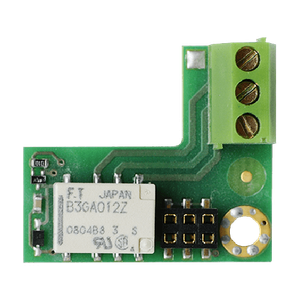
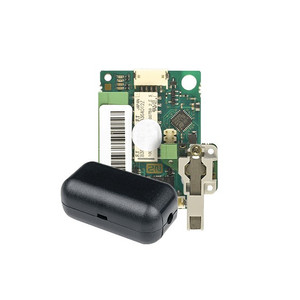
2N 02318-001 NVT PL-08 Network Switch
Overview
The 2N 02318-001 is a purpose-built network switch engineered to consolidate IP cameras, access-control readers, door controllers, and networked intercoms into a single security infrastructure hub. Unlike commodity switches, the 02318-001 is sized and optimized for medium-scale deployments — specifically 20–50 IP cameras plus access-control devices — and uses a 2N NVT PL-08 switching architecture designed to handle the continuous bandwidth and latency demands of professional security systems without artificial throttling or broadcast storms that can cripple reader response times.
If you're building or expanding an enterprise security network where uptime matters and you need to isolate camera traffic from general corporate data, this switch serves as a distribution point that keeps surveillance endpoints responsive and predictable. It's not oversized for small sites and not undersized for medium ones — a practical sizing choice that keeps costs proportional to actual deployment needs.
Key Features
- Dual Network Adapters: Two separate network connection ports allow you to segregate camera streams on one adapter and access-control signaling (readers, intercoms, door strikes) on another. This traffic isolation reduces broadcast storms — a real issue when dozens of cameras flood a single switch — and improves latency-sensitive reader response times. Meaningful for deployments where card-reader unlock delay is a user-experience problem.
- 2N NVT PL-08 Switching Platform: This is 2N's proprietary switching fabric, optimized specifically for 2N IP cameras and networked access-control platforms. Integration overhead is lower than generic enterprise switches; firmware upgrades and topology changes align with 2N device timelines, not third-party vendors.
- H.265 Pass-Through Support: The 02318-001 handles H.265 (HEVC) compressed streams without re-encoding. If your 2N or compatible cameras output H.265, bandwidth consumption drops roughly 40–60% compared to H.264 at equivalent quality — a real win on storage and WAN links when recording 24/7 across dozens of endpoints.
- ONVIF Vendor-Neutral Compatibility: Functions as a standard network switch. Any ONVIF-compliant IP camera or access-control device will work, though 2N native devices integrate with simplified provisioning and unified management. No proprietary licensing required; standard Ethernet connectivity to any video management system.
- Medium-Scale Deployment Sizing: Built to handle 20–50 IP cameras plus access-control readers and intercoms without oversizing infrastructure costs for smaller sites. If your deployment will exceed 50 cameras with VLAN and QoS requirements beyond basic port isolation, a managed enterprise switch in the 2N or competitor family will be necessary.
- Enterprise-Grade Reliability: Designed for 24/7 operation in security environments where switch failure becomes the weak link in your entire system. Component selection, thermal management, and mean-time-between-failure (MTBF) targets are professional-grade, not consumer-grade. This isn't a cost-cutting play; it's an uptime play.
Integration & Compatibility
Deploy alongside 2N IP cameras and access-control platforms for streamlined management, or integrate with any ONVIF-compliant IP camera or networked security device. The 02318-001 works with standard video management systems via Ethernet — no proprietary drivers or licensing overhead. Access-control readers, door controllers, and intercoms from 2N or compatible vendors all function as standard networked endpoints. If you're consolidating a mixed-vendor environment, confirm ONVIF Profile S (or higher) compliance on non-2N devices; older or consumer cameras may not be fully compatible.
When to Choose a Different Model
If your deployment will exceed 50 cameras and requires VLAN segmentation, QoS prioritization, or SNMP monitoring, evaluate managed switches in the 2N enterprise family or alternative managed-switch vendors. If you're connecting only 3–5 cameras with no access-control devices, a smaller unmanaged PoE switch will cost less and deliver the same throughput. If you need failover or ring topology for geographic redundancy, confirm whether dual-unit redundancy or ring-capable hardware is required — the 02318-001 is a single point of distribution, not a redundant pair. For very large campuses or multi-site environments, discuss managed-switch clustering or distributed architecture with your integrator.
Frequently Asked Questions
Q: What is H.265 compression and why does it matter for this switch?
A: H.265 (HEVC) is a video codec that cuts storage and bandwidth requirements roughly 40–60% compared to H.264 at equivalent quality. If your 2N cameras are configured to stream H.265, this switch will pass that compressed stream without re-encoding or transcoding overhead. The bandwidth savings compound across 20–50 cameras — meaningful when recording 24/7 and storage retention is measured in weeks or months.
Q: Can I use the 02318-001 with non-2N IP cameras?
A: Yes. The switch is a standard Ethernet device and will pass traffic from any ONVIF-compliant IP camera. 2N native devices benefit from simplified provisioning and unified management, but the switch imposes no vendor lock-in on camera selection.
Q: Do I need to configure VLANs or advanced network settings on the 02318-001?
A: The 02318-001 supports basic port isolation via its dual-adapter design (camera traffic on one, access-control on another). For advanced VLAN segmentation, QoS policies, or SNMP monitoring, you'll need a managed switch in the 2N enterprise family or a third-party managed switch. Confirm your IT team's network topology requirements before purchase.
Q: What power supply does the 02318-001 require?
A: Confirm with 2N documentation or your integrator. The switch itself typically draws modest power, but verify whether PoE power injection is built-in or whether separate power supplies are required for downstream cameras and access-control devices. Budget accordingly for your site's power architecture.
Q: Is the 02318-001 suitable for outdoor or harsh-environment deployment?
A: The switch is designed for controlled indoor environments typical of security operations centers, server rooms, or secure closets. If outdoor or harsh-environment deployment is required, discuss protective enclosures, temperature control, or alternative industrial-grade switches with your integrator.
Q: What warranty and support does the 02318-001 include?
A: Confirm with your integrator or specialty reseller. 2N products typically include manufacturer warranty; exact terms (1-year, 3-year, extended options) vary by region and purchase channel. Confirm support availability for your deployment timeline.
Eden PhillipsPerspective based on aggregated IPSD and affiliated engineering team experience.
The 2N 02318-001 is purpose-built for integrators who need a network switch that won't become the bottleneck in a 20–50 camera security deployment. The dual-adapter architecture is the real differentiator here — it's not fancy, but it solves a concrete problem: isolating camera bandwidth from latency-sensitive access-control traffic (readers, intercoms, door strikes). In deployments where card-reader response time matters operationally, this architecture delivers measurable improvement over a single-pipe switch.
Technical Highlights:
- Dual Network Adapters: Segregate camera streams and access-control signaling to separate adapters — reduces broadcast storms and improves reader response times. Real measurable benefit in medium-scale sites where dozens of cameras would otherwise saturate a single Ethernet pipe.
- H.265 Pass-Through: If your cameras output H.265, bandwidth consumption drops 40–60% versus H.264 at equivalent quality. On 24/7 recording across 20–50 cameras, that compounds into serious storage and WAN savings. The switch doesn't re-encode; it passes the compressed stream intact.
- 2N NVT PL-08 Switching Fabric: Optimized for 2N access-control and video platforms. Lower integration overhead than generic enterprise switches; firmware updates and topology changes align with 2N device timelines, not third-party vendor cadences.
Deployment Considerations:
- Sizing boundary: The 02318-001 is a good fit for 20–50 cameras plus access-control. If your site exceeds 50 cameras or requires VLAN segmentation, QoS policies, or SNMP monitoring, move up to a managed enterprise switch. Don't force it into a role it's not sized for.
- Gotcha: This is not a PoE injector. Confirm your power architecture upfront — cameras and access-control devices need their own PoE sources or separate power supplies. Don't assume the switch includes power injection for downstream endpoints.
- Indoor deployment only: The 02318-001 is designed for controlled server rooms, secure closets, or ops centers. Outdoor or harsh-environment deployments require protective enclosures and additional planning.
The 02318-001 is the right call for a medium-scale integrator deployment where you need reliable traffic isolation, straightforward provisioning with 2N platforms, and no overengineering for smaller sites. It's not a managed switch, and it's not designed to be. Appropriate sizing and honest acknowledgment of its limits (no VLANs, no QoS, no SNMP) make it a solid operational choice for the 20–50 camera band.