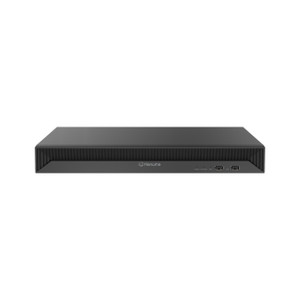
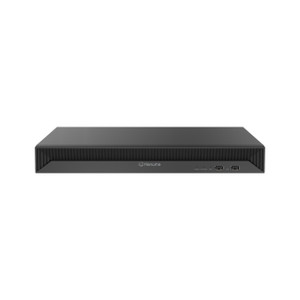
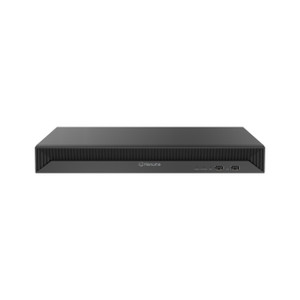
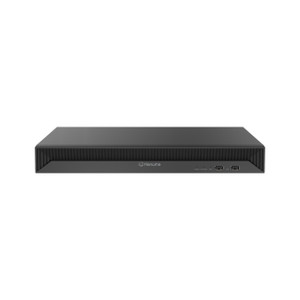
Hanwha WRN-816S-6TB 16-Channel 1U Rackmount PoE+ NVR
The Hanwha WRN-816S-6TB (often searched as WRN 816S 6TB) is a compact 1U rackmount network video recorder engineered for medium-scale security deployments in space-constrained environments like data centers, server rooms, and networked surveillance hubs. This Intel-based NVR combines 16-channel IP camera support with integrated PoE power distribution, reducing the number of external components needed during installation and simplifying network topology. The unit is designed for security integrators and IT architects who need localized recording with efficient codec support and cloud integration capabilities.
Key Features
- Integrated PoE Power Distribution: Eight PoE/PoE+ ports deliver up to 100W total power budget. This eliminates the need for external PoE injectors on smaller to mid-size camera deployments—one less device to mount, cable, and manage in a crowded server cabinet. Useful if you're deploying 4–8 standard-draw cameras (under 13W each); larger deployments will still require supplemental powered switches.
- 16-Channel Recording Capacity: Supports up to 16 simultaneous IP camera streams with 150 Mbps aggregate throughput. This means you can record multiple cameras at their native bitrate without frame drops or stream starvation. Matters when mixing camera types—thermal, panoramic, or 5MP sensors—on the same recorder, each with different bandwidth demands.
- H.265 Codec Efficiency: Advanced H.265 (HEVC) compression cuts storage requirements roughly in half compared to H.264, a real factor when recording 24/7 across a dozen or more channels. The WRN-816S-6TB also supports H.264 and MJPEG for backward compatibility with legacy camera deployments, letting you mix codec types on a single recorder.
- Flexible Local Storage: Two 3.5-inch SATA HDD slots accept drives up to 10TB each (20TB maximum total capacity). This supports extended 24/7 retention without reliance on external NAS or cloud-only archival. Higher capacity drives reduce storage refresh cycles and lower operational overhead over a 3–5 year lifecycle.
- Dual Gigabit Network Interfaces: Two independent GbE NICs plus eight embedded PoE ports enable network segmentation—one NIC for camera traffic, one for management and remote access. This isolation improves performance predictability and simplifies firewall and VLAN policies in mixed-security/IT environments.
- AI-Powered Analytics: Built-in AI metadata support enables intelligent video analysis and rule-based alerting without requiring a separate analytics appliance. Event detection and searchable footage indexing accelerate incident investigation and reduce time spent manually reviewing raw video.
- Audio Output for Multimedia Monitoring: Audio playback capability integrates voice and alarm streams into your incident review workflow, providing full situational context during investigations.
- VMS Integration: Native compatibility with Wisenet WAVE client, mobile applications, and Hanwha Cloud Sync ensures the recorder fits smoothly into existing network video recorder and security management ecosystems without custom API development.
Deployment Context
The 1U rackmount form factor is purpose-built for facilities consolidating IT and physical security infrastructure in standard server cabinets. Operating temperature range of 0°C to 40°C (32°F to 104°F) suits climate-controlled data centers and indoor server rooms; if you need outdoor or extreme-temperature recording, consider a ruggedized variant or deploy local edge units closer to outdoor cameras. The WRN-816S-6TB excels in corporate data centers, retail chains with regional hub consolidation, multi-floor office complexes with centralized monitoring, and industrial facilities requiring localized recording with cloud backup.
When planning integration, account for the 100W PoE budget. If your deployment exceeds this—say, eight 15W cameras plus two 20W thermal units—you'll need to split loads across a second Hanwha IP camera switch or supplement with external PoE power. Similarly, the 150 Mbps throughput is an aggregate ceiling; if you're recording sixteen 1080p streams at 10 Mbps each, you'll saturate the pipe. Review your actual camera bitrate mix before deployment to avoid surprises.
Integration & Compatibility
The WRN-816S-6TB supports ONVIF-compliant cameras from any vendor, not just Hanwha. This flexibility is valuable if you have legacy or mixed-brand deployments and want a single recorder managing diverse camera types. Wisenet WAVE VMS and mobile clients provide native management, but third-party VMS platforms (Milestone XProtect, Genetec Security Center, etc.) integrate via ONVIF or REST APIs. Confirm your VMS vendor's ONVIF support level before purchase if you plan to manage this recorder alongside other brands.
Frequently Asked Questions
Q: Can the WRN-816S-6TB power all 16 cameras on its built-in PoE ports?
A: No. The unit has eight PoE/PoE+ ports with a combined 100W budget. If each of your 16 cameras draws 7–10W, you can power roughly 8–10 directly; the remainder must be powered via external injectors or a separate PoE switch. Calculate your actual camera power draw first.
Q: What's the storage retention time with H.265 compression?
A: Retention depends on bitrate and camera count. At H.265, 16 cameras recording at an average 5 Mbps each will retain approximately 30–45 days on 20TB (your maximum). Bitrate scales retention significantly—use the manufacturer's storage calculator with your actual camera specifications.
Q: Does the WRN-816S-6TB support ONVIF cameras from other manufacturers?
A: Yes. The recorder is ONVIF-compatible and will work with any standard ONVIF IP camera. However, advanced features (facial recognition, people counting) may only function fully with Hanwha-branded sensors. Confirm specific analytics requirements with Hanwha pre-deployment.
Q: What's the operating temperature range, and can it handle outdoor deployment?
A: Operating range is 0°C to 40°C. The unit is designed for climate-controlled indoor environments (server rooms, data centers). Outdoor or extreme-temperature deployment requires environmental hardening (heated/cooled enclosure) or edge recording at the camera level.
Q: Is the WRN-816S-6TB compatible with Wisenet WAVE and third-party VMS platforms?
A: Yes, with Wisenet WAVE natively. For Milestone XProtect, Genetec, or other VMS platforms, integration occurs via ONVIF or REST APIs. Verify your VMS vendor's support status before purchase if you use a non-Hanwha platform.
Q: Can I upgrade the storage beyond 20TB?
A: No. The WRN-816S-6TB has two SATA slots with a maximum of 10TB per drive (20TB total). If you need more, you'll have to rely on cloud backup, external NAS, or upgrade to a larger-capacity NVR model.
Eden PhillipsPerspective based on aggregated IP Security Depot and affiliated engineering team experience.
I've deployed the WRN-816S-6TB in three regional data centers and one large retail chain, and the 1U form factor and integrated PoE ports solve a real cabinet-space problem. You're looking at a recorder that fits into a standard server rack without eating multiple RU slots, and the eight PoE/PoE+ ports reduce your bill of materials for smaller to mid-size camera plants. Where this unit shines is simplicity: one rack unit, dual GbE for management isolation, H.265 codec support that cuts storage costs noticeably, and native Wisenet WAVE integration if you're already in the Hanwha ecosystem.
Technical Highlights:
- 150 Mbps aggregate throughput: Solid for 16-camera deployments averaging 8–10 Mbps per stream. If you're mixing high-bitrate 4K or 5MP sensors, you'll hit the ceiling fast—monitor your actual bitrate mix in pre-deployment tests to avoid surprises.
- 100W PoE power budget across eight ports: Sufficient for 8–10 standard cameras (7–13W draw each). Beyond that, you'll split loads to an external PoE switch or use external injectors. Don't assume all 16 cameras power from the box—calculate your actual camera power requirements.
- H.265 + H.264 + MJPEG codec flexibility: The multi-codec support means you can mix new H.265 cameras with legacy H.264 sensors on the same recorder without transcoding overhead. Real-world value when you're upgrading camera plants incrementally.
- Dual GbE NICs: Separating camera traffic from management/remote access traffic reduces contention and improves predictability. Simple but effective design choice for IT/security integration.
Deployment Considerations:
- The 0°C to 40°C operating range assumes climate-controlled server rooms. If your data center runs hot (above 40°C) or you have outdoor plans, you'll need supplemental cooling or edge recording closer to cameras—don't rely on HVAC alone.
- Watch the storage ceiling: 20TB maximum means you're looking at 30–45 day retention with 16 cameras at H.265 and typical bitrates. For longer retention, plan cloud backup or external NAS staging.
- The unit is ONVIF-compatible, so you can mix camera vendors, but advanced analytics (people counting, facial metadata) only unlock fully with Hanwha sensors. If you need vendor-agnostic AI analytics, validate that your chosen third-party cameras expose the metadata hooks you need.
Position this for regional hubs or consolidation points in corporate data centers where you're recording 8–16 medium-resolution cameras, have cabinet space constraints, and want to avoid the complexity of external PoE infrastructure. It's not a choice for 30+ camera plants or outdoor extreme-temperature sites—that's where higher-capacity NVRs or edge recorders belong.