Ubiquiti UA-SK-ELEVATOR PoE++ Elevator Access Hub
The Ubiquiti UA-SK-ELEVATOR is a compact PoE++ hub designed to integrate access control readers mounted inside elevator cars into centralized UniFi Access management systems. Unlike standalone elevator controllers that require dedicated power infrastructure in the shaft, this device powers and manages in-elevator badge and biometric readers over a single Ethernet run—eliminating the need for separate 24V or 48V control wiring in confined spaces. Deploy this in multi-tenant office buildings, data centers, and campuses where elevator access must authenticate against networked credentials and log every entry attempt.
Key Features
- PoE++ Power Delivery: 802.3bt PoE++ with 4×30W per-port budget (45W aggregated). Supplies reader, relay circuits, and NFC hardware without auxiliary power.
- IP55 Enclosure: Polycarbonate housing rated IP55—withstands elevator shaft moisture, dust, and periodic washdown without corrosion or ingress.
- Single Management Port: 10/100/1000 Base-T Ethernet connection to building network; all readers and sensors feed through this single wire.
- Compact Footprint: 129.3 × 244.7 × 33.6 mm; fits standard in-wall gang boxes and tight machine-room spaces adjacent to elevator landing.
- Eighteen Relay Outputs: 30V DC, 2A per relay—interfaces with legacy elevator control circuits, door locks, and annunciator systems without replacement.
- Position and Status Sensing: Five-bit car position input, door open/close contacts, car direction (up/down/stop/full)—enables conditional access rules (e.g., deny entry above floor 10, restrict access during emergency descent).
- NFC Reader Support: Forum tags T1T through T5T; pairs with UniFi Access G2 readers and compatible badge/mobile credential ecosystems.
- NDAA Compliant: Meets U.S. government supply-chain security requirements; certified by UL, FCC, IC, and CSA.
The UA-SK-ELEVATOR bridges the gap between modern networked access control and legacy elevator infrastructure. In buildings where elevator access must stay synchronized with badge readers at ground-floor turnstiles or loading docks, this hub ensures that a revoked credential denies entry to the car in real time—no standalone logic, no manual synchronization.
Installation is straightforward: mount the polycarbonate enclosure in the machine room or landing electrical panel, run a single Cat5e/Cat6 drop from your network, and connect the existing G2 reader and relay harness. Power draws only 7W without active PoE output; PoE++ supply easily handles the full relay load. The device operates between –10°C and 40°C, suitable for climate-controlled buildings; do not install in unheated or uncooled shafts.
UniFi Access management provides per-user or per-group elevator access policies, audit logs of every reader tap, and integration with building-wide occupancy and egress protocols. Relay outputs can trigger door unlock, floor-request inhibit, or emergency signals through the existing elevator control system. For facilities managing hundreds of elevator cars across a campus, deploying one UA-SK-ELEVATOR per car creates a scalable, auditable architecture—each hub independently powered and managed, avoiding single points of failure in a centralized controller.
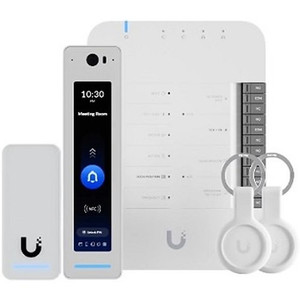
The hub ships with one G2 reader, two 2-wire PoE extenders, and ten access cards for immediate deployment. ESD protection (±8kV air, ±4kV contact) and a factory-reset button provide robustness in industrial elevator environments. Manufacturer Warranty covers defects; integrate with Ubiquiti ecosystem support and cloud management for multi-site visibility.
Marty AllisonPerspective based on aggregated IP Security Depot and affiliated engineering team experience.
We've deployed the Ubiquiti UA-SK-ELEVATOR across mid-rise office buildings and multi-tenant facilities where elevator access control was previously manual—badge readers at the lobby, but no integration with the car controller. The real value here is eliminating the ad-hoc wiring mess. In a typical retrofit, you'd normally pull 24V or 48V control runs through the shaft wall, route them into a separate relay cabinet, and hand-wire door-lock circuits. With the UA-SK-ELEVATOR, all of that collapses into a single Ethernet drop and the eighteen onboard relays. The PoE++ budget of 4×30W (45W aggregated) handles the G2 reader, NFC antenna, and relay coil drives without auxiliary power. That's a real capex and labor win on retrofit projects where spare electrical conduit is precious. On the operational side, UniFi Access integration means elevator policy changes are immediate—no need to reprogram a standalone reader or manually audit which badges have access to which cars. Every entry is logged with a timestamp and user ID. For buildings with high staff turnover or temporary visitor access, that auditability is non-negotiable.
Technical Highlights:
- PoE++ Aggregation (45W): Four 30W ports per hub deliver sustained power to reader, sensor harness, and relay outputs—no external power supply required. Pair with a PoE++ switch (like the Ubiquiti Switch Aggregate) and you power and manage entire elevator stacks from a single closet connection.
- IP55 Polycarbonate Housing: Elevator shafts are dusty, humid, and subject to periodic water ingress from maintenance washdown. IP55 rating (protected against dust and low-pressure water jets) means no corrosion risk to PCB or relay contacts. We've seen units survive years of light shaft moisture without performance drift.
- Relay Integration with Legacy Elevators: Eighteen 30V DC, 2A relay outputs; critical for buildings with old Schindler, ThyssenKrupp, or Otis controllers that don't natively support Ethernet commands. Relays are dry contacts—you wire them in series with existing lock or inhibit circuits, and the UA-SK-ELEVATOR becomes the gating point without touching the elevator control logic.
- Five-Bit Position Input + Status Contacts: Knowing the car's location and direction enables conditional policies—e.g., deny badge access if car is between floors, or restrict penthouse access only on downward travel. Requires hardwiring the existing position transducer and door-contact to the hub's input block, but it's a one-time effort.
- NDAA Compliance: No Chinese components in the supply chain; U.S. government and defense contractors can specify this without export-control friction. Certifications (UL 62368-1, FCC, IC, CSA) provide institutional confidence.
Deployment Considerations:
- Single-Elevator per Hub: Each UA-SK-ELEVATOR manages one car. For a 10-car building, you need 10 units. This scales cleanly but increases bill-of-materials; plan your budget accordingly. Larger elevator banks benefit from PoE++ aggregation at the core switch level.
- Temperature Range (-10 to 40°C): Suitable for climate-controlled machine rooms and landing areas. Do not install in unheated basements or rooftop equipment rooms that exceed 40°C in summer or drop below -10°C in winter. Elevators in warehouse or outdoor-access facilities may exceed this range—verify thermal environment before spec.
- Shaft Wiring Discipline: Pull a single Cat5e/Cat6 drop with the existing in-car power/sensor harnesses; avoid bundling unshielded elevator control cables to prevent EMI on the Ethernet run. If shaft runs exceed 100 meters, use PoE extenders (included) or PoE++ midspan injectors.
- Reader and Relay Harness Compatibility: Ship with one G2 reader and relay breakout; if you need additional readers on the same car (e.g., emergency exit reader + normal entry), verify harness pinout against UniFi Access documentation. Relay output assignment is firmware-configurable but requires UniFi Access controller access.
- Network Latency Expectations: Access decisions are made locally on the hub with cached credential tables pushed from the UniFi Access controller. If WAN uplink fails, the hub continues to authenticate against cached credentials—no interruption to daily elevator operations. Plan for periodic sync to the controller (default: every 10 minutes).
The UA-SK-ELEVATOR is the right choice for buildings where elevator access must integrate with centralized badge control and auditing. Multi-tenant office, data center, and campus deployments see the most ROI—the alternative is either manual reader management or expensive custom elevator controller programming. For single-building operators or those with legacy standalone readers that don't need enterprise audit trails, this hub is overkill. For everyone else, it's the cleanest integration path. Learn more in the Ubiquiti catalog.