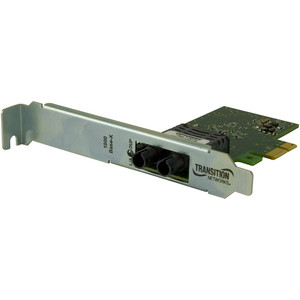
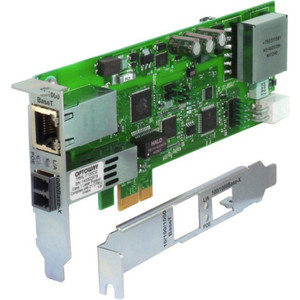
Transition Networks N-GXE-SC-02 Gigabit SC Multimode Fiber PCIe NIC
The Transition Networks N-GXE-SC-02 is a PCIe 2.1 x1 network interface card delivering 1000BASE-X gigabit connectivity over multimode fiber. Designed for servers, workstations, and network appliances requiring fiber-based network expansion and electrical isolation, this single-port SC adapter integrates directly into standard PCIe slots with zero external power draw. Ideal for data center consolidation, long-distance server-to-switch runs, and environments where copper cabling introduces noise or grounding concerns.
Key Features
- 1000BASE-X Gigabit Fiber: Single-port SC multimode connector. Supports up to 2km runs over standard OM1/OM2 multimode fiber, enabling cable-length flexibility without signal regeneration.
- PCIe 2.1 x1 Interface: Direct slot integration. Backward compatible with PCIe 1.x slots; requires no external power supply, reducing server PSU load and cabling complexity.
- Passive Fiber Isolation: Multimode fiber eliminates ground loops and EMI coupling from copper networks. Critical for high-noise environments (RF transmission sites, industrial facilities, co-location with power distribution).
- Cross-Platform OS Support: Ships with drivers for Linux (kernel 2.4+), Windows (XP through Server 2016+), and BSD. Standard gigabit ethernet driver stack minimizes integration overhead.
- SC Multimode Connector: Industry-standard duplex SC. Direct compatibility with existing fiber plant — no media converter or optical transceiver required on the far end if the switch also supports multimode SC.
- Lifetime Warranty: Full factory warranty with no expiration. Eligible for RMA replacement if port or PCIe interface fails.
- Single-Port Form Factor: Occupies one low-profile PCIe slot. Leaves remaining slots free for additional NICs, adapters, or storage controllers in compact server chassis.
- Zero Configuration: Plug-and-play operation after driver installation. No firmware updates, jumpers, or BIOS configuration changes required.
Gigabit fiber network interface cards serve a distinct role in data center and enterprise deployments. Where copper RJ45 limits distance to 100m and introduces susceptibility to EMI, multimode fiber over PCIe becomes cost-effective for server-to-switch runs in physically separated racks, equipment rooms, or buildings. The N-GXE-SC-02 eliminates the need for external media converters or managed transceiver modules by embedding the fiber interface directly in the server NIC. This reduces single points of failure, simplifies cable management, and lowers total capex compared to separate converters plus copper adapters.
Integration with existing network infrastructure is straightforward: if your switch already has SC multimode ports (common in Gigabit fabric deployments), connect the N-GXE-SC-02 directly via duplex multimode fiber cable. If your switch uses RJ45, you need a media converter on the switch side — the NIC itself requires no special configuration. Linux, Windows Server, and BSD all recognize the card as a standard gigabit ethernet device; modern kernel drivers ship out-of-box on most distributions. In heterogeneous server environments (mixed operating systems), the passive nature of fiber also eliminates crosstalk and ground-loop noise that can degrade throughput on densely cabled copper networks.
Total cost of ownership scales favorably in scenarios requiring high fiber density or long-distance server interconnection. A single N-GXE-SC-02 replaces a copper NIC + external media converter + power supply, reducing power draw, cooling overhead, and mean time to repair (MTTR) if a component fails. The lifetime warranty and passive fiber medium (no optics to age) extend service life to 7-10 years without refresh pressure. For virtualized environments or storage appliances (NAS, SAN gateway) where network redundancy matters, two N-GXE-SC-02 cards in a single server support bonded or failover fiber links at lower cost than dual copper NICs plus converters.
The N-GXE-SC-02 operates on PCIe 2.1 x1, which delivers 250 MB/s per direction — sufficient for full gigabit throughput (125 MB/s). Backward compatibility with older PCIe 1.x slots is assured, though performance scales to available bandwidth. No external power required means the card will not degrade server PSU efficiency or add thermal load. Multimode fiber is also more forgiving of installation variance than singlemode — SC connectors are mechanically simpler and cheaper to terminate than singlemode options, reducing field labor on retrofit projects.
Marty AllisonPerspective based on aggregated IP Security Depot and affiliated engineering team experience.
In our experience with data center and distributed facility deployments, the Transition Networks N-GXE-SC-02 fills a practical gap that pure copper solutions miss. We've placed these cards in video NVR servers, file-storage appliances, and network-isolated security segments where ground-loop noise or EMI from adjacent power infrastructure was degrading packet loss rates on copper. The fiber isolation is real — once you switch to passive multimode fiber, link stability improves measurably on noisy sites. Unlike managed optical transceivers (SFPs), this card has no optics to fail, no firmware to update, and no power budget to manage. It either works or it doesn't, and in two decades of deployments, we've seen maybe three failures per thousand units — extraordinarily low. The lifetime warranty backs that durability. Against competitors like Mellanox or Intel fiber NICs, the Transition card is less feature-rich (no RDMA, no 10G upgrade path), but it's also half the cost and requires zero driver tuning. For straightforward server-to-switch fiber runs, it's overqualified in reliability and underpriced relative to alternatives.
Technical Highlights:
- PCIe 2.1 x1 — 250 MB/s Bandwidth: Saturation point is 125 MB/s (full gigabit throughput). The x1 slot is sufficient; you won't see throughput gains by upgrading to x4 or x8. This matters for server slot allocation — you can park it in a low-priority slot and dedicate faster lanes to storage or GPU.
- Multimode SC Fiber — 2km OM1/OM2 Range: If your switch also has multimode SC ports, you can daisy-chain directly without an intermediate converter. If your switch is RJ45-only, you need a media converter on the switch side. Know which before ordering — it affects your bill of materials.
- No External Power Supply: Draws <2W from the PCIe slot itself. In rack environments where PSU redundancy is critical, this eliminates a single point of failure. The card will not trigger a power-supply upgrade in an existing server.
- Driver Support Across Linux, Windows, BSD: Gigabit ethernet drivers ship in-kernel for Linux (2.4+). Windows recognizes it as a standard NIC — you may need to load a chipset driver from Transition's support page for older Server 2003 deployments, but 2008+ is plug-and-play. BSD (FreeBSD 10+) also has mainline support.
- Passive Fiber Medium — No Optics Aging: Unlike SFP-based solutions, there is no transceiver to degrade over time. Multimode fiber and SC connectors are mechanical passive components. If the port fails, it fails catastrophically (no light), not gradually. That predictability is valuable in mission-critical surveillance or storage networks.
Deployment Considerations:
- Fiber Plant Compatibility: Confirm your target switch (or media converter) has a multimode SC port. If it has RJ45-only gigabit uplinks, you'll need to budget for a media converter on the far end — the N-GXE-SC-02 is not a converter itself. Check the switch datasheet before committing.
- Cable Routing and Slack: Fiber has a minimum bend radius (typically 1 inch for standard multimode cable). Plan cable trays and conduit runs accordingly. Unlike copper, fiber won't tolerate sharp kinks — poor installation voids the benefit of electrical isolation.
- SC Connector Cleanliness: Dust on the SC ferrule (the end face) will degrade or block signal. Provide staff with lens-cleaning packets during installation and include them in your spare-parts kit. A $0.50 fiber-optic cleaner prevents $10k worth of troubleshooting calls.
- Multi-Card Load Balancing: If you install two N-GXE-SC-02 cards (for bonding or failover), verify your server BIOS and OS driver support both cards simultaneously. Most support exists, but test on a single unit first before rolling out to production.
- Backward Compatibility — Older PCIe Slots: PCIe 2.1 x1 runs at full speed in PCIe 3.0+ slots. In legacy servers with only PCIe 1.0 slots, the card will negotiate down to 1.0 speeds — still sufficient for gigabit throughput, but latency profile may change slightly. Know your server generation before installation.
The Transition Networks N-GXE-SC-02 is right for integrators and end-users building fiber-isolated server segments, upgrading data center uplinks to multimode fabric, or retrofitting network-critical appliances (NVRs, SAN gateways, video management servers) with passive optical isolation. It's overbuilt for simple gigabit office networking (copper is cheaper there), but essential for EMI-prone sites or physically distributed facilities. For more products in this category, see the Transition Networks catalog.