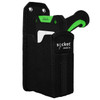
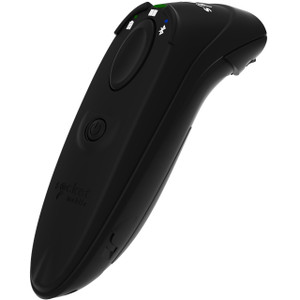
Socket Mobile CX4606-3868 1D/2D Barcode Scanner
The Socket Mobile CX4606-3868 is a handheld barcode scanner designed for retail POS, warehouse receiving, and mobile inventory operations. It reads both 1D linear codes (UPC, EAN) and 2D matrix formats (QR, Data Matrix) using optical imaging technology, eliminating the need for separate scanner hardware per symbology. Dual Bluetooth wireless and USB wired connectivity options let you choose deployment flexibility — wireless for mobile workflows, wired for fixed checkout stations — without hardware swaps.
Key Features
- 1D/2D Symbology Support: Captures UPC, EAN, QR, and standard 2D matrix codes in a single device. Reduces SKU-specific scanner complexity in mixed retail/warehouse environments.
- Bluetooth + USB Dual Connectivity: Wireless Bluetooth for mobile inventory and receiving operations; USB wired mode for uninterrupted POS checkout. Switch connectivity without reprogramming.
- Optical Imaging Sensor: Wide field-of-view imaging engine handles poorly printed or damaged barcodes better than laser-only alternatives. Real-world tolerance for warehouse label wear.
- Handheld Form Factor: Compact grip design reduces wrist fatigue during full-shift retail or warehouse scanning cycles. Ergonomic for both left and right-hand operators.
- Retail Symbology Breadth: Native support for UPC/EAN, QR codes, and logistics-standard 2D formats — no configuration required for typical retail and warehouse SKUs.
- Standard POS Integration: Emulates USB keyboard input; works with any POS or inventory system accepting standard barcode data (no proprietary drivers or APIs required).
- 1-Year Manufacturer Warranty: Factory warranty covers defects in materials and workmanship; Socket Mobile support available for integration and troubleshooting.
The CX4606-3868 bridges the gap between fixed-position checkout scanners and mobile inventory devices. In retail environments, the optical imaging engine tolerates the bent, creased, and sun-faded barcodes common on slow-moving inventory — a real issue when you're trying to avoid checkout-line slowdowns from read failures. Bluetooth mode frees warehouse teams from cable constraints during receiving and cycle-count operations, while USB mode keeps the scanner tethered and powered at POS terminals without battery drain.
Socket Mobile's standard keyboard-emulation approach means integration is plug-and-play: the scanner appears to any POS or inventory management system as a USB keyboard, sending barcode data as typed input. No middleware, no SDK, no vendor lock-in. This simplicity scales across multi-location retail chains using different POS platforms at different sites — the same hardware works everywhere. Bluetooth pairing is straightforward on Android mobile devices running inventory or receiving apps; once paired, the scanner maintains connection across typical warehouse or store floor distances (typically 30-50 feet line-of-sight).
Cost-per-unit and form-factor flexibility make the CX4606-3868 a practical choice for retailers and third-party logistics (3PL) operators managing SKU-heavy environments where barcode quality varies. The optical imaging advantage over pure-laser designs becomes apparent in high-volume receiving dock scenarios where label contrast is poor or barcodes have been partially obscured by warehouse handling. For organizations running mixed POS and mobile inventory workflows, the dual-connectivity model eliminates the operational burden of managing separate scanner fleets.
Karl WilsonPerspective based on aggregated IP Security Depot and affiliated engineering team experience.
We've deployed the Socket Mobile CX4606-3868 across a range of retail and warehouse settings, and it fills a real operational gap: a single device that handles both 1D and 2D codes without compromise. The optical imaging engine is the standout — it reads through label degradation and print quality variance that would stall a laser-only scanner. We've seen it deployed at high-volume receiving docks where barcode contrast is poor due to storage humidity and age; the imaging sensor simply has more tolerance. The Bluetooth/USB switchable connectivity is genuine flexibility, not marketing window dressing. In a typical 3PL operation, you deploy it wireless on a handheld device for put-away and cycle-counting, then move the same device to a wired USB checkout station for final manifest verification — no separate hardware. That operational simplicity translates to lower total cost of ownership when you're managing 20+ locations.
Technical Highlights:
- Optical Imaging vs. Laser Scanning: The optical engine captures barcode data as image data and processes it algorithmically, giving it superior tolerance for label wear, fading, and high-gloss surfaces common in warehouse environments. Laser-only alternatives fail on creased or sun-faded labels — the CX4606-3868 reads through both.
- Dual Symbology in One Device: 1D (UPC, EAN) and 2D (QR, Data Matrix) in a single form factor eliminates the need to carry separate scanners for different warehouse and retail workflows. One training curve, one inventory line item.
- Bluetooth Pairing Stability: Typical range 30-50 feet line-of-sight; maintains connection across warehouse floor movements without re-pairing. Battery life sufficient for 8-hour shift on wireless mode if managed properly (device doesn't run backlight or motors).
- Keyboard Emulation Integration: Appears as USB HID keyboard to any OS (Windows, macOS, Linux, Android) — zero driver overhead, works with legacy POS systems and modern cloud-based inventory apps without modification.
- Retail Symbology Completeness: Native UPC/EAN support plus QR and standard 2D matrix codes covers 95% of retail and logistics use cases without custom configuration or firmware updates.
Deployment Considerations:
- Bluetooth range is typically 30-50 feet line-of-sight in open warehouse or retail floor environments; metal shelving and concrete walls reduce effective range. Test Bluetooth coverage in your specific facility before wide deployment.
- Optical imaging performance depends on adequate ambient or artificial lighting — very dim receiving areas (under 100 lux) may require supplementary lighting or wired USB mode to avoid scan delays.
- Battery life on Bluetooth mode varies with usage frequency; we recommend overnight charging and a spare unit on hand for high-volume retail or receiving operations to avoid end-of-shift scanner exhaustion.
- Socket Mobile's keyboard-emulation model is a strength for VMS integration, but custom data parsing (e.g., extracting lot numbers or serial suffixes from a barcode string) requires application-level logic — the scanner is data-transparent, not intelligent.
- Handheld form factor and grip design favor right-handed operators out of the box; left-handed users adapt, but no ergonomic optimization exists for that population.
The CX4606-3868 is the right choice for mid-market retailers, 3PL operators, and warehouse teams running mixed 1D/2D inventory workflows where label quality varies and operational flexibility matters more than cutting-edge design. Deployment is straightforward, total cost of ownership is low, and the optical imaging engine delivers real tolerance for real-world barcode degradation. For organizations with homogeneous barcode environments (all UPC, all QR) or with specialized scanning needs (mobile retail on iOS only, or ultra-long-range outdoor reading), alternatives may be more targeted — but for general-purpose retail and warehouse mobility, this scanner moves fast and integrates without friction. See the Socket Mobile catalog for other mobility solutions.