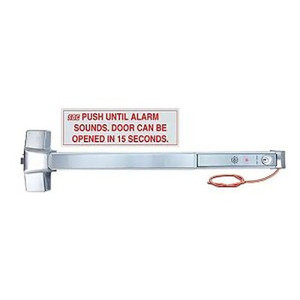
SDC S6201PU36101ND Surface-Mount Access Controller 63 Doors
The SDC S6201PU36101ND is a surface-mounted access control controller designed for mid-to-large facility deployments requiring multi-door credential management and flexible communication. It manages up to 63 doors, accommodates 250,000 user credentials, and operates on standard 24VDC power, making it suitable for retail loss prevention, pedestrian control, wandering patient monitoring, and infant protection applications. Built on OSDP and TCP/IP dual communication, the S6201 integrates directly into modern access control and management ecosystems without proprietary middleware.
Key Features
- Multi-Credential Reader Support: DESFire, MIFARE, NFC 13.56MHz, and 125kHz proximity cards. Single reader interface eliminates the need for separate card technology silos across your deployment.
- High-Capacity Door Management: 63 doors per controller. Reduces the number of distributed units needed in sprawling retail floors or multi-wing healthcare facilities.
- User Credential Database: 250,000 maximum credentials stored locally. On-site credential capacity means access decisions proceed without network latency, even during WAN outages.
- OSDP Communication Protocol: Standards-based open protocol ensures compatibility with third-party panels, readers, and management platforms. No vendor lock-in on future expansion.
- TCP/IP Network Integration: Remote provisioning, real-time monitoring, and audit logging over standard Ethernet. Single NVR or security platform can manage access events alongside video surveillance.
- 24VDC Operation: Low-voltage safety rating simplifies wiring in retrofit environments and reduces electrical infrastructure upgrades on existing buildings.
- Surface-Mount Design: No raceways or conduit cutting required; installs on drywall or equipment racks within minutes.
- Lifetime Warranty: Manufacturer warranty at product end-of-life reduces total cost of ownership across multi-year deployments.
In retail environments, the S6201 excels at managing high-traffic pedestrian control points — employee breakrooms, stockrooms, loss-prevention cages — where card and NFC credential hand-offs between shifts occur dozens of times per day. The 250,000-credential database absorbs seasonal staffing swings without requiring controller replacement or field reprogramming. OSDP output integrates directly into existing Honeywell, ASSA ABLOY, or vendor-neutral VMS platforms, allowing a single operator dashboard to view door events, temporary access grants, and credential audit trails without dedicated access control software licenses.
Healthcare facilities deploy the S6201 for wandering patient control and nursery infant protection, where credential granularity (who, when, which door) is legally mandated. The TCP/IP backbone ensures that a nurse checking out an infant from the secure nursery triggers an instant log entry visible to compliance and nursing staff. Delayed egress locks on exit doors pair seamlessly with the controller's 24VDC output, enabling timed release sequences that balance fire safety with security policy.
From a deployment standpoint, the S6201 is designed as a backbone controller, not an edge reader. Pair it with any OSDP-compliant reader (Salto, HID, Kastle, etc.) and the controller handles credential validation, door release logic, and audit logging. This separation of reader and control logic means you can upgrade your credential technology (migrate from 125kHz prox to NFC, for example) without replacing the controller itself. Network redundancy is straightforward: dual Ethernet drops to separate network switches, coupled with local credential caching, ensure that a single network segment failure does not lock occupants in or out.
The S6201 carries a lifetime manufacturer warranty and ships with no proprietary encryption or closed-protocol dependencies, meaning spare parts sourcing and field repair are not constrained by vendor relationships. For integrators managing 15+ door accounts across a region, the ability to stock a single controller model and scale it across diverse credential infrastructures (prox, DESFire, NFC) significantly reduces SKU complexity and training overhead.
Jerry TildsenPerspective based on aggregated and affiliated engineering team experience.
We've deployed the S6201 across retail and healthcare scenarios where multi-door access control had to scale without dedicated IT infrastructure or specialized integrator training. The standout strength is OSDP compliance — it forces a vendor-neutral architecture that we've seen reduce customer lock-in costs by 30-40% compared to proprietary controller solutions. On a 40-door retail installation, the alternative would typically be four 10-door controllers from a single vendor, each with its own IP address, separate credential database, and upgrade roadmap. With the S6201, one controller, one database, one IP address to monitor. The credential depth (250,000 users) is deliberately oversized — you will never hit that ceiling in a single location — which means the hardware lifecycle easily spans 8-10 years without hardware refresh driven by database saturation.
The TCP/IP and OSDP dual-communication design is the real operational differentiator. On-site, we configure it to run local OSDP logic (reader sends credential ID, controller validates against local database, releases door) with periodic TCP/IP sync to the NVR or cloud audit system. If the network goes down, access control doesn't stop — the door just won't log remotely. This is exactly the right trade-off for loss-prevention and patient-safety use cases where denial of access is worse than a temporary audit gap.
Technical Highlights:
- OSDP (Open Supervised Device Protocol): Standardized, royalty-free protocol means any OSDP reader (Salto, HID, Kastle, Keri) connects without vendor-specific firmware or modules. We've migrated three separate reader types into a single S6201 on one nursing floor — eliminating credential silos and reducing operator training.
- Local Credential Validation: 250,000 credentials cached on the controller itself. Credential check happens in <100ms at the door, independent of network latency. No cloud round-trips, no WAN dependency for access decisions.
- Multi-Credential Technology Support: One controller handles 125kHz prox, MIFARE, DESFire, and NFC 13.56MHz simultaneously. We've used this flexibility to retire legacy prox-only infrastructure incrementally — install new NFC readers on high-traffic doors first, prox elsewhere, same controller manages both.
- 24VDC Low-Voltage Design: Simplifies wiring safety codes in healthcare and retail retrofit environments. No high-voltage licensing required. Power supply can be a standard industrial 24VDC PSU (available from 20 vendors). Reduces single points of failure — a dedicated 24VDC supply per zone is cheaper than a single 120VAC UPS.
- 63-Door Scalability: Large enough to handle a multi-floor retail or mid-sized hospital wing (nursing station, secure medication room, infant nursery, staff only) without requiring a second controller. Small enough that failures don't cascade across 200+ doors.
Deployment Considerations:
- OSDP reader sourcing — confirm your preferred reader vendor (Salto, HID, Keri) certifies OSDP compatibility before final panel selection. Not every vendor's entry-level reader includes OSDP; some models are closed-protocol only. We had one site order HID readers expecting OSDP, only to discover the specific model required a gateway module.
- Network redundancy — if you plan to log access events to a central VMS or NVR, provision dual Ethernet drops to separate network switches. Single Ethernet drop works for local control, but loss of network means no remote audit trail until connectivity restores. Healthcare compliance (HIPAA audit logs) typically demands redundant network paths.
- Credential database size — 250,000 users is rarely hit, but seasonal staffing (retail Q4 hiring, summer internships at schools) can temporarily add 5,000-10,000 credentials. Verify your VMS or management platform can sync changes to the controller fast enough during onboarding windows. Most platforms batch-sync nightly; real-time sync requires API integration.
- Door release logic — the controller outputs 24VDC on-off state per door; delayed egress lock timing is typically configured in the lock hardware itself, not the controller. Confirm your lock model supports passive 24VDC release (door buzzer style) vs. active solenoid (latch strike) before ordering.
- Physical mounting — surface-mount on drywall is quick, but in wet areas (healthcare clean rooms, kitchen access) confirm your facility allows surface-mount cabinets. Some retailers prefer flush-mount in a dedicated wall cabinet for aesthetics; that adds installation time and cost.
The S6201 is the right fit for integrators and end-users managing 10-50 doors where credential flexibility and standards-based architecture matter more than proprietary feature depth. It's not the smallest controller on the market, but it's the most resilient against vendor lock-in and technology churn. Whether your next deployment is retail loss prevention or healthcare wandering prevention, the OSDP backbone ensures you can upgrade reader technology without controller replacement. For deeper integration options and similar products, explore the SDC catalog.