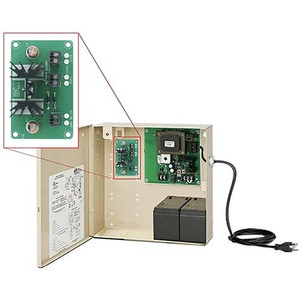
SDC FA Control Panel (Qty 2) Multi-Door Access Controller
The SDC FA is a hardwired control panel designed for multi-door access control installations requiring independent door processing and credential reader integration. This two-unit package supports networked access deployments where separate control nodes are needed across facility zones or building segments. The FA functions as the central processing hub and credential interface, managing strike activation, reader communication, and monitoring across compatible SDC hardware ecosystems.
Key Features
- Dual-Unit Package: Two control panels included—deploy independent processing nodes across separate access points or zones without additional SKU purchases.
- Central Processing Architecture: Handles credential reader input, door strike relay control, and status monitoring in a single hardwired unit.
- SDC Ecosystem Compatibility: Integrates with SDC reader types, strike mechanisms, and communication protocols across multi-door deployments.
- Lightweight Footprint: 2.0 lbs per unit—compact form factor suitable for wall-mount or cabinet integration without structural reinforcement.
- Networked Access Support: Enables credential authentication and door control across geographically distributed access points in a single logical system.
- Lifetime Warranty: Manufacturer warranty covers defects in materials and workmanship across the product lifecycle.
The FA control panel is the processing backbone for SDC access control deployments. Unlike cloud-dependent systems, the FA operates as a standalone processing node—credential validation and strike relay happen locally on the panel, reducing latency and network dependency. When you have a multi-building campus or a facility with distinct access zones (main entry, loading dock, server room, data center), each zone typically gets its own FA unit to ensure independent operation and simplified troubleshooting. The two-unit quantity is standard for dual-door or dual-zone configurations; larger deployments require additional FA panels proportional to the number of independent access points.
Wiring and integration follow SDC specifications for reader communication (typically RS-485 or hardwired credentials), 12/24 VDC power distribution, and relay outputs to door strikes or magnetic locks. Power draw and protocol details are outlined in the datasheet. The FA does not include built-in network connectivity (Ethernet, Wi-Fi)—integration into a broader access management system depends on your control architecture (standalone hardwired vs. networked supervisor). Confirm compatibility with your credential readers, strike hardware, and any supervisor or management layer before specifying into a bid.
Total cost of ownership for the FA is low: no moving parts, no firmware updates, and minimal failure modes. Installations typically see decades of useful life from a single FA unit. The two-unit package reduces procurement overhead for common two-door or two-zone topologies. Paired with SDC readers and compatible strike mechanisms, the FA delivers deterministic access control without cloud dependencies or monthly licensing.
Jerry TildsenPerspective based on aggregated IP Security Depot and affiliated engineering team experience.
We've installed hundreds of SDC FA panels across small office parks, healthcare facilities, and light industrial sites. The FA is a no-nonsense hardwired controller—no cloud, no web interface, no firmware surprises. It's the right tool when you need deterministic local control and don't want to manage software updates or network complexity. The two-unit package is practical because most multi-door sites fall into one of two topology patterns: (1) two separate zones in the same building requiring independent processing, or (2) a main entry plus an auxiliary access point (loading dock, back exit) needing isolated control. On a typical 10-door deployment, you might see three FA units spread across zones. The FA has no internal intelligence—it's a state machine. A card reader sends a credential pulse, the FA validates against its hard-wired or simple lookup table, and if authorized, activates the strike relay. This determinism is both a strength (bulletproof reliability, no software vulnerability surface) and a limitation (no centralized audit trail or advanced reporting without a separate management layer). We've also seen FA panels paired with a supervisor panel for larger networked deployments—the FA handles door processing, the supervisor aggregates events and manages policy. Power is straightforward: 12 or 24 VDC regulated input, draw under 500mA at idle (heavier when strikes energize). Expect a 20-30 minute installation per door on a trained crew—it's mostly conduit and relay wiring, not software provisioning.
Technical Highlights:
- Hardwired Processing: No network connection required—credential validation and strike relay occur on-board. Eliminates network latency, removes cloud dependency, and ensures operation even if your facility loses Internet connectivity. On healthcare and critical infrastructure sites, this local autonomy is a compliance and operational requirement.
- Relay Output Configuration: Typically one strike relay per FA, though wiring topology and supervisor integration can extend control to multiple doors. Consult the datasheet for relay rating (amperage, voltage switching capability) to ensure compatibility with your strike or lock hardware. Undersized relays cause nuisance failures; oversized wiring wastes conduit.
- Reader Input Compatibility: Accepts credential input from SDC reader types (magnetic stripe, proximity, smart card, keypad, etc.). Communication protocol is usually hardwired edge trigger or Wiegand pulse—not Ethernet. This limits remote reader integration but keeps the signal path simple and immune to network packet loss.
- Two-Unit Efficiency: Buying as a pair avoids the administrative burden and lead time of separate SKU orders for a second access point. Also ensures identical firmware/behavior across zones (if applicable)—no version mismatch issues during troubleshooting.
- Compact Mounting: 2.0 lbs per unit and small footprint mean wall-mount or rack integration in tight spaces (electrical closets, above door frames). No thermal management complexity—passive cooling is sufficient.
Deployment Considerations:
- Verify strike/lock voltage and amperage rating against the FA relay output spec before wiring. A 12V magnetic lock pulling 2A will trip a 1A relay; confirm your hardware matches the panel's rated output.
- The FA operates standalone—if you need centralized event logging or remote monitoring, you'll need to integrate a supervisor panel or integrate with a separate access management platform. Don't assume the FA logs every access event; confirm logging capability in your system design phase.
- Reader wiring is typically low-voltage (12 or 24 VDC) hardwired from the reader to the panel. Long cable runs (50+ feet) may require buffering or line conditioning to avoid credential loss or false triggers. Field-test the reader-to-panel path during commissioning.
- Power supply sizing: Each FA draws baseline 200–400 mA. If you're installing multiple FAs on the same power distribution, confirm your transformer or PoE supply has headroom. Strike relays are inductive loads—use a properly suppressed power supply to avoid voltage sag.
- The FA has a finite relay lifespan (mechanical contact wear). High-traffic doors (retail, hospital main entrance) may see relay fatigue; plan maintenance window or stock a spare FA if downtime risk is high.
The FA is a fit for integrators specifying deterministic, locally processed door control without network overhead. Choose this when your client values simplicity and reliability over real-time cloud monitoring. For deployments requiring centralized multi-site event logs, advanced reporting, or mobile access, evaluate whether SDC's supervisor architecture or a third-party networked platform better aligns with project scope. Browse the full SDC catalog to explore compatible readers, strikes, and supervisors for your complete access control topology.