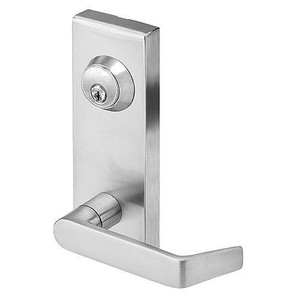
SDC EK14U Eclipse Trim 630 OSDP Controller
The SDC EK14U is an escutcheon trim controller assembly designed for the Eclipse 630 electronic locking mechanism, engineered to translate OSDP protocol signals from certified readers into mechanical lock actuation. This wired controller bridges your proximity or keypad reader hardware to the 630 lock body, supporting NFC/13.56MHz credential validation in single- or multi-credential access deployments. It mounts in passage mode (default unlocked state), meaning the lock relies entirely on reader authorization and controller command to grant access — a standard configuration for professional installations where reader integration is non-negotiable.
Key Features
- OSDP Protocol Support: Open Supervised Device Protocol certification ensures interoperability with any OSDP-compliant access control platform (Salto, Gallagher, Allegion, Genetec, etc.). Eliminates proprietary lock-to-reader wiring and single-vendor lock-in.
- Multi-Credential Reader Flexibility: Accepts proximity readers and keypad reader types on the same controller — no separate escutcheon trim swap needed to support NFC cards or PIN entry alongside card credentials.
- NFC/13.56MHz Proximity Card Support: Industry-standard contactless credential format (ISO14443A/B) — compatible with commercial NFC cards, mobile device credentials, and legacy proximity card stocks already deployed at your facility.
- Wired Connectivity: Direct hardwired connection to lock body eliminates wireless latency and battery drain concerns. Suitable for high-traffic or mission-critical access points where connectivity reliability is non-negotiable.
- Passage Mode Configuration: Default unlocked state with reader-controlled actuation — appropriate for emergency egress compliance and controlled-access scenarios where fail-safe behavior is required by code or operational policy.
- Lifetime Warranty: Manufacturer warranty covers mechanical and electrical failures, reducing replacement capex on high-use entrance hardware over a 5-10 year facility lifecycle.
The EK14U is purpose-built for integrators deploying OSDP-compliant access control across mixed-reader environments. Unlike generic trim assemblies, this controller actively negotiates protocol handshakes with readers, meaning reader provisioning and controller firmware alignment must occur before field deployment — cutting corners on commissioning causes silent authorization failures at the door.
Compatibility verification is critical: the EK14U is specific to the Eclipse 630 locking family. Verify your existing or planned lock model against the datasheet before procurement; mounting a 630-trim controller onto a 700-series or 800-series lock body will result in mechanical misalignment and non-functional assembly. Many integrators order trim assemblies based on aesthetic preference alone, then discover incompatibility during rough-in — reference the Eclipse lock part number on your hardware bill of materials, not just the escutcheon appearance.
Deployment scenarios where the EK14U excels include card-readers-only installations (no keypads), retrofit projects consolidating multiple reader types onto one door, and facilities migrating from legacy Wiegand readers to OSDP-based credentialing. Passage mode makes it unsuitable for fail-secure applications (e.g., server rooms or secure storage) where the lock must remain locked until credential verification; those deployments require an active-locking controller variant. On the total cost of ownership side, OSDP eliminates the need for proprietary reader-to-lock harnesses, reducing spare-parts inventory and simplifying troubleshooting across a multi-building estate.
The EK14U ships with a lifetime manufacturer warranty covering mechanical and electrical defects, with no annual licensing or firmware-update fees. Pair it with any OSDP-certified reader (Salto, Gallagher, HID, Allegion, or third-party certified hardware) and your VMS platform's access control module (Genetec Security Center, Milestone XProtect, etc.). Field testing and reader firmware synchronization are mandatory before live deployment — OSDP protocol version mismatch or unsigned reader credentials will silently block access until resolved on-site.
Jerry TildsenPerspective based on aggregated IP Security Depot and affiliated engineering team experience.
We've deployed the SDC EK14U in corporate campuses, healthcare facilities, and retrofit projects where OSDP interoperability was the non-negotiable requirement. The real operational win is freedom from proprietary reader cabling and lock-vendor dependencies — once you commit to OSDP, you can swap reader hardware or access control platforms without ripping out trim assemblies. That flexibility is worth the integration overhead. On the flip side, OSDP does require smarter commissioning: reader provisioning, certificate exchange, and protocol negotiation aren't set-and-forget operations like legacy Wiegand readers. We've seen sites where the EK14U was installed but readers weren't provisioned until weeks later, leaving doors in mystery mode until an integrator revisited and sync'd the certificate chain. Passage mode is the default lockout behavior, which means your access control system (or reader) is the single point of failure — if the reader goes offline, the door defaults to unlocked. That's the right call for emergency egress, but wrong for secure storage or sensitive areas. If you need fail-secure (default locked), you need a different controller. In our experience, the EK14U shines in environments where you're consolidating reader types (NFC cards + PIN entry on the same door) or managing multi-building campuses where the VMS is the source of truth for all credentialing. The lifetime warranty means you're not sweating component failures 18 months post-install.
Technical Highlights:
- OSDP Certification: Open Supervised Device Protocol is the only open-standards access control protocol with real security audit trails and encryption. Unlike Wiegand (which sends plain-text card numbers over unsecured wire), OSDP includes PKI certificate exchange and AES encryption — critical if your facility has any compliance requirements (healthcare, finance, defense). We've seen regulatory audits specifically call out OSDP as the baseline for credible access logging.
- NFC/13.56MHz Flexibility: The controller supports both proximity cards (older passive RFID, 13.56 MHz) and newer NFC mobile credentials on the same escutcheon. This eliminates the need to stock multiple trim variants or stage a reader upgrade project separately from a lock refresh — you're future-proofed against mobile credential deployments without hardware replacement.
- Passage Mode Default: The lock is unlocked in its default state, with the reader/controller responsible for authorization. This satisfies NFPA 101 (Life Safety Code) fail-safe egress requirements on the exit side of a door, and it's operationally safe when paired with a responsive access control system. However, if your network latency or reader availability is spotty, passage mode means unauthorized access becomes a risk — test your reader uptime and network redundancy before deploying on a critical door.
- Wired-Only Connectivity: No wireless or battery fallback — the EK14U relies entirely on hardwired power and control lines to the 630 lock body. That eliminates RF interference issues and battery-drain troubleshooting, but it also means a severed wire or power loss at the lock disables the controller entirely. Make sure your rough-in includes conduit protection and a dedicated UPS circuit if the door is on an emergency egress path.
- Eclipse 630 Family Lock Requirement: This trim is 630-specific. We've caught integrators ordering based on escutcheon aesthetics alone, only to discover during rough-in that the 630-trim doesn't fit their 700-series lock body. Always verify the lock part number (not just the series name) against the datasheet before cut orders.
Deployment Considerations:
- OSDP reader provisioning and certificate exchange must happen in a controlled environment before field deployment. Unsigned or mismatched reader credentials will silently fail authorization until the certificate chain is re-synced on-site — don't assume plug-and-play out of the box.
- Passage mode (default unlocked) is only appropriate for emergency egress or supervised areas where an external controller can actively authorize each access event. If you need the lock to remain locked by default, you need an active-locking trim variant, not the EK14U.
- Wired connectivity requires hardwired power to the lock body via conduit. Plan for 24VDC supply, control signal lines, and at least one emergency power drop if the door is on a life-safety path. Wireless or battery fallback is not an option.
- Verify OSDP reader firmware and access control platform compatibility against the datasheet before purchase. Some legacy readers (Wiegand-only interfaces) require a separate OSDP gateway; the EK14U controller alone won't make them compliant.
- The lifetime warranty covers mechanical and electrical defects, but does not include reader provisioning or protocol debugging. Budget for integrator labor to commission reader credentials and test authorization flows before handing off to the facility team.
The EK14U is the right choice for integrators deploying OSDP-based access control across campus environments, consolidating mixed-reader types, or meeting regulatory compliance requirements that demand encrypted credential exchange. It's overkill for single-door Wiegand-based installations, but essential if your access control roadmap includes mobile credentials or multi-vendor platform flexibility over the next 5-10 years. See the SDC catalog for compatible locks and reader options.