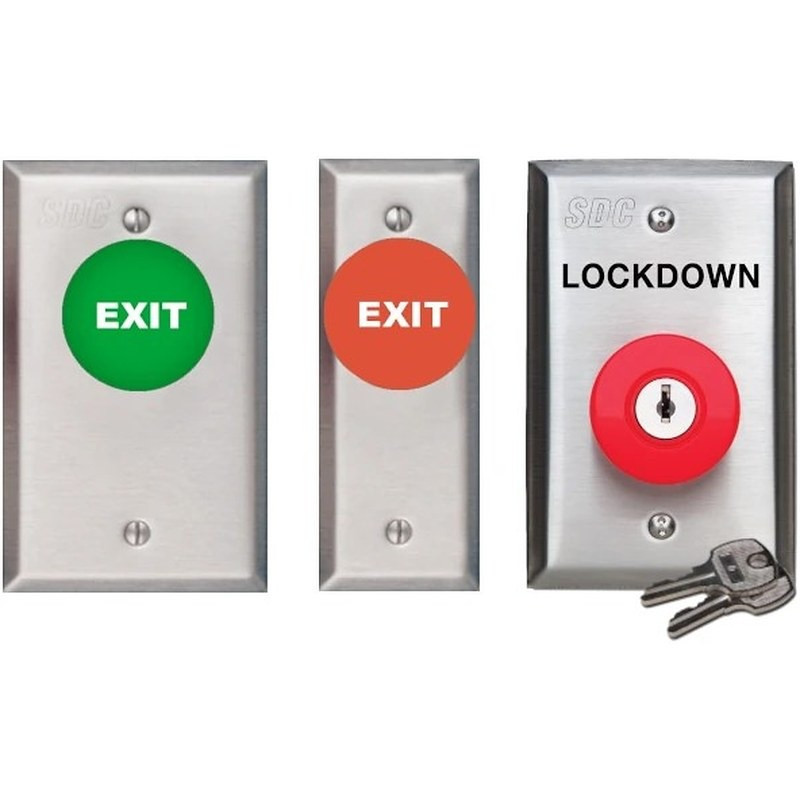
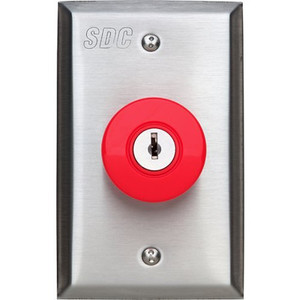
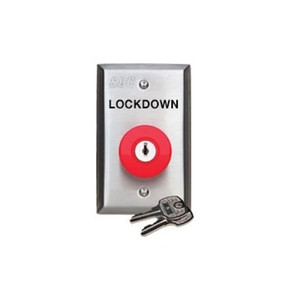
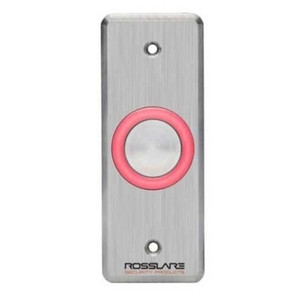
SDC 432KLDUR Hardwired Lockdown Mushroom Button Controller
Overview
The SDC 432KLDUR is a hardwired access control controller designed for centralized emergency lockdown deployments across enterprise facilities. It manages up to 63 doors simultaneously and supports 250,000 user credentials, making it suitable for multi-building or multi-floor installations where a single panic or lockdown button must coordinate immediate access denial across a large door estate. This is a controller, not a reader — the 432KLDUR sits in a cabinet or control panel and orchestrates door locks and access points via hardwired connections.
Key Features
- Up to 63 Door Management: Control dozens of doors from one hardwired point — eliminates the need for separate emergency buttons at each entry. Useful in schools, hospitals, and corporate campuses where a single "all-hands lockdown" command must propagate instantly across multiple floors or buildings.
- 250,000 Credential Storage: Supports large credential databases without external servers for basic credential management. Scales to mid-sized enterprise deployments without licensing complexity.
- Hardwired Design with No Battery Backup: Eliminates wireless failure modes and battery maintenance — if power is lost, the system defaults to fail-safe or fail-secure behavior depending on how door locks are configured. No wireless means no RF interference or jamming concerns in security-sensitive environments.
- 30VDC Power Requirement: Operates on standard 30V DC, common in access control cabinet infrastructure. Ensures compatibility with existing power distribution in multi-door installations without custom supplies.
- DESFire, MIFARE, NFC (13.56 MHz), and 125 kHz Proximity Support: Accepts four credential types without reader replacement — allows mixed badge deployments or credential upgrades over time. 13.56 MHz readers use encrypted DESFire; older proximity systems can coexist during migration.
- OSDP and TCP/IP Communication: OSDP (Open Supervised Device Protocol) encrypts credential and command traffic between reader and controller, protecting against credential interception. TCP/IP integration enables remote monitoring and audit logging with modern VMS platforms and access control software.
Integration and Compatibility
The 432KLDUR integrates with standard access control architectures using hardwired door strike and relay outputs. OSDP support ensures encrypted communication with certified readers; TCP/IP allows integration with enterprise access control platforms and audit logging systems. Because this is a controller, not a reader, you'll pair it with separate access control readers for credential capture — the 432KLDUR receives credential data and manages the lockdown logic.
Hardwired deployment means no wireless gateway or mesh network — simplifies troubleshooting in large facilities and removes dependency on Wi-Fi or cellular coverage. Suitable for integrators deploying multi-door access control systems in environments where uptime and instant response are non-negotiable.
Deployment Considerations
Install the 432KLDUR in a secure access control cabinet with appropriate 30VDC power conditioning. Hardwired door connections require conduit runs or cable trays — plan runs during initial site survey. OSDP reader pairing requires device commissioning; TCP/IP connectivity requires network planning (wired recommended for security-critical systems). No batteries means loss of 30V power triggers fail-safe behavior — configure door locks appropriately (magnetic locks fail closed on power loss; electric strikes typically fail open).
When to Choose a Different Model
If you need wireless emergency buttons or mobile-initiated lockdown, consider other SDC models in the access control line that support wireless connectivity. If your facility requires only single-door control, a simpler hardwired button may be more cost-effective. If you need on-device video or facial recognition as part of lockdown response, you'll integrate cameras separately via the access control platform.
Frequently Asked Questions
Q: Can the 432KLDUR initiate lockdown remotely, or only via hardwired button?
A: The 432KLDUR is a hardwired controller. Lockdown initiation depends on how you wire it — typically a physical mushroom button or relay contact triggers it. Remote initiation requires integration with a VMS or access control software that sends a command via TCP/IP; not all configurations support this, so verify with your integrator.
Q: Does the 432KLDUR require a separate power supply?
A: Yes, it operates at 30VDC. Your cabinet must include a regulated 30V DC power supply rated for the current draw of all connected door locks and relays. Plan for redundancy (dual supplies with automatic failover) if uptime is critical.
Q: What happens if 30VDC power is lost?
A: The controller loses power and cannot send commands. Door locks revert to their fail-safe state (typically fail-closed for magnetic locks, fail-open for electric strikes). Ensure your lock hardware is specified for safe behavior during power loss.
Q: Is the 432KLDUR compatible with my existing proximity badge system?
A: Yes, it supports 125 kHz proximity credentials. Readers must transmit credentials via OSDP or TCP/IP to the 432KLDUR. Older Wiegand-only readers will require replacement with OSDP-capable models.
Q: Can the 432KLDUR manage doors in multiple buildings?
A: Yes, it can control up to 63 doors across multiple locations — provided all door hardware (locks, strikes, relays) is wired back to the controller cabinet. This typically means running conduit or cable trays between buildings, or segmenting control across multiple cabinets if distances are too great.
Q: Does the 432KLDUR store audit logs of lockdown events?
A: The controller stores lockdown commands and credential usage in its memory. Detailed audit logging typically requires integration with an access control software platform via TCP/IP that centralizes and archives all events.
Ted PerryPerspective based on aggregated IP Security Depot and affiliated engineering team experience.
The 432KLDUR is a solid choice for integrators building hardwired, centralized emergency response systems. The fact that it's hardwired — no batteries, no wireless — is its strength. You get instant response and no failure modes from dead batteries or RF jamming. The 30VDC power requirement is standard in cabinet-based access control, so you're not inventing new power architecture.
Technical Highlights:
- 63-Door Capacity: One hardwired controller manages up to 63 doors. That's enough to cover a mid-sized office complex, campus, or multi-floor hospital without splitting control across multiple cabinets — reducing points of failure and command latency.
- 250,000 Credentials: Stores a large badge database locally, meaning you don't need a separate server just to manage credentials for a single facility. Scales past small deployments without licensing overhead.
- OSDP Encryption: Credential and command traffic is encrypted between reader and controller. Non-negotiable if you're deploying in regulated facilities (healthcare, education, government) where credential interception is a compliance risk.
- Four Credential Types (DESFire, MIFARE, NFC 13.56 MHz, 125 kHz Proximity): Supports legacy proximity badges alongside modern DESFire cards. Allows phased migrations without ripping and replacing the entire reader infrastructure at once.
Deployment Considerations:
- Hardwiring is Non-Negotiable: Every door connection runs back to the cabinet in conduit or cable tray. This is not a wireless button you can tape to a wall anywhere. Plan conduit runs during site survey, or you'll spend money on expensive cable remediation later.
- Power Loss = Fail-Safe Only: No battery backup means loss of 30V power triggers fail-safe behavior in the locks. If you need fail-secure (doors locked) on power loss, you must size battery backup into the power supply itself. Many integrators miss this and end up explaining to the client why all doors unlocked in a blackout.
- 30VDC is Standard, But Verify Availability: Most cabinet power supplies support 30V output, but confirm your existing UPS and PDU are rated for the current draw. Magnetic locks and strikes pulling 5–10A each add up fast across 63 doors.
Best fit: K-12 schools, hospitals, and corporate campuses with dedicated security cabinets and the budget to run hardwired door control. Avoid if your site has legacy wireless panic buttons or if you lack conduit infrastructure for multiple buildings.