SDC 400U-SN Access Controller with Integrated Siren
Overview
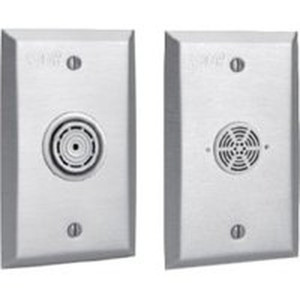
The SDC 400U-SN is a compact wired access controller purpose-built for small- to mid-scale deployments where space constraints and installation simplicity matter. This unit handles up to 4 doors and manages 250,000 user credentials — enough capacity for multi-tenant facilities or distributed single-site installations without requiring a larger networked controller. The integrated siren delivers local alarm signaling directly from the controller, eliminating the need for separate audio devices and reducing cabinet clutter.
Unlike larger centralized systems, the 400U-SN fits a single-gang electrical box, making it ideal for retrofit projects where you cannot easily run dedicated alarm circuits. It communicates via both OSDP and TCP/IP protocols, giving you flexibility to integrate with existing network-based access management platforms or standalone reader ecosystems.
Key Features
- 4-Door Management: Handles up to 4 independent door circuits simultaneously. This capacity avoids the cost and complexity of stacking multiple controllers in retrofit installations or small offices.
- 250,000 User Credentials: Supports a large on-device credential database. For small- to mid-size facilities, this means you avoid frequent controller reprogramming or cloud-dependency for credential lookup — a meaningful advantage in installations with unreliable network uptime.
- Integrated Siren: Built-in alarm signaling eliminates a separate device purchase and cabinet space. Particularly valuable in tight electrical boxes or where local alarm tone is sufficient without full PA system integration.
- 24VDC Operation: Runs on standard 24VDC wiring, commonly available in access control infrastructure. Simplifies power distribution and keeps the controller compatible with existing battery backup and UPS systems already deployed in most facilities.
- OSDP Protocol Support: Open Supervised Device Protocol ensures future-proof reader compatibility and allows command-and-control without proprietary middleware. OSDP readers — increasingly common in new installations — will work directly with the 400U-SN without translation layers.
- TCP/IP Networking: Enables integration with network-based access management systems. Allows remote credential updates, audit logging, and centralized monitoring if your facility already runs an IP-based VMS or access management platform.
- HID Credential Ecosystem: Compatible with HID card and mobile reader technologies. This broad compatibility avoids lock-in and lets you reuse existing HID infrastructure or purchase readers from multiple vendors.
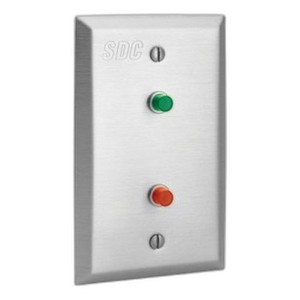
- Single-Gang Plate Mounting: Ships mounted on a standard 1-gang electrical plate, meaning installation into existing outlet boxes or retrofit panels requires no custom mounting brackets — a labor and cost saving on retrofit jobs.
Integration & Compatibility
Deploy the 400U-SN in retrofit or new-build access control environments where gang-box mounting fits your electrical layout. It pairs with HID-based readers and integrates into network-connected access management systems that support OSDP or TCP/IP. If you run a standalone reader network without centralized management, the 400U-SN's local credential database and direct alarm output work independently. If you manage access across multiple buildings via a central platform, TCP/IP connectivity allows you to provision and audit the controller remotely.
The 400U-SN (often searched as 400U SN) is not a replacement for large-scale networked panels; it targets integrators and facility managers deploying small-footprint solutions where simplicity, compactness, and cost-per-door matter more than feature density.
Frequently Asked Questions
Q: Can the SDC 400U-SN integrate with my existing Milestone XProtect or Genetec access module?
A: Integration depends on your VMS's support for OSDP or TCP/IP. If your platform natively supports either protocol, the 400U-SN can be provisioned within it. If your system requires proprietary middleware, check with the VMS vendor for compatibility. TCP/IP connectivity provides the best interoperability path.
Q: What happens to stored credentials if network connection is lost?
A: The 400U-SN stores up to 250,000 credentials locally on the controller. If the network goes down, the unit continues to authenticate cardholders using the cached credential database. Only remote credential updates and audit logging are affected by network outage.
Q: Is the integrated siren loud enough for a warehouse or large open space?
A: The integrated siren provides local alarm signaling suitable for small- to mid-size rooms and alert notification. In large warehouses or high-noise environments, pair the 400U-SN with a dedicated external speaker or alarm strobe for greater coverage.
Q: Can I use non-HID readers with the 400U-SN?
A: The 400U-SN is optimized for HID credential types. If you need to support other reader technologies (Mifare, DESFire, proprietary), consult the manufacturer's OSDP compatibility matrix or contact the integrator technical team.
Q: What is the warranty on the 400U-SN?
A: Warranty details are provided in the manufacturer's product documentation. Contact the vendor or your specialty distributor for specific terms and coverage.
Q: Does the 400U-SN support backup power or battery integration?
A: The unit operates on 24VDC and can be backed up by standard UPS or battery supplies already connected to your access control cabinet power distribution. Consult the datasheet for recommended power specifications and redundancy planning.
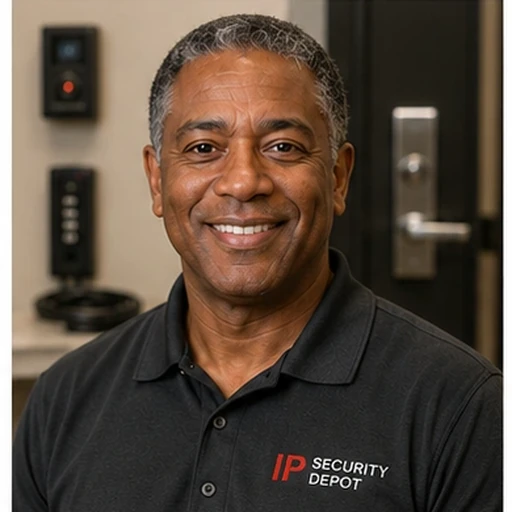
Jerry TildsenPerspective based on aggregated IP Security Depot and affiliated engineering team experience.
I deploy the SDC 400U-SN in retrofit access control installs where I need compact footprint and simplicity. The 250,000 on-device credential cache is the real working asset here — it keeps the controller functional even if your network backbone goes down, and avoids the latency and cloud-dependency that plague some larger systems. For small- to mid-size facilities where you're retrofitting into existing electrical infrastructure, the single-gang plate and 24VDC operation sidestep a lot of rough installation work.
Technical Highlights:
- 4-Door Circuit Handling: Manages four independent door readers without stacking controllers. In a 10-20 door retrofit, this can reduce cabinet complexity and wiring runs compared to single-door units.
- 250K Credential Database: Stores credentials locally on flash. Authentication doesn't depend on a remote server — a hard advantage when you're working in a facility with spotty Wi-Fi or no dedicated network segment for access control.
- OSDP + TCP/IP Dual Protocol: OSDP is the modern standard for reader-to-controller communication. If you want future flexibility to swap readers or migrate to a different platform, OSDP support keeps that door open. TCP/IP lets you hook into a Milestone, Genetec, or any IP-native system later.
- Integrated Siren Cuts BOM: One less device to mount, power, and wire. In a retrofit job where every inch of cabinet space matters, this adds up.
Deployment Considerations:
- Network Outage Resilience: The local credential store is a strength, but it also means you need a manual process to revoke credentials in real time if someone is terminated mid-day. Plan for that limitation in your operating procedures.
- Siren Volume: The integrated siren is adequate for alert notification in a small office or retail space. If you're deploying in a noisy warehouse or need PA-level coverage, budget for external alarm audio.
- HID Ecosystem Lock: The controller is optimized for HID card and mobile readers. If your facility runs Mifare or proprietary NFC infrastructure, this may not be the right fit without additional reader gateways.
The 400U-SN is purpose-built for integrators retrofitting small- to mid-scale facilities where electrical simplicity and credential resilience matter. It's not a networked mega-panel, but it's honest engineering: compact, reliable, and it works offline when the network fails. Ideal for retail chains, small offices, and manufacturing facilities where you don't need enterprise-scale feature complexity.