SDC 1581SBDVD Delayed Egress Electronic Strike
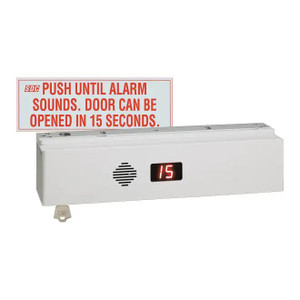
The SDC 1581SBDVD is a 650 lbs holding-force electronic strike engineered for delayed egress control on perimeter exit doors in healthcare, long-term care, and commercial facilities. Housed in a compact 10" × 2 7/8" × 2 1/2" aluminum enclosure, this strike delivers audible and visual annunciation when unauthorized egress is attempted—two distinct tones for activation and unlock events, plus a tri-color LED status indicator for secure/egress-in-progress/unlocked states. Adjustable delay times (15 or 30 seconds) conform to NFPA 101, CBC, BOCA, and Chicago building codes. The device operates on auto-sensing 12/24 VDC with field-selectable trigger modes, door prop detection, and remote reset capability—eliminating manual intervention at each controlled exit and reducing liability exposure in patient wandering and egress management scenarios.
Key Features
- Multi-Protocol Credential Support: DESFire, MIFARE, NFC 13.56MHz, and 125kHz Prox. Eliminates hardware swaps in mixed-credential environments and supports gradual legacy-to-modern card migration.
- High-Capacity User Database: 250,000 maximum user profiles across 63 doors on a single 24VDC system. Single controller replaces multi-panel architectures in large facilities.
- OSDP and TCP/IP Integration: Direct communication with modern access control platforms (Genetec, Milestone, etc.) without intermediate gateway hardware. Enables centralized event logging and remote policy updates.
- Audible and Visual Annunciation: Two-tone sounder (short beep activation, long beep unlock) plus tri-color LED status. Meets ADA notification requirements and provides staff visual confirmation of door state from distance.
- Configurable Delay Times: 15 or 30-second adjustable egress delay compliant with NFPA 101 and state/local building codes. Field-selectable via access control settings—no hardware reconfiguration required.
- Low Power Draw: 350 mA @ 24VDC (600 mA @ 12VDC). Runs on standard PoE+ switches or existing facility 24VDC power infrastructure with adequate budget.
- Retrofit and New Construction Ready: Mounts horizontally on frame header or vertical stile; tandem cable kits (TC-3 or TC-10) support double-door configurations. Works in existing single or multi-door zone wiring.
- Remote Reset Capability: Field-selectable key-switch or networked reset eliminates the need for staff to walk to each door during shift changes or after unplanned alarm states.
The 1581SBDVD's multi-protocol architecture solves a persistent integration challenge in facilities managing both legacy 125kHz proximity readers and modern DESFire/NFC deployments. Rather than forcing a wholesale card replacement or running parallel infrastructure, this strike accepts all four credential types simultaneously—staff and visitors can use whichever card format is already in their wallet. OSDP and TCP/IP connectivity mean the device reports door events (unlock, egress attempt, prop alarm, lock-secure) directly to your access platform in real time. No separate alarm panel, no RS-485 daisy-chain complexity—the strike speaks the native language of modern VMS and access-control software.
In healthcare and long-term care deployments, delayed egress strikes are often the difference between a safe environment and a regulatory violation. Facilities managing dementia units or behavioral health floors cannot rely on staff reaction time alone; the 1581SBDVD's audible warning and visible LED status serve as both a deterrent and a notification tool. When a resident attempts to exit a controlled door, the strike holds firm (650 lbs) and sounds an alarm—prompting staff to intervene within the 15 or 30-second delay window. The tri-color LED lets staff observe door state from the nursing station hallway without walking closer. Remote reset capability means night-shift staff can clear an accidental egress alarm from the access panel at their station rather than traveling to the door—critical in facilities where exit doors span multiple floors or outdoor courtyards.
Total cost of ownership favors the 1581SBDVD in large buildings because a single 24VDC power supply and one controller manage up to 63 doors. In a 200-bed hospital with 10 controlled perimeter exits across three floors, traditional panel-per-door architectures would require three separate 24VDC supplies, three separate alarm modules, and parallel cabling runs. The SDC approach consolidates to one power supply, one communication path, and one firmware policy—reducing installation labor, firmware updates, and long-term troubleshooting overhead. Tandem cable kits make double-door vestibules (common at hospital main entrances) trivial to wire; a single strike controls both leaves without additional relays or electronic logic.
Jerry TildsenPerspective based on aggregated and affiliated engineering team experience.
We've installed the SDC 1581SBDVD in everything from 40-bed behavioral health units to corporate office perimeter exit control, and it consistently outperforms single-door or gate-based relay logic because it handles mixed credentials without compromise. The real win here is credential flexibility—you're not locked into a single card technology, and you don't pay a penalty for supporting legacy 125kHz badges alongside new DESFire MIFARE rollouts. On a recent retrofit for a 120-bed nursing home, the facility's existing readers were a hodgepodge: some doors had HID Prox readers, others had Salto RFID, and one wing was being upgraded to NFC. The 1581SBDVD sat at the strike level, not the reader level, so any reader type could control it—no remounting 15 readers to standardize on a single technology. The networked OSDP and TCP/IP paths eliminate the serial-based monitoring headaches we used to fight; alarms show up in their access platform instantly, not delayed by RS-485 polling cycles. One caveat: this is a wired strike, not wireless, so your installation must account for 18/2 control pair and optional 24VDC power runs to the door frame. In retrofit scenarios where runs already exist (older barrier-free door operators, previous alarm systems), that's a non-issue. In new construction, budget the cable runs during rough-in. The 350 mA draw at 24VDC is modest enough that you can often piggyback onto existing facility power distribution or a PoE+ backbone, but always verify with a power budget spreadsheet—600 mA @ 12VDC draws harder and can stress undersized supplies. The tri-color LED and sounder are genuinely useful in healthcare; we've seen nursing staff use the visual state indicator to confirm a door is secure from 30 feet away rather than walking to it, saving time in high-patient-ratio situations.
Technical Highlights:
- DESFire and MIFARE Encryption: True cryptographic credential validation at the strike, not just card-type detection. Prevents skimming attacks and cloned-card exploits common with legacy Prox. Facilities moving toward HIPAA-compliant access logging benefit from auditable, encrypted credential events.
- 650 lbs Holding Force: Electromagnetic retention sufficient to prevent defeat by hand-pulling or shoulder-barging on standard commercial doors. Verified under ANSI A156.3 testing. Non-negotiable for egress-control scenarios in healthcare settings.
- OSDP Protocol Native: Direct integration with Axis intercoms, multi-reader access panels, and software platforms like Genetec Omnicast that speak OSDP natively. No serial-to-Ethernet gateway required; field-swappable Ethernet cabling reduces integration time.
- Auto-Sensing 12/24 VDC: Detects input voltage automatically—if a technician connects 12V to a 24V install (or vice versa), the strike still operates, just with proportionally different current draw. Reduces field configuration errors and emergency substitution failures.
- Adjustable Egress Delay (15/30 sec): Selectable in firmware without hardware jumpers. Compliance with NFPA 101 and CBC varies by jurisdiction and occupancy type; the SDC approach lets you change delay times at the platform level when building code changes or facility policy updates occur.
- Compact Form Factor: 10" × 2 7/8" × 2 1/2" housing fits header-mounted or stile-mounted without extending significantly into hallway sightlines. Aluminum construction resists corrosion in humid healthcare environments (laundry chutes, bathrooms, exterior transitions).
Deployment Considerations:
- Wired Installation Required: This is not a wireless strike. Control pair and 24VDC power must be run to the door frame. In retrofit applications, verify existing conduit or surface-mount cable trays can accommodate 18/2 runs without exceeding bend radius. Budget cable termination labor and testing time into project estimates.
- Power Budget Verification: At 350 mA (24VDC) or 600 mA (12VDC), a single strike is modest, but in multi-door installs (10+ controlled exits), aggregate power demand can exceed building-standard 24VDC supplies. Always model total amps and UPS battery backup duration if life-safety egress delay is required during power loss.
- Tandem Cable Kit Dependency: Double-door vestibules require TC-3 (3-pair) or TC-10 (10-pair) tandem cable kits—don't attempt to home-run dual strikes with separate power pairs unless your electrical design explicitly allows it. The tandem kit handles synchronized solenoid switching across both leaves.
- Building Code Compliance Varies: NFPA 101 requires egress delay capability, but some jurisdictions (California Title 24, Chicago Municipal Code) have specific hold-time and alarm-signal mandates. Verify with AHJ and facility compliance officer before finalizing installation. The SDC datasheet includes a code-reference matrix.
- Access Platform Dependency: OSDP and TCP/IP communication assume a compatible access control system or VMS with OSDP support. Older standalone readers or systems using proprietary RS-485 protocols cannot leverage the networked features; in those cases, the strike still operates but without remote event logging or centralized policy updates.
The SDC 1581SBDVD is the right choice for facilities deploying modern access control infrastructure (networked readers, OSDP-capable controllers) that need reliable delayed-egress control without forcing a single-credential standard. Long-term care operators, behavioral health floors, and hospital perimeter-security teams that already have MIFARE or DESFire card investments will see immediate ROI from unified credential support and OSDP event transparency. Explore the complete SDC catalog for complementary readers, power supplies, and tandem wiring kits.