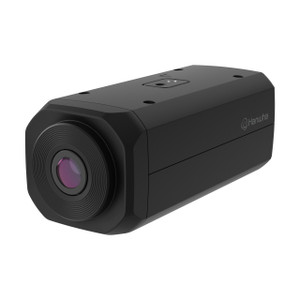
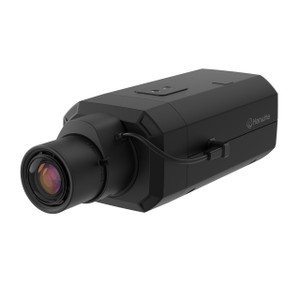
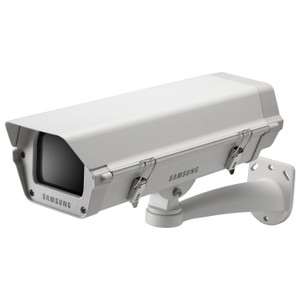
Hanwha SPM-4210 Network I/O Box
Overview
The Hanwha SPM-4210 is a compact network I/O accessory that extends integration capabilities across IP surveillance deployments. This device bridges external sensors, alarms, microphones, and speakers to networked cameras and VMS platforms, enabling centralized monitoring and automated response without requiring separate wiring or dedicated control systems. For warehouse automation, access control, and security-critical facilities, the SPM-4210 (often searched as SPM 4210) eliminates the need for parallel data networks—everything runs over standard Ethernet with PoE power.
Key Features
- 4 Configurable Alarm I/O Ports with 12V DC Output (max 50mA per port): Connect door contacts, motion sensors, glass-break detectors, or relay-driven devices without needing external terminal blocks or breakout panels. Each port can be assigned as input or output, so you can trigger remote actions (unlock signals, siren relays, indicator lights) directly from camera events or VMS rules.
- Selectable Audio Input (Microphone or Line-Level) with Line-Level Audio Output: Eliminates the need for separate audio breakout hardware. Switch between a built-in microphone and external line-level sources (mixing consoles, intercom systems) without hardware reconfiguration—useful when deploying two-way audio in noisy warehouse floors or lobby areas.
- 10/100BASE-T Ethernet with PoE Power (IEEE 802.3af Class 3): Draws just 4.5W maximum, so this device will not overload your PoE switch's power budget. A standard single-port injector or switch works fine; no separate power supply needed, reducing cable clutter and deployment time in already-congested control rooms.
- Multi-Format Audio Compression (G.711 u-law, G.726 ADPCM, AAC-LC): G.726 at 16–40 Kbps lets you stream two-way audio over congested or metered WAN links without sacrificing intelligibility. AAC-LC at 48 Kbps handles higher-fidelity audio for intercom or verification scenarios.
- Web-Based Management with 16 Language Options: No proprietary client software required. Configure alarm thresholds, audio routing, and network parameters from any browser. Multi-language support simplifies global deployments and handoffs to local IT teams.
- Compact Form Factor (143mm × 73mm × 27.3mm, 171g): Fits into DIN-rail enclosures, wall-mount cabinets, or even hidden above ceiling tiles. Lightweight enough that mounting hardware is not a structural concern.
Integration and Network Security
The SPM-4210 supports a full protocol stack—IPv4/IPv6, TCP/IP, UDP/IP, RTP, RTSP, HTTP/HTTPS—and integrates with network video recorders and VMS platforms via standard ONVIF or Hanwha's SUNAPI HTTP API. This means custom integration workflows—trigger alarms on motion detection, log sensor events to a central database, or relay audio from one zone to another—are straightforward without custom middleware.
Security is built in: HTTPS/SSL login, digest authentication, IP address filtering, user access logging, EAP-TLS/EAP-LEAP support, and device-level certificate authentication via Hanwha Techwin Root CA prevent unauthorized access to alarm and audio streams. In environments where data exfiltration or man-in-the-middle attacks are a threat, this hardening is essential.
Environmental and Operational Resilience
Operating across −40°C to +60°C (−40°F to +140°F) with 95% non-condensing humidity tolerance, the SPM-4210 survives warehouse freezers, outdoor equipment cabinets, and industrial settings without thermal throttling or condensation failures. 4GB RAM and 256MB flash storage provide stable performance even under sustained alarm and audio traffic.
Frequently Asked Questions
Q: Can the SPM-4210 trigger actions on IP cameras when an external alarm fires?
A: Yes. The four I/O ports are bidirectional. You can configure the SPM-4210 to send an alarm signal to a connected camera (or NVR) when a door sensor closes, triggering recording, snapshot capture, or audio alert. Conversely, a camera event can trigger an output port to activate a relay or siren.
Q: What audio codec should I use for bandwidth-limited sites?
A: G.726 ADPCM at 16 Kbps delivers acceptable speech clarity over very constrained links (satellite, cellular backup). For normal office or warehouse networks, G.711 u-law (64 Kbps) is standard and widely supported by VMS platforms and SIP endpoints.
Q: Does the SPM-4210 require a separate power supply?
A: No. It is powered entirely by PoE (IEEE 802.3af). A standard PoE-enabled switch or injector provides the 4.5W maximum draw. No wall outlet or UPS connection needed.
Q: Can I manage the SPM-4210 remotely or only from the local network?
A: Web-based management works over your WAN if the device is reachable via DNS or a static IP. However, configure firewall rules and use HTTPS/authentication to prevent unauthorized access. For highly sensitive sites, keep management traffic on a secure VLAN.
Q: Is the SPM-4210 suitable for outdoor cabinet deployment?
A: Yes, its −40°C to +60°C operating range covers most outdoor enclosures. However, the device itself is not IP-rated (no water ingress protection), so mount it inside a weatherproof cabinet or backbox and bring only the I/O and Ethernet cabling through sealed connectors.
Q: What is the maximum current per alarm output port?
A: 50mA per port. This is sufficient for low-voltage solenoids, indicator LEDs, or relay coils. If you need to switch high-current devices (industrial motors, high-wattage sirens), use an external 24VDC relay with the SPM-4210 output as the trigger.
Ted PerryPerspective based on aggregated IP Security Depot and affiliated engineering team experience.
The SPM-4210 solves a real integration pain point in medium to large surveillance deployments. Most integrators cobble together separate alarm panels, audio consoles, and I/O relays—then spend weeks troubleshooting cross-system synchronization. This box consolidates those tasks into a single PoE-powered device, reducing BOM cost and on-site troubleshooting time. The 4.5W power envelope is especially valuable in budget-constrained PoE switch rollouts where every watt matters.
Technical Highlights:
- Multi-codec Audio Support (G.711, G.726, AAC-LC): G.726 at 16–40 Kbps lets you stretch bandwidth on WAN-connected remote locations without sacrificing intelligibility. On local networks, G.711 is your default—it works everywhere, and most VMS platforms decode it natively without transcoding overhead.
- Bidirectional I/O with 50mA per Port: Sufficient for triggering solenoid locks, indicator arrays, or relay coils. Watch your current budget if you stack multiple devices on a single circuit; 50mA per port × 4 ports = 200mA max output draw.
- PoE Class 3 (4.5W Max): A single IEEE 802.3af source is enough—no injector stacking or class negotiation headaches. This device will not compete with high-power cameras for budget on a shared switch.
- Operating Range −40°C to +60°C: Covers frozen warehouses and outdoor equipment cabinets. Humidity tolerance of 95% non-condensing is reasonable for most indoor enclosures, but avoid direct condensation—seal your mounting cabinet and use a small desiccant pack if deploying in humid climates.
Deployment Considerations:
- The device itself has no IP rating, so outdoor or high-moisture deployments require a sealed enclosure. Do not mount it directly on a warehouse wall or under an eave—condensation will kill it.
- 50mA per I/O port is a hard limit. If you need to switch industrial relays or solenoid banks drawing 100mA+, insert an external 24VDC relay between the SPM-4210 output and the load. One relay per high-current circuit keeps design simple and troubleshooting clean.
- Alarm polling latency depends on your VMS refresh rate. Most systems check I/O state every 1–5 seconds. If you need sub-100ms response times (emergency stop, fire suppression trigger), route critical signals through a dedicated hardwired panel, not the network.
Best fit: warehouse facilities with door access integration, commercial buildings where audio from lobby sensors feeds into a central intercom, and industrial sites where conveyor line jams or environmental sensors need to trigger camera recording or operator alerts. If you are integrating a dozen cameras with scattered alarm sensors and no central panel, this box pays for itself in reduced wiring and cabinet real estate.