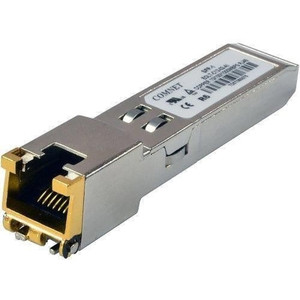
Axis 5801-801 T8611 SFP Module LC.LX Single-Mode Fiber Transceiver
Overview
The Axis 5801-801 is an industrial-grade SFP (Small Form-Factor Pluggable) optical transceiver engineered for long-distance fiber optic connectivity in large-scale surveillance networks. This single-mode module enables reliable transmission up to 10 kilometers, solving a fundamental problem in distributed security deployments: the cost and complexity of running copper cabling across sprawling properties. When your camera locations are separated by more than a few hundred meters—think university campuses, industrial parks, or critical infrastructure sites—single-mode fiber becomes the practical choice.
Key Features
- Single-Mode Fiber with 1310nm Wavelength: Long-distance optical transmission up to 10 kilometers without signal regeneration. Single-mode fiber carries data in a single path, minimizing dispersion over extended runs—far superior to multimode for anything beyond 500 meters. This matters because every kilometer you avoid running copper saves installation labor and eliminates voltage drop complications.
- LC.LX Duplex Connector: Industry-standard LC connector type ensures compatibility with standard fiber patch panels and existing infrastructure. LC connectors feature small form factor and reliable mating, reducing insertion loss and return loss—critical for maintaining signal integrity over 10km runs.
- SFP Form Factor: The pluggable design allows rapid hot-swap installation into any Axis device with an SFP port slot. No soldering, no firmware flashing—insert, link up, and begin transmitting video. This modularity also means you're not locked into a single transceiver type if your deployment requirements shift.
- Industrial-Grade Components: Built to withstand temperature extremes and electromagnetic noise common in outdoor and harsh environments. Critical in installations near industrial machinery, power distribution, or RF sources where shielded fiber naturally isolates your signal from electrical interference.
- Minimal Latency Transmission: Fiber optic delivery of uncompressed or H.265-compressed video eliminates packet jitter and buffering delays inherent to long copper runs. This is essential when you need real-time monitoring or synchronized multi-site recordings for forensic analysis.
- Seamless Axis Ecosystem Integration: Compatible with Axis surveillance devices equipped with SFP slots—including certain network switches and video recorders in the Axis product line. Plug-and-play operation means no custom drivers or proprietary configuration tools.
Integration & Compatibility
The 5801-801 integrates into Axis IP-based surveillance architectures wherever SFP-capable hardware exists. Common deployment scenarios include connecting remote IP cameras or camera clusters back to central recording facilities via single-mode fiber backbone. Pair this module with fiber patch panels, LC-to-LC single-mode cabling, and appropriate managed switches with SFP uplinks to build extensible networks. Fiber isolation also eliminates the need for costly surge suppression equipment on long copper runs—another cost factor worth calculating in campus-wide deployments.
When to Choose This Module
Select the Axis 5801-801 if you are deploying cameras or network equipment more than 300 meters apart, need complete electromagnetic isolation, or must span terrain where trenching copper is cost-prohibitive. The 10km range means a single fiber run can connect multiple buildings or remote sites without intermediate amplification. If your distances are under 100 meters and copper works, multimode fiber or PoE over twisted-pair is simpler and cheaper. If you need ranges beyond 10km, consult Axis extended-range modules or carrier-class optical infrastructure.
What's in the Box
- One (1) Axis T8611 SFP Module LC.LX
Frequently Asked Questions
Q: Does the 5801-801 work with non-Axis devices that have SFP slots?
A: The module is an industry-standard SFP transceiver operating at 1310nm single-mode. Compatibility depends on the receiving device's SFP implementation and optical specifications. Verify the host device supports 1310nm single-mode SFP before pairing. Many third-party network switches and video recorders accept standard SFP modules, but Axis does not publish interoperability matrices for non-Axis hardware.
Q: What fiber cable type do I need for the LC.LX connector?
A: Use single-mode fiber (9/125 micron) patch cords terminated with LC duplex connectors. Standard SMF-28 or equivalent single-mode cable is industry-standard and widely available. Avoid multimode (50/125 or 62.5/125 micron) fiber, which will not support the full 10km range and will result in signal loss.
Q: What is the maximum transmission distance with the 5801-801?
A: Up to 10 kilometers over single-mode fiber. Actual range depends on fiber quality, connector loss, and patch panel insertion loss. Dirty or poorly crimped connectors degrade range. Professional fiber installation practices and testing ensure you achieve spec distance.
Q: Can I use the 5801-801 for both transmit and receive simultaneously?
A: Yes. The LC.LX duplex connector carries separate transmit and receive wavelengths (or uses WDM—wavelength division multiplexing—on a single fiber pair), enabling full-duplex Ethernet operation. Data flows both directions simultaneously without speed penalty.
Q: Is the 5801-801 hot-swappable?
A: Yes. SFP modules are designed for hot-swap insertion and removal. Power down the host device or bring the port administratively offline before removal to avoid link-state disruption, though the module itself can be physically inserted or extracted without special tools.
Q: Does this module include any cabling or adapters?
A: No. The package contains only the SFP transceiver. Fiber patch cords, adapters, and termination hardware are purchased separately based on your cable routing and infrastructure layout.
Ted PerryPerspective based on aggregated IP Security Depot and affiliated engineering team experience.
The Axis 5801-801 (often searched as 5801 801) is a straightforward but critical piece of fiber infrastructure. If you're building a surveillance network that spans more than a kilometer or crosses electromagnetically noisy ground, single-mode fiber is your only practical option. The 1310nm wavelength and LC.LX connector are industry standards—meaning you're not locked into Axis-only patch panels or cabling. What matters most is understanding the tradeoff: fiber costs more upfront (termination, testing, skilled installation labor) but eliminates the per-meter cost creep of long copper runs, removes grounding and voltage-drop headaches, and makes your network immune to lightning-induced surges on unshielded copper.
Technical Highlights:
- 10km Transmission Range: Single-mode fiber at 1310nm wavelength allows a single fiber pair to span campus or industrial environments without regenerators. Over 10km, attenuation is minimal and predictable—roughly 0.35dB per km for quality SMF-28 cable, meaning you'll lose signal but not catastrophically.
- LC.LX Duplex Connector: Industry-standard LC duplex is durable and compact. Insertion loss is typically 0.3–0.5dB per mating. Use quality fiber patch cords and test continuity before going live—poor terminations degrade range more than you'd expect.
- SFP Hot-Swap Form Factor: Modularity is the win here. You can provision the module once, insert it into inventory, and deploy it months later without firmware updates or rediscovery cycles. If a transceiver fails, swap it in seconds without touching the host device power.
Deployment Considerations:
- Fiber termination and testing are non-negotiable. Budget for professional installation and OTDR (optical time-domain reflectometer) testing. A $300 termination mistake costs you hours of troubleshooting in the field.
- The 5801-801 is transmit and receive on the same wavelength pair (or uses WDM). Verify your host device (Axis switch, NVR, or camera) supports duplex operation. Some older SFP implementations are unidirectional—rare, but check your Axis hardware specs before committing fiber runs.
- Environmental factors: outdoor fiber runs need conduit or armor protection. UV, rodents, and weather degrade unshielded fiber. Budget for proper cable management and consider armored single-mode cable for exposed runs.
Deploy the 5801-801 in campus-wide security architectures where building-to-building connectivity is measured in hundreds of meters or more, or in RF-noisy industrial settings where copper cabling would pick up noise. Skip it for short runs under 300 meters—twisted-pair PoE is simpler and cheaper. For mission-critical sites where network resilience matters, the fiber isolation and immunity to electrical transients justify the upfront investment in professional fiber infrastructure.