


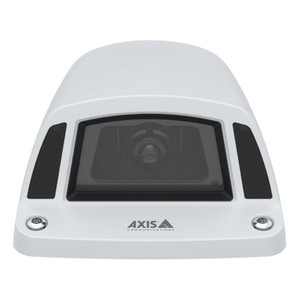


Overview
SKU:
02090-001
UPC:
7331021072442
Condition:
New
Availability:
Usually ships in 24 hours
Warranty
5-year warranty

Axis P3925-LRE 2MP Mobile IP Camera
Axis P3925-LRE 2MP Mobile IP CameraThe Axis P3925-LRE is a rugged, compact IP camera purpose-built for mobile and vehicular surveillance applications.…

Axis P3925-LRE 2MP Mobile IP Camera
$1,059.00
$1,027.99
Your recommended setup
Review items below — quantities update pricing automatically.
Item
Qty
Status
Price
Optional Add-Ons recommended
Services optional
Bundle Summary
Bundle Subtotal:
$0.00
Optional Add-Ons:
$0.00
Services:
$0.00
Total:
$0.00
Overview
SKU:
02090-001
UPC:
7331021072442
Condition:
New
Availability:
Usually ships in 24 hours
Warranty
5-year warranty
Description

Axis P3925-LRE 2MP Mobile IP Camera
The Axis P3925-LRE is a rugged, compact IP camera purpose-built for mobile and vehicular surveillance applications. Designed for buses, trains, mass transit systems, and rolling stock monitoring, this camera delivers reliable HD imaging in demanding onboard environments. With 2MP resolution, Axis Lightfinder technology, and Forensic WDR, the P3925-LRE captures clear, detailed video in variable lighting conditions—from bright daylight to complete darkness.
Key Features
- 2MP resolution at 30fps for sharp, real-time video capture
- 1/1.8" progressive scan RGB CMOS sensor with 2016x2016 maximum resolution
- Axis Lightfinder IR night vision for clear imagery in low-light and no-light conditions
- Forensic WDR (Wide Dynamic Range) for superior image quality across varying light environments
- 56° horizontal and 30° vertical field of view with wide-angle lens
- Pan up to 20°, tilt up to 15°, and 175° rotation capability
- Weatherproof outdoor-rated durability for harsh vehicular and transit environments
- PoE (Power over Ethernet) connectivity—single cable solution for power and data
- H.264 and H.265 video encoding for bandwidth and storage efficiency
- Integrated analytics: Motion Guard, Fence Guard, LoiteringGuard, Video Motion Detection, and Shock Detection
- Axis Camera Application Platform (ACAP) support for third-party applications
Technical Highlights
The P3925-LRE combines mobile-grade durability with professional surveillance capabilities. Its 1/1.8" sensor and advanced optics ensure exceptional clarity, while Axis Lightfinder technology and Forensic WDR work in tandem to handle the unpredictable lighting conditions typical of vehicular environments. The dual H.264/H.265 codec support optimizes bandwidth utilization without compromising image quality—critical for fleet operations with limited network infrastructure.
Mounting flexibility, including pan/tilt/rotation mechanics, allows precise positioning within confined vehicle spaces. Built-in shock detection is particularly valuable for transit applications, triggering alerts when impacts or collisions occur. The integrated video analytics suite enables proactive monitoring for motion, boundary violations, loitering, and unexpected vehicle movement.
Ideal Applications
- Public transit bus and train surveillance
- Commercial and charter vehicle fleets
- Rolling stock and maintenance vehicle monitoring
- Mobile asset and equipment tracking
- High-security vehicle and perimeter surveillance
Jerry Tildsen
The P3925-LRE addresses a specialized market segment often overlooked by general-purpose camera lines. Its mobile-centric design—including shock detection and weatherproofing—reflects the real-world demands of vehicular surveillance. The combination of Lightfinder and Forensic WDR is particularly effective for transit environments where lighting changes rapidly (tunnels, overpasses, stops).
PoE simplifies installation in mobile platforms where power infrastructure is limited. The ACAP platform support future-proofs the investment, allowing integration with fleet management and analytics platforms as requirements evolve. For organizations managing large mobile fleets, this camera's built-in analytics and codec efficiency deliver measurable ROI through reduced bandwidth costs and faster incident response.
Specifications
Frame Rate:
30fps
Product Type:
Mobile Computer
Connectivity:
Wired
Power Type:
PoE
Resolution:
2MP
Night Vision:
IR
Have Questions?
Ask an Expert.
RELATED PRODUCTS

Axis
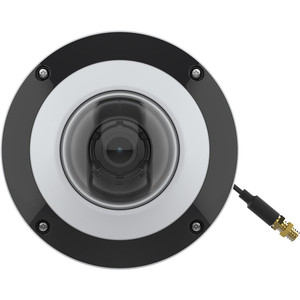
Axis F4105-LRE 2MP Full HD IR Outdoor Mini Dome IP Camera, 02364-001
$339.00
$329.99
Save $9.01

System Design, Deployment & Technical Support
Support services and planning resources for commercial surveillance, access control, and infrastructure deployments.
Fixed scope • Fixed price
System Design Assistance
- Get help validating product compatibility
- Coverage requirements
- Storage planning and deployment architecture before you buy.
Deployment & Configuration Support
- Access fixed-scope support for rollout planning
- User setup guidance
- Migration and system standardization across single-site or multi-site deployments
Guides, Tools & Calculators
- PoE requirements
- Storage retention
- Camera selection and deployment methodology