



Overview
SKU:
VHW-HWPS-B
Condition:
New
Availability:
Usually ships in 24 hours
Warranty
3-Year Warranty
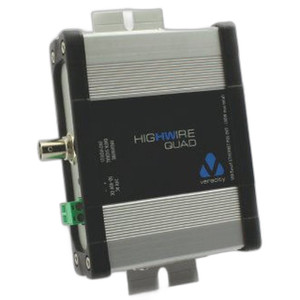
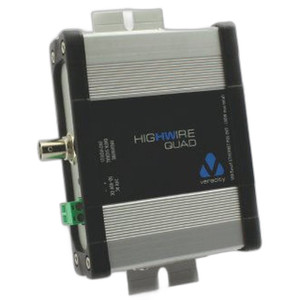
Veracity VHW-HWPS-B HIGHWIRE Powerstar PoE Extender
Veracity VHW-HWPS-B HIGHWIRE Powerstar PoE Extender Overview The Veracity VHW-HWPS-B is a dedicated Power over Ethernet extender engineered for secur…
Veracity VHW-HWPS-B HIGHWIRE Powerstar PoE Extender
$234.99
Your recommended setup
Review items below — quantities update pricing automatically.
Item
Qty
Status
Price
Optional Add-Ons recommended
Services optional
Bundle Summary
Bundle Subtotal:
$0.00
Optional Add-Ons:
$0.00
Services:
$0.00
Total:
$0.00
Overview
SKU:
VHW-HWPS-B
Condition:
New
Availability:
Usually ships in 24 hours
Warranty
3-Year Warranty
Description

Veracity VHW-HWPS-B HIGHWIRE Powerstar PoE Extender
Overview
The Veracity VHW-HWPS-B is a dedicated Power over Ethernet extender engineered for security infrastructure deployments requiring extended PoE delivery across longer cable runs. This device extends power and data delivery to remote IP endpoints—cameras, access controls, and networked devices—beyond standard Ethernet distance limitations. The VHW-HWPS-B (often searched as VHW HWPS B) operates reliably across standard environmental conditions and integrates into existing 10/100 network architectures without requiring specialized switching or power management modules.
Key Features
- 10/100 Mbps Ethernet Speed: Supports standard Fast Ethernet connectivity for compatible IP security devices and legacy network infrastructure
- PoE Extension Capability: Regenerates and extends Power over Ethernet to devices positioned at extended distances from primary power sources or network switches
- Operating Temperature Range -10°C to 50°C: Rated for indoor and climate-controlled outdoor installations across temperate and moderate environments
- Compact Deployment Form Factor: Designed for integration in wall-mounted, cabinet, or field enclosure scenarios without excessive footprint
- Transparent Pass-Through Operation: Functions as a network extender with minimal latency introduction, preserving existing VLAN and network segmentation configurations
- Powered Device Support: Supplies consistent power delivery to downstream PoE endpoints, eliminating reliance on auxiliary power infrastructure at remote locations
Integration & Compatibility
The VHW-HWPS-B integrates into heterogeneous security networks where standard Ethernet run lengths exceed infrastructure capacity. It is compatible with 10/100 Mbps networks and operates with standard PoE-compatible cameras, intercoms, access control readers, and networked I/O modules. Installers should verify endpoint power consumption against the device's PoE budget to ensure adequate power delivery. The unit operates within standard IT network topologies and does not require proprietary management software or specialized configuration interfaces.
When specifying the VHW-HWPS-B for larger deployments, integrators should calculate total line-run distances, cumulative power draw, and network segment isolation requirements. The device functions as a transparent intermediate link and does not provide switching intelligence, VLAN management, or advanced network filtering—it operates as a pure PoE extender in bridged or pass-through mode.
Environmental & Operational Specifications
The VHW-HWPS-B maintains operational performance across a -10°C to 50°C (14°F to 122°F) temperature band, suitable for enclosed indoor installations and climate-controlled exterior deployments. Operating within this thermal envelope ensures stable PoE delivery and Ethernet frame transmission without thermal throttling or component degradation. For deployments in hotter environments or uncontrolled outdoor spaces, auxiliary thermal management or shaded enclosure mounting is recommended.
Installers and IT managers should account for VHW-HWPS-B placement in network topology design, ensuring the device receives stable AC or DC power input and is positioned with adequate ventilation. As a PoE regenerator, the unit concentrates power delivery functions and should be protected from moisture ingress and physical damage.
James Everett
During integration planning for a multi-building security deployment, the VHW-HWPS-B addressed a recurring constraint: cable run lengths between our primary PoE switch and remote camera endpoints exceeded standard Ethernet limitations. Rather than install powered switches at intermediate points, the VHW-HWPS-B provided a cost-effective PoE regeneration node that preserved network simplicity while extending power delivery. The device's transparent operation meant no additional network configuration or endpoint reconfiguration was necessary.
Technical Highlights:
- 10/100 Mbps Pass-Through: The VHW-HWPS-B maintains native Ethernet speed without requiring gigabit infrastructure—essential for legacy camera systems and cost-constrained deployments where gigabit upgrade cycles have not yet matured
- Extended PoE Range: Regenerates PoE at intermediate cable segments, enabling camera and reader placement beyond single cable-run reach from central power sources
Deployment Considerations:
- Verify downstream device PoE power consumption against available PoE budget—the extender does not increase available power, only extends delivery range
- Position the device in a clean, dry enclosure with AC or DC power input; thermal management is important in high-heat environments
- Plan network topology to minimize hops and latency; the VHW-HWPS-B is transparent but still introduces a serialized link in the network path
The VHW-HWPS-B is a pragmatic choice for integrators managing legacy 10/100 infrastructure or cost-sensitive deployments where PoE extension is the limiting factor. It eliminates the complexity and power overhead of installing full managed switches at intermediate points, reducing both capital cost and operational overhead. Recommended for standard indoor security deployments and climate-controlled outdoor cabinets where temperature range aligns with the -10°C to 50°C operating window.
Specifications
Product Type:
PoE Extender
Operating Temperature:
-10 to 50 C
Speed:
10/100
Have Questions?
Ask an Expert.
RELATED PRODUCTS

System Design, Deployment & Technical Support
Support services and planning resources for commercial surveillance, access control, and infrastructure deployments.
Fixed scope • Fixed price
System Design Assistance
- Get help validating product compatibility
- Coverage requirements
- Storage planning and deployment architecture before you buy.
Deployment & Configuration Support
- Access fixed-scope support for rollout planning
- User setup guidance
- Migration and system standardization across single-site or multi-site deployments
Guides, Tools & Calculators
- PoE requirements
- Storage retention
- Camera selection and deployment methodology