


Overview
SKU:
UF-SPLITTER-16
Condition:
New
Availability:
Usually ships in 24 hours
Warranty
Manufacturer Warranty
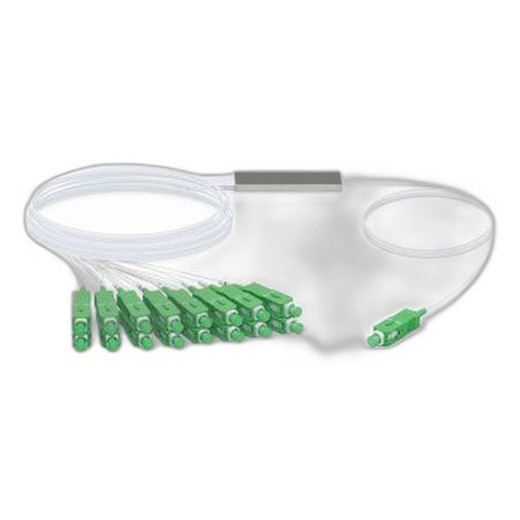
Ubiquiti UF-SPLITTER-16 UFiber Splitter 16
Ubiquiti UF-SPLITTER-16 UFiber Passive Optical Splitter Overview The Ubiquiti UF-SPLITTER-16 (MPN: UF-SPLITTER-16) is a passive optical splitter des…

Ubiquiti UF-SPLITTER-16 UFiber Splitter 16
$29.99
Your recommended setup
Review items below — quantities update pricing automatically.
Item
Qty
Status
Price
Optional Add-Ons recommended
Services optional
Bundle Summary
Bundle Subtotal:
$0.00
Optional Add-Ons:
$0.00
Services:
$0.00
Total:
$0.00
Overview
SKU:
UF-SPLITTER-16
Condition:
New
Availability:
Usually ships in 24 hours
Warranty
Manufacturer Warranty
Description

Ubiquiti UF-SPLITTER-16 UFiber Passive Optical Splitter
Overview
The Ubiquiti UF-SPLITTER-16 (MPN: UF-SPLITTER-16) is a passive optical splitter designed for fiber-based network deployments within the UISP ecosystem. As a passive component, the splitter requires no external power or management overhead, making it an economical choice for point-to-multipoint fiber architectures. The unit distributes a single fiber input across 16 output ports, enabling one-to-many fiber topology configurations typical in fiber access networks and distributed antenna systems.
Key Features
The passive optical design eliminates complexity in fiber plant operations. With 16 ports in a compact form factor weighing 0.300 lb, the splitter provides straightforward signal distribution without configuration requirements. As a UISP Accessory, it integrates into Ubiquiti's fiber infrastructure platform, complementing fiber termination and transport equipment. The splitter operates transparently across the optical spectrum with no latency or processing delay—signals pass through without active intervention.
Deployment Scenarios
Common use cases include fiber-to-the-building (FTTB) and fiber-to-the-premises (FTTP) last-mile deployments where a single feeder fiber must serve multiple customer or sector locations. The 16-port capacity scales beyond smaller splitter options for medium-density coverage areas. Operators also deploy the UF-SPLITTER-16 in backhaul ring networks, distributed remote sites, and fiber aggregation points where passive splitting reduces operational complexity and cost relative to active switching solutions.
Network Integration
The MPN UF-SPLITTER-16 integrates directly into UISP fiber plants alongside Ubiquiti fiber modules, media converters, and optical termination equipment. Signal loss is inherent to passive splitting; optical power budgets must account for the 1:16 split ratio when sizing transmit and receiver specifications across all 16 branches. Integrators should verify that connected equipment (fiber transceivers, ONUs, or wireless radios) operate within acceptable optical power ranges at the split output.
Installation Notes
Mount the splitter in a fiber distribution enclosure, patch panel, or network rack using standard fiber management practices. Secure all 16 output fibers to prevent strain and maintain bend radius compliance. Input and output ports accept standard single-mode or multi-mode fiber connectors depending on network specification. No calibration or firmware updates are required. The splitter operates reliably across industrial temperature ranges typical of outdoor and indoor telecom installations.
Jerry Tildsen, Senior Network Architect
"The Ubiquiti UF-SPLITTER-16 is a straightforward, cost-effective solution for scaling fiber coverage in UISP deployments. Its passive architecture means zero management overhead—a significant advantage in remote or lightly staffed sites. When you need to distribute one fiber to 16 endpoints without active electronics, the MPN UF-SPLITTER-16 delivers exactly that function. Just remember that optical power loss is fixed and non-negotiable with passive splitting, so calculate your link budgets early in the design phase."
Specifications
Form Factor:
Passive Optical Splitter
Management:
Passive (No Management Required)
Ports:
16
Product Family:
UISP Accessory Tech
Country of Origin:
CN
Weight:
0.300 lb
Have Questions?
Ask an Expert.
RELATED PRODUCTS



System Design, Deployment & Technical Support
Support services and planning resources for commercial surveillance, access control, and infrastructure deployments.
Fixed scope • Fixed price
System Design Assistance
- Get help validating product compatibility
- Coverage requirements
- Storage planning and deployment architecture before you buy.
Deployment & Configuration Support
- Access fixed-scope support for rollout planning
- User setup guidance
- Migration and system standardization across single-site or multi-site deployments
Guides, Tools & Calculators
- PoE requirements
- Storage retention
- Camera selection and deployment methodology