




Overview
SKU:
U-POE
Condition:
New
Availability:
Usually ships in 24 hours
Warranty
Manufacturer Warranty
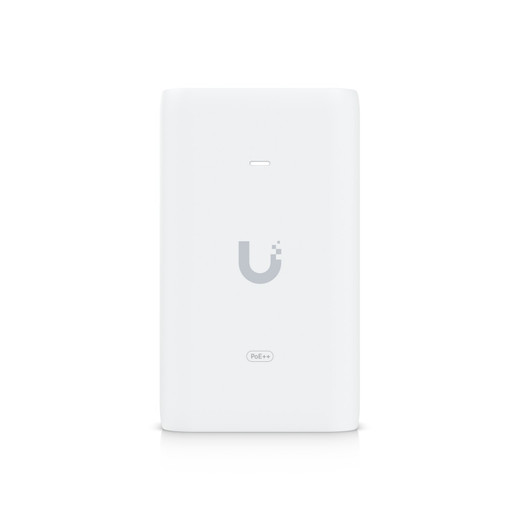
Ubiquiti U-POE PoE Injector
Ubiquiti U-POE++ 60W PoE AdapterOverviewThe Ubiquiti U-POE++ is a standalone 60W PoE++ power adapter designed to supply and network UniFi PoE-enabled …
Ubiquiti U-POE PoE Injector
$8.99
Your recommended setup
Review items below — quantities update pricing automatically.
Item
Qty
Status
Price
Optional Add-Ons recommended
Services optional
Bundle Summary
Bundle Subtotal:
$0.00
Optional Add-Ons:
$0.00
Services:
$0.00
Total:
$0.00
Overview
SKU:
U-POE
Condition:
New
Availability:
Usually ships in 24 hours
Warranty
Manufacturer Warranty
Description
Ubiquiti U-POE++ 60W PoE Adapter
Overview
The Ubiquiti U-POE++ is a standalone 60W PoE++ power adapter designed to supply and network UniFi PoE-enabled devices independently of PoE switch infrastructure. It delivers 48V DC at 1.25A output via standard RJ45 connectors with integrated Gigabit LAN passthrough, reducing dependency on dedicated PoE switch ports while maintaining network connectivity. Compact form factor (106 x 63 x 34 mm) suitable for remote or supplemental device deployment.
Technical Specifications
Output: 48V DC at 1.25A (60W max). Input: 100–240V AC, 50/60 Hz. Efficiency: 85+%. Surge protection includes 1500A (8/20 μs) discharge and 36A (10/1000 μs) peak pulse current. Operating temperature: 0–40°C. Shielded RJ45 socket with 4-pair powering on pins 1, 2, 4, 5 (+) and 3, 6, 7, 8 (−). Line regulation ≤1%, load regulation ≤3%, output ripple 1% max.
Compatibility
Works with UniFi PoE and PoE++ devices. Provides redundant or supplemental power for security cameras, access points, and switches in existing UniFi deployments. NDAA compliant; CE, FCC, IC, UL, UKCA, KC, CCC, RoHS certified.
Specifications
Power Type:
Universal AC input, 100–240V AC, 50/60 Hz
Form Factor:
External adapter
Ports:
1
Power_Budget:
60W
Speed:
Gigabit
Dimensions:
106 x 63 x 34 mm
Weight:
210 g (7.4 oz)
Power Supply:
AC/DC
Voltage Range:
100–240V AC
Operating Temp:
0 to 40° C (32 to 104° F)
NDAA Compliant:
Yes
Certifications:
CE, FCC, IC, UL, UKCA, KC, CCC, KC, RoHS
Have Questions?
Ask an Expert.
RELATED PRODUCTS

System Design, Deployment & Technical Support
Support services and planning resources for commercial surveillance, access control, and infrastructure deployments.
Fixed scope • Fixed price
System Design Assistance
- Get help validating product compatibility
- Coverage requirements
- Storage planning and deployment architecture before you buy.
Deployment & Configuration Support
- Access fixed-scope support for rollout planning
- User setup guidance
- Migration and system standardization across single-site or multi-site deployments
Guides, Tools & Calculators
- PoE requirements
- Storage retention
- Camera selection and deployment methodology