


Product images are provided for reference and may not represent the exact model, configuration, or included
components.
Overview
SKU:
HORN-5-30
Condition:
New
Availability:
Usually ships in 24 hours
Warranty
Manufacturer Warranty
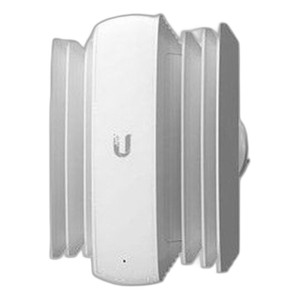
Ubiquiti HORN-5-30 5 GHz PrismAP Antenna 30
Ubiquiti HORN-5-30 5 GHz Horn Antenna Overview The Ubiquiti HORN-5-30 is a purpose-built horn antenna designed for point-to-point and point-to-multip…

Ubiquiti HORN-5-30 5 GHz PrismAP Antenna 30
$86.99
Your recommended setup
Review items below — quantities update pricing automatically.
Item
Qty
Status
Price
Optional Add-Ons recommended
Services optional
Bundle Summary
Bundle Subtotal:
$0.00
Optional Add-Ons:
$0.00
Services:
$0.00
Total:
$0.00
Overview
SKU:
HORN-5-30
Condition:
New
Availability:
Usually ships in 24 hours
Warranty
Manufacturer Warranty
Description

Ubiquiti HORN-5-30 5 GHz Horn Antenna
Overview
The Ubiquiti HORN-5-30 is a purpose-built horn antenna designed for point-to-point and point-to-multipoint wireless deployments operating in the 5 GHz band. This antenna is part of Ubiquiti's UISP Wireless product family, engineered to support 802.11a/n/ac standards in infrastructure and last-mile connectivity applications. The horn form factor delivers focused directional gain with minimal side lobe radiation, making it suitable for medium-range backhaul links and sector coverage in fixed wireless access networks.
Key Features
Operating across the 5 GHz frequency spectrum, the HORN-5-30 integrates seamlessly with UISP Wireless access points and radios that comply with 802.11a/n/ac protocols. The horn antenna geometry provides controlled directional radiation, reducing interference in congested RF environments. Manufactured in China and weighing 17.350 pounds, the unit is engineered for outdoor mounting on standard antenna masts and pole infrastructure. The robust mechanical design of the HORN-5-30 accommodates typical environmental exposure without compromising performance characteristics.
Deployment Scenarios
The HORN-5-30 excels in backhaul aggregation, connecting remote access points to core network infrastructure over distances of 2–5 miles depending on terrain and licensed spectrum availability. It is equally effective in sector antenna configurations where operators need to subdivide coverage areas and isolate interference corridors. Fixed wireless access providers use this antenna type to serve defined geographic zones with predictable gain and directional characteristics.
Network Integration
The antenna mounts to Ubiquiti access points and radios within the UISP Wireless ecosystem via standard RF connectors. Integration with UniFi or UISP controllers allows centralized management of connected wireless devices. The directional nature of the HORN-5-30 requires careful site survey and alignment to maximize link performance and minimize adjacent-channel interference.
Installation Notes
Site preparation should account for the antenna's 17.350-pound weight when selecting mounting hardware and brackets. Proper grounding and weatherproofing of all connectors are essential for long-term reliability in outdoor installations. Alignment should be verified using signal strength measurements and, where available, UISP controller diagnostics to confirm optimal orientation before finalizing the installation.
Eden Phillips, Infrastructure Specialist
"The HORN-5-30 addresses a specific need in wireless backhaul design: deployments requiring moderate gain with mechanical simplicity. Unlike parabolic dishes, horn antennas offer lower wind load and easier alignment procedures. When your network topology calls for point-to-point links in the 5 GHz band without the footprint or cost of larger aperture antennas, the Ubiquiti HORN-5-30 delivers predictable performance. Ensure your radio equipment supports the impedance and connector type this antenna uses—integration with UISP Wireless devices is straightforward, but cross-vendor compatibility requires verification."
Specifications
Form Factor:
Horn antenna
WiFi:
5 GHz (802.11a/n/ac)
Product Family:
UISP Wireless
Country of Origin:
CN
Weight:
17.350 lb
Have Questions?
Ask an Expert.
RELATED PRODUCTS


System Design, Deployment & Technical Support
Support services and planning resources for commercial surveillance, access control, and infrastructure deployments.
Fixed scope • Fixed price
System Design Assistance
- Get help validating product compatibility
- Coverage requirements
- Storage planning and deployment architecture before you buy.
Deployment & Configuration Support
- Access fixed-scope support for rollout planning
- User setup guidance
- Migration and system standardization across single-site or multi-site deployments
Guides, Tools & Calculators
- PoE requirements
- Storage retention
- Camera selection and deployment methodology