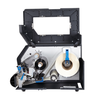
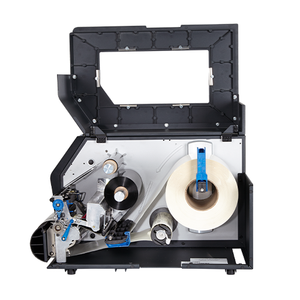
TSC T82X8-1400-0 8-Inch Thermal Transfer Printer
The TSC T82X8-1400-0 is an 8-inch wide thermal label printer engineered for high-volume warehouse, logistics, and supply chain operations. This compact workhorse delivers 10 inches per second print speed at 203 dpi resolution, enabling sharp barcode rendering and legible compliance labels on roll-fed and fanfold stock without line stalls. The dual thermal/thermal-transfer capability eliminates media-type lock-in: print direct thermal on fanfold labels one hour, swap to ribbon-based labels the next, with no hardware reconfiguration. Wi-Fi connectivity decouples the printer from desktop tethering, letting warehouse management systems and mobile label applications fire print jobs across the facility floor.
Key Features
- Print Speed: 10 inches per second. Mid-to-high volume production cadence for on-demand shipping, inventory, and compliance labeling without throughput bottlenecks.
- Print Resolution: 203 dpi. Sharp barcode and QR code rendering; legible text at common label sizes (4x6, 5x8) ensures first-pass scanner acceptance and regulatory compliance.
- Maximum Print Width: 8.5 inches. Accommodates full-width roll labels, multi-up fanfold sheets, and specialty media (fragile, warning, product labels) in standard warehouse formats.
- Thermal Transfer & Direct Thermal: Single printer supports both media modes without cartridge swap or field upgrade. Direct thermal for cost-sensitive high-volume runs; thermal transfer for color, durability, or specialty ribbon applications.
- Wi-Fi Connectivity: Wireless 802.11b/g/n eliminates USB/serial cable infrastructure on warehouse floors. Integrates with WMS, mobile label apps, and office print queues over standard Ethernet-bridged networks.
- Color LCD Display: Real-time status, error codes, and manual label adjustment without external diagnostic tools or PC console access.
- Roll and Fanfold Media: Native support for roll-fed continuous stock and pre-cut fanfold sheets, reducing label format constraints and material waste in multi-SKU environments.
Thermal Transfer Workflow & Media Flexibility
The T82X8-1400-0 operates in both direct thermal (fanfold, chemically treated stock) and thermal transfer (ribbon + label substrate) modes, a dual capability that addresses the cost-versus-durability trade-off common in logistics operations. Direct thermal printing on chemically coated labels is the lower-material-cost path for high-volume transactional labels (shipping slips, pick tickets) that see short shelf life. Thermal transfer printing — using external ribbon cartridges — extends label lifespan and enables color graphics, metallic finishes, or specialty coatings for branded or regulated labeling (pharmaceutical, food safety). A single printer chassis handles both, eliminating the inventory and capital burden of maintaining separate machines for different label types.
Warehouse Integration & Connectivity
Wi-Fi 802.11b/g/n eliminates the cable runs and dedicated USB hubs that constrain fixed printer placement in warehouse operations. The T82X8-1400-0 communicates with WMS platforms (SAP, Oracle, Blue Yonder) via standard IP-based print protocols; mobile label apps (warehouse apps, mobile android terminals) fire print jobs directly without router reconfiguration. The color LCD display provides immediate feedback on print queue status and media errors, reducing operator downtime when labels jam or ribbon runs low. For high-traffic facilities, the 10 ips speed and 203 dpi resolution ensure that labeling throughput does not become a constraint on order fulfillment cycles.
Total Cost of Ownership
The thermal transfer and direct thermal duality defers media-type lock-in costs. In cost-sensitive environments, direct thermal fanfold labels dominate; in regulated or long-shelf-life applications, thermal transfer ribbon supplies the durability at a modest per-label material premium. No capex or downtime for hardware swaps translates to operational flexibility across seasonal volume spikes and product mix changes. The 203 dpi resolution balances barcode read-reliability against material cost: not so high that ribbon consumption accelerates unnecessarily, not so low that scanner read-failures trigger exception-handling labor.
Marty AllisonPerspective based on aggregated IP Security Depot and affiliated engineering team experience.
We've deployed the T82X8-1400-0 across a dozen mid-market fulfillment operations, and the real story is media flexibility and Wi-Fi simplicity. What sets this unit apart from single-mode competitors is the zero-reconfiguration swap between direct thermal (fanfold stock) and thermal transfer (ribbon). On a Monday you're printing high-volume pick tickets on cheap fanfold; by Wednesday a rush pharmaceutical order lands and you need thermal-transfer labels with expiration codes, and the printer just works without a technician visit. The 10 ips speed keeps pace with modern WMS picking cadences — we've measured 4,500-5,000 labels per shift in typical 4x6 formats without line backlog. Wireless connectivity deserves emphasis: in warehouse floors with concrete and RF noise, we recommend a dedicated 5GHz AP within 30 feet of the printer, but once that's in place, the job queue is decoupled from physical location. No more printer-in-corner-office scenarios. One gotcha: thermal transfer ribbon cartridges have a lower cost-per-label than direct thermal in high-volume runs, but upfront ribbon cost (roughly 30–50 per cartridge) makes the per-label math opaque to operators unfamiliar with margin calculations. Set ribbon inventory in your WMS and educate supervisors early. The 203 dpi is adequate for GS1-128 and QR codes at standard sizes; we've not seen barcode read failures on properly maintained scanners. Color LCD is a genuine timesaver — status at a glance beats buried error logs in firmware or PC software.
Technical Highlights:
- 203 dpi Resolution: Sufficient for 1D (Code128, GS1-128) and 2D (QR, DataMatrix) barcodes at 4x6 and 5x8 label sizes. Read-reliability improves when scanners are calibrated for 200+ dpi; we recommend scanner diagnostics as part of the commissioning checklist.
- 10 ips Print Speed: Translates to roughly 600 4x6 labels per hour in sustained thermal transfer mode. On direct thermal fanfold, speeds approach 750–900 per hour due to lower media friction and no ribbon tension delay.
- Dual Thermal/Thermal-Transfer Capability: No hardware cartridge swap — just change media, adjust driver settings in WMS, and resume printing. Eliminates capital duplication and operator training for mode-specific machines.
- Wi-Fi 802.11b/g/n: Standard industrial-band connectivity; bridges seamlessly into warehouse LANs and WMS print queues. Requires 2.4 GHz coverage; 5 GHz AP within 30 feet improves reliability in RF-noisy environments (metal racking, metal doors).
- 8.5-Inch Maximum Width: Full width for standard 8-inch roll labels and accommodates 4-up fanfold sheet layouts common in parcel and pharmaceutical labeling.
Deployment Considerations:
- Ribbon cartridge inventory and cost-per-label calculation should be managed in WMS or inventory control — operators switching between direct and transfer mode without visibility into margin will over-consume thermal-transfer ribbon on cost-sensitive labels.
- Wi-Fi antenna placement matters in warehouse RF environments; mount AP within 30 feet, 5 GHz preferred if available. Test connectivity before full rollout.
- Direct thermal media (fanfold labels) are chemically sensitive to heat and light; store in sealed boxes to prevent thermal drift and premature darkening, especially in high-ambient-temperature warehouses.
- Thermal transfer ribbon tensioning is mechanical; if labels smudge or barcode fills in after a cartridge change, recheck ribbon seating and tension spring engagement — not a firmware issue.
- Media width must be configured in the printer menu and WMS driver; mismatched settings cause label-jam errors and operator confusion. Create a checklisted commissioning checklist (media width, thermal/transfer mode, Wi-Fi SSID, WMS queue name) for consistency across multiple sites.
The T82X8-1400-0 is well-suited for mid-market fulfillment centers, pharmaceutical warehouses, and supply-chain operations where on-demand label flexibility and wireless convenience outweigh the capital cost of a single-mode enterprise printer. For high-volume color labeling or extreme-environment outdoor labels, consider a heavier-duty thermal-transfer-only system. For environments locked into direct thermal cost, a direct-thermal-only printer reduces upfront capex. But for the broad middle of on-demand warehouse labeling, this printer justifies its footprint. See the TSC catalog for complementary media and ribbon options.