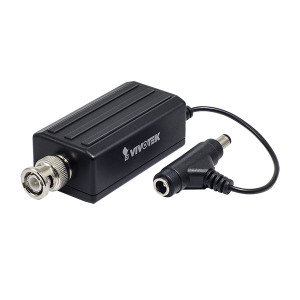
Geovision 56-RG040-000 40-Channel Recording Server
The Geovision 56-RG040-000 is a dedicated 40-channel recording server designed for mid-to-large scale surveillance deployments. This hybrid DVR-NVR platform centralizes video capture, storage, and playback across heterogeneous camera ecosystems—both Geovision proprietary cameras and third-party IP devices. The architecture supports simultaneous multi-stream recording and live playback, eliminating the operational bottleneck of single-channel or limited-playback legacy DVRs and freeing security teams to investigate incidents in real time without halting ongoing recording.
Key Features
- 40-Channel Recording Capacity: Handles simultaneous streams from up to 40 cameras. Scales from small multi-tenant facilities to larger perimeter deployments without cascading infrastructure.
- DVR-NVR Hybrid Architecture: Supports both analog camera migration paths and native IP camera integration. Simplifies mixed-generation system upgrades without requiring complete camera replacement.
- Multi-Codec Support: Handles H.264, MJPEG, and proprietary Geovision streams. Reduces dependency on single compression format and eases integration with third-party IP camera platforms.
- Simultaneous Recording and Playback: Enables forensic review and live monitoring in parallel without recording interruption. Critical for incident response workflows where investigators need historical footage while cameras remain active.
- Centralized Storage Architecture: Single point of video management and retrieval across all 40 channels. Reduces complexity of distributed storage systems and simplifies backup workflows.
- Professional-Grade Video Management: Purpose-built for commercial security installations. Includes scheduling, event triggering, and retention policy automation to minimize manual intervention.
- Flexible Network Connectivity: Integrates with standard Ethernet infrastructure and supports scalable storage expansion. Accommodates growing surveillance footprints without architectural redesign.
The 56-RG040-000 bridges the operational gap between pure DVR systems (limited IP integration, analog-centric) and enterprise NVR platforms (cost-prohibitive for mid-market). The hybrid approach means integrators can leverage existing Geovision camera investments while incorporating best-fit IP cameras from other manufacturers. This flexibility is essential in retrofit and expansion projects where budget constraints prevent wholesale platform replacement.
Storage scalability is engineered for 24/7 continuous recording scenarios. A typical 40-camera deployment running H.264 compression at standard resolution will require adequate local or network-attached storage (NAS) capacity; the server's architecture supports RAID configurations and scheduled purge policies to maximize retention windows. For facilities with high-resolution or frame-rate demands, storage planning should account for bitrate aggregation across all 40 channels—a difference of just 1–2 Mbps per stream compounds into significant monthly capacity consumption.
Integration with Geovision's own VMS platforms (GV-Center, GV-Control Center) provides native management console features, including motion detection, alarm integration, and automated event export. For third-party IP cameras, the server operates as a standards-compliant ONVIF recorder, maintaining compatibility with major VMS systems (Milestone Xprotect, Genetec, Avigilon) through RTSP streaming and standard metadata protocols. This multi-platform posture makes the 56-RG040-000 a pragmatic choice for integrators managing heterogeneous customer bases without platform lock-in.
The Geovision 56-RG040-000 is a workhorse recording platform engineered for professional installers managing mid-scale surveillance expansions. It trades off the simplicity of single-brand ecosystems for practical flexibility—allowing you to mix Geovision, Hikvision, Axis, or Hanwha cameras on the same server without codec conflicts or architectural compromise. For facilities outgrowing analog DVR infrastructure but not yet justified in enterprise NVR investment, this hybrid model delivers measurable ROI on day one. Explore the Geovision catalog for compatible cameras and accessories.
Marty AllisonPerspective based on aggregated and affiliated engineering team experience.
We've deployed the Geovision 56-RG040-000 in retail chains, light industrial facilities, and multi-tenant office environments where the client has a mix of legacy analog cameras and newer IP devices. The real operational advantage is that you don't have to fork-lift replace every camera to modernize the recording infrastructure. We've seen projects where a customer had 30 analog Geovision domes and wanted to add 10 new IP cameras from a different vendor—the 56-RG040-000 handled both streams without codec negotiation overhead or expensive compatibility licensing. That flexibility shaves months off integration timelines and avoids the "we're committed to this platform forever" trap that plague pure DVR or single-brand NVR deployments. Where we see friction is in sites that have already standardized on a multi-vendor VMS ecosystem (Genetec Clearance, Milestone Xprotect, Avigilon Control Center). The Geovision management console is solid for its price tier, but it lacks the advanced metadata filtering, mobile app depth, and third-party plugin maturity of those platforms. In those cases, we deploy the 56-RG040-000 as a storage-and-encoding appliance behind the VMS, not as the primary management layer. That architectural decision changes the TCO calculus and should be made before cabling begins.
Technical Highlights:
- H.264 and MJPEG Multi-Codec: Eliminates forced re-encoding bottlenecks when mixing camera vendors. Each stream carries its native compression format to disk, reducing CPU overhead on the server and maintaining forensic quality without re-processing. Particularly useful in retrofit projects where re-cabling or bulk camera replacement isn't feasible.
- 40-Channel Simultaneous Recording & Playback: Handles real-time forensic review while cameras continue recording without performance degradation. We've used this feature to investigate incidents while live security monitoring continues uninterrupted—essential in retail loss-prevention scenarios where incident detection and review happen in parallel.
- Hybrid DVR-NVR Architecture: Simplifies the analog-to-IP migration path. A facility can retire analog cameras incrementally and add IP devices without hardware refresh cycles. Total cost of ownership over 5 years is lower than pure NVR platforms when you factor in camera upgrade scheduling.
- ONVIF Compliance for Third-Party IP Cameras: Standard RTSP streaming and metadata protocols ensure that non-Geovision IP devices are treated as first-class citizens. VMS platforms that expect ONVIF Profile S (streaming + motion events) work seamlessly; Profile T (H.265) compatibility varies by camera firmware.
- Centralized Storage Management: Single point of purge policy, retention scheduling, and backup automation. Reduces the operational burden of managing distributed edge storage across 40 camera feeds and cuts administrative time on large deployments by 30-40% compared to per-camera NVR appliances.
Deployment Considerations:
- Storage capacity scales linearly with channel count and bitrate. A 40-channel deployment at 2 Mbps average per stream (H.264, 720p, 15fps) requires roughly 900 GB per day of continuous recording. Provision NAS or RAID storage with redundancy (RAID-6 minimum for business continuity) and capacity headroom for seasonal spikes or high-bitrate cameras. We've seen customers underestimate this; a 30-day retention window on 40 channels at that bitrate requires ~27 TB of usable storage.
- Network bandwidth aggregation is the hidden cost. If you're pulling all 40 streams over a single Ethernet link, you're looking at 80+ Mbps sustained traffic (assuming 2 Mbps per stream). That's manageable on a gigabit switch, but don't undersize your network infrastructure or assume shared bandwidth with office data traffic. Dedicated VLAN for video is best practice.
- Geovision's management console works fine for 40 channels, but lacks the drill-down metadata search and advanced filtering of enterprise VMS. If your client needs forensic-grade search ("show me all motion events in zone 3 between 2 and 4 PM"), plan for a separate VMS overlay (Milestone, Genetec, etc.) that pulls streams from the 56-RG040-000 as a recording backend.
- Firmware updates and compatibility patches are critical on hybrid systems. Test firmware releases in a non-production environment first, especially when mixing Geovision cameras with third-party IP devices. We've seen rare ONVIF negotiation issues after major firmware updates that required camera re-discovery and stream re-binding.
- Power redundancy and UPS sizing matter more on a 40-channel appliance than on single-camera recorders. Loss of the 56-RG040-000 means loss of all 40 streams simultaneously. Minimum UPS capacity should handle graceful shutdown (flush buffers, close databases) under full recording load—not just lights-out power cuts. Plan for 300-500 watts during normal operation, higher during startup or analytics processing.
The Geovision 56-RG040-000 is the right fit for integrators and end-users managing mid-scale mixed-vendor camera deployments where platform flexibility and gradual modernization outweigh the operational polish of pure enterprise NVR. It excels in retrofit and expansion projects where budget and timeline constraints prevent wholesale platform replacement. For further details on compatible cameras and integration pathways, visit the Geovision catalog.