
Showing Results for Power Supplies
-
Save $0.01

HPE P79329-B21 1000W Power Supply
1000W, -48VDC, hot-plug power supply unit designed for high-availability server and network equipment
Usually Ships in 2-3 Weeks Free shipping over $499$1,750.00 $1,749.99 Save $0.01 -
Save $0.01
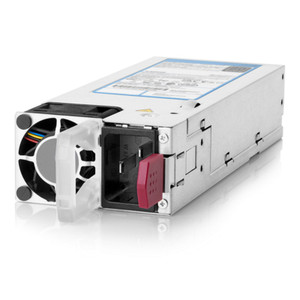
HPE P82919-B21 2000W Power Supply
2000W, -48VDC, hot-plug, reverse air flow power supply kit
Usually Ships in 2-3 Weeks Free shipping over $499$2,155.00 $2,154.99 Save $0.01 -
Save $0.01

HPE QW939A#05Y CDC Optional Power Supply (hot-plug)
Hot-plug optional power supply unit designed to provide redundant or supplementary power for compatible HPE server or storage systems
Usually Ships in 2-3 Weeks Free shipping over $499$4,620.00 $4,619.99 Save $0.01 -
Save $0.01

Kantech KT-PS4085 12VDC 1.5A Power Supply
12VDC 1.5A regulated supply for distributed access control systems
- 12VDC 1.5A regulated power supply for access control
- Stable voltage under load prevents reader brownouts
- Compact form factor fits standard control panels
Usually Ships in 2-3 Weeks Free shipping over $499$123.00 $122.99 Save $0.01 -
Save $71.51

Kantech KTES-PS-NA 19VDC 3.15A Power Supply
19VDC 3.15A regulated power supply for Kantech access control
- 19VDC 3.15A regulated power supply (59.85W output)
- Universal 100-240VAC input for global deployments
- 3-pin AC cord included for direct outlet connection
Usually Ships in 2-3 Weeks Free shipping over $499$249.50 $177.99 Save $71.51 -
Save $99.01
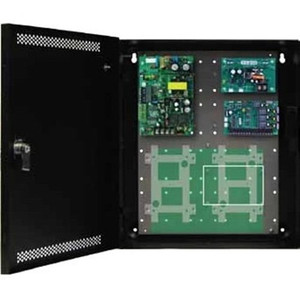
Kantech LifeSafety Power 75W 12V/24V Supply
75W dual-voltage supply for access control and door locks
- 75W power supply with 6A @ 12V or 3A @ 24V output
- Dual voltage selectable for lock hardware or accessories
- Wall-mount form factor saves rack space at the door
Usually Ships in 2-3 Weeks Free shipping over $499$475.00 $375.99 Save $99.01 -
Save $0.01
Lantronix ACC-520-0203-00 Spider 2 KVM Power Supply Accessory
Power supply accessory for Lantronix Spider 2 32-port KVM systems
- 5VDC 2A replacement power supply for Spider 2 KVM
- Right-angle mini USB-B connector for low-profile fit
- 100-240VAC universal input for global deployments
Usually Ships in 2-3 Weeks Free shipping over $499$30.00 $29.99 Save $0.01 -
Save $0.01

Lantronix SPS-UA12DHT-EU 18W Universal AC Power Adapter
12VDC 18W universal power adapter for Lantronix SPS series devices
- 18W universal AC adapter, +12VDC output
- Universal AC input for global voltage compatibility
- TAA-compliant external supply for Lantronix appliances
Usually Ships in 2-3 Weeks Free shipping over $499$48.00 $47.99 Save $0.01 -
Save $403.01
Lenovo 00MY807 Brocade 6505 Redundant Power Supply
Hot-swap, 150W AC redundant power supply designed as a field-replaceable unit for the Lenovo B6505 (Brocade 6505) Fibre Channel SAN switch
Usually Ships in 2-3 Weeks Free shipping over $499$3,529.00 $3,125.99 Save $403.01 -

Lenovo 4X20E54691 800W Gold Hot Swap Power Supply
N 800W Gold-rated, hot-swappable redundant power supply designed to maintain continuous operation for compatible Lenovo tower servers
Usually Ships in 2-3 Weeks Free shipping over $499$359.99 -
Save $0.01
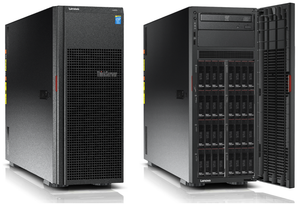
Lenovo 4X20F28577 1100W Platinum Hot Swap Power Supply
1100-watt Platinum-rated hot-swappable power supply unit designed to provide reliable and efficient power for Lenovo ThinkServer Gen 5 systems
Usually Ships in 2-3 Weeks Free shipping over $499$429.00 $428.99 Save $0.01 -
Save $0.01
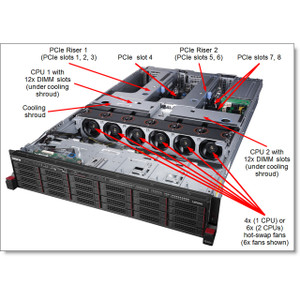
Lenovo 4X20F28578 1600W Platinum Hot Swap Power Supply
1600W 80 Plus Platinum-rated hot-swap power supply designed as a direct replacement or redundancy expansion unit for Lenovo ThinkServer Gen 5 servers
Usually Ships in 2-3 Weeks Free shipping over $499$499.00 $498.99 Save $0.01 -
Save $0.01
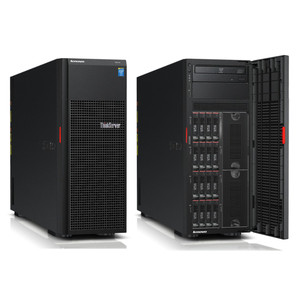
Lenovo 4X20G87845 450W Gold Hot Swap Power Supply
450W 80 PLUS Gold certified hot-swappable power supply unit designed to provide reliable and efficient power for ThinkServer Gen 5 server systems
Usually Ships in 2-3 Weeks Free shipping over $499$199.00 $198.99 Save $0.01 -
Save $0.01

Lenovo 4X20G87846 Hot Swap Redundant Power Supply
450W hot-swap redundant power supply module designed to maintain continuous operation for the ThinkServer TS460
Usually Ships in 2-3 Weeks Free shipping over $499$199.00 $198.99 Save $0.01 -
Save $358.01

Lifesafety Power FPO150-2C82D8E4 16 Lock 16 Aux Outputs
Fused power distribution module designed to control door locks and auxiliary devices from a single power supply
- 16 dedicated lock outputs and 16 auxiliary outputs consolidate multi-door power in one module.
- Each channel is individually fused at 3A, isolating faults so one short won't drop other circuits.
- Supports mag locks, solenoids, strikes, sirens, and relay loads within the 3A per-channel limit.
Usually Ships in 2-3 Weeks Free shipping over $499$1,044.00 $685.99 Save $358.01 -
Save $206.01
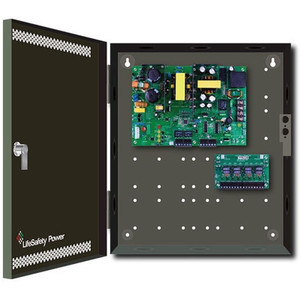
Lifesafety Power FPO150-2D8E1 FPO150-2D8E1
150W fused auxiliary power supply built to distribute regulated 12V or 24V power to multiple security devices from a single source
- 16 independent 3A fused outputs isolate faults so a single short won't cascade.
- Distributes regulated 12V or 24V at 150W to locks, readers, and sensors.
- E1 enclosure suits electrical closets and control rooms in access-control deployments.
Usually Ships in 2-3 Weeks Free shipping over $499$602.00 $395.99 Save $206.01 -
Save $370.01

Lifesafety Power FPO150-2D8E4V1 FPO150-2D8E4V1
150W, 12V backup power supply mounted in an E4V1 steel enclosure (24 inches high, 20 inches wide, 4.5 inches deep)
- 150W at 12V DC sustains cameras and access control during mains failure.
- 16 fused auxiliary outputs isolate faults per circuit, preventing system-wide outages.
- E4V1 steel enclosure (24"H × 20"W × 4.5"D) fits standard commercial cabinet footprints.
Usually Ships in 2-3 Weeks Free shipping over $499$1,081.00 $710.99 Save $370.01 -
Save $486.01
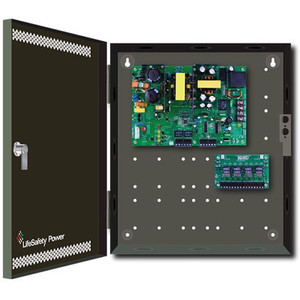
Lifesafety Power FPO150-2D8E6S 150W 120 VAC
150-watt single-voltage (120 VAC input) power distribution unit with 16 auxiliary outputs, designed for small-to-medium surveillance, access control
- 150W at 120 VAC input powers 16 auxiliary outputs from a single hardwired source.
- Supports 12 VDC and 24 VDC low-voltage devices including cameras, locks, and readers.
- Consolidates branch power distribution, eliminating sub-panels at each device location.
Usually Ships in 2-3 Weeks Free shipping over $499$1,419.00 $932.99 Save $486.01 -
Save $578.01

Lifesafety Power FPO150-2D8PE6M1 150W Single Voltage
150W single voltage power supply operating at 120 VAC input, designed to distribute 24 VDC auxiliary power across networked surveillance, access
- 150W at 24 VDC consolidates power for up to 16 auxiliary devices in one unit.
- Single 120 VAC input simplifies wiring in rack or cabinet deployments.
- Supports cameras, access readers, intercoms, and sensors drawing 24 VDC.
Usually Ships in 2-3 Weeks Free shipping over $499$1,687.00 $1,108.99 Save $578.01 -
Save $379.01
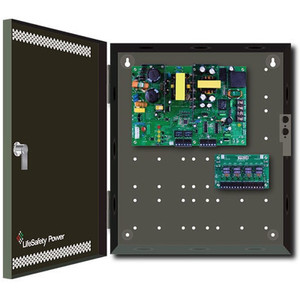
Lifesafety Power FPO150-B1002C82D8E4 16 Lock 16 Aux Output
150W distributed power supply built for access control systems running multiple electric locks and auxiliary devices—door readers, access panels
- 16 independently fused 3A lock outputs prevent a single fault from dropping the full supply.
- Dual voltage rails (12V/4A and 24V/4A) support mixed-voltage lock and device loads in one enclosure.
- 16 auxiliary outputs at 3A each power readers, REX buttons, and strobes alongside lock circuits.
Usually Ships in 2-3 Weeks Free shipping over $499$1,105.00 $725.99 Save $379.01 -
Save $325.01
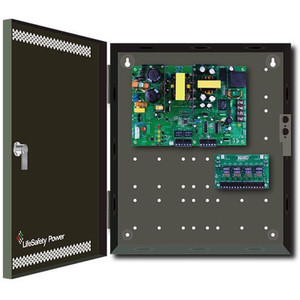
Lifesafety Power FPO150-B1002D8E4M 150W Dual Voltage
150W dual voltage power supply rated for 120 VAC input with 16 auxiliary outputs
- Single 120 VAC hard-wired source distributes power across 16 auxiliary outputs.
- Dual voltage output supports 12 VDC and 24 VDC devices from one cabinet-mounted unit.
- 75W rated supply eliminates daisy-chained transformers in access control installations.
Usually Ships in 2-3 Weeks Free shipping over $499$948.00 $622.99 Save $325.01 -
Save $234.01

Lifesafety Power FPO150-B100C4P2D8PE1 150W
150W standard power supply designed to distribute regulated DC power across multiple surveillance and access control devices
- 150W regulated DC output centralizes power for cameras, locks, and readers.
- Four relay lock outputs support electromagnetic and electronic door control.
- 16 auxiliary outputs integrate sensors, strobes, and status indicators.
Usually Ships in 2-3 Weeks Free shipping over $499$682.00 $447.99 Save $234.01 -
Save $634.01
Lifesafety Power FPO150-B100C82D8PE4M/T8-A 8DR E4M 150W 4A/12V
150W redundant power supply built for distributed door control and surveillance infrastructure
- 150W redundant supply delivers 4A at 12V and 4A at 24V across 8 isolated outputs.
- Dual-voltage design powers legacy 12V cameras and 24V access control from one unit.
- Eight separate output channels eliminate daisy-chain voltage sag across locks and readers.
Usually Ships in 2-3 Weeks Free shipping over $499$1,850.00 $1,215.99 Save $634.01 -
Save $634.01
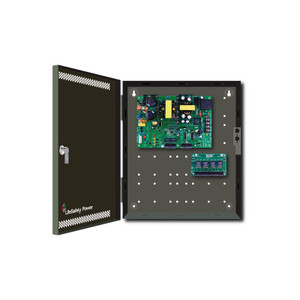
Lifesafety Power FPO150-B100C82D8PE4M/T8-C 8DR
150W prewired access control power supply engineered for small-to-medium commercial deployments requiring distributed 12V and 24V power to door locks
- Delivers 4A at 12V and 4A at 24V simultaneously to power up to 8 door locks.
- Factory-prewired MR52 harnesses eliminate field termination and reduce install errors.
- 16 auxiliary outputs support relays, REX buttons, LEDs, and door sensors.
Usually Ships in 2-3 Weeks Free shipping over $499$1,850.00 $1,215.99 Save $634.01 -
Save $712.01
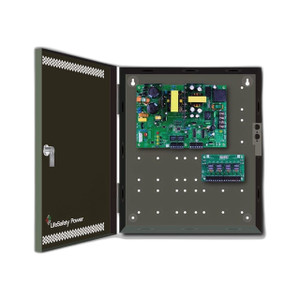
Lifesafety Power FPO150-B100C82D8PE4M1/T8-A 150W 4A/12V
150W distributed power supply rated 4A at both 12V and 24V outputs—built for access control, surveillance, and door management deployments where you
- Eight isolated 12V/24V rails prevent a single-device fault from collapsing system power.
- 150W envelope supports mixed mag locks, readers, and aux relays at 4A per rail.
- Ships pre-wired with tie-wrap harness, reducing bench time and installation wiring errors.
Usually Ships in 2-3 Weeks Free shipping over $499$2,076.00 $1,363.99 Save $712.01 -
Save $712.01
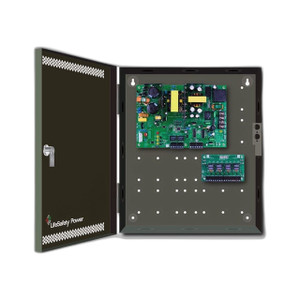
Lifesafety Power FPO150-B100C82D8PE4M1/T8-C 150W 4A/12V
150W distributed power supply purpose-built for multi-door access control installations
- 150W supply delivers 4A at 12V, powering up to 8 simultaneous lock solenoids.
- Factory pre-wired 8-door relay outputs reduce installation time in multi-door deployments.
- Switchable 12V/24V output supports both fail-safe and fail-secure lock circuit types.
Usually Ships in 2-3 Weeks Free shipping over $499$2,076.00 $1,363.99 Save $712.01 -
Save $831.01
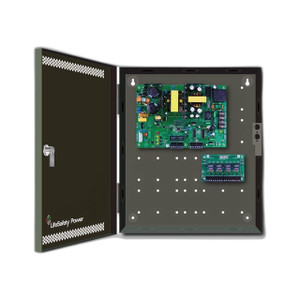
Lifesafety Power FPO150-B100C82D8PE6M/T8-A 150W 4A/12V
150W 8-output regulated power supply designed for small-to-medium access control and surveillance installations requiring dual-voltage DC outputs
- Dual-rail 12V/24V DC output powers mixed-voltage devices from a single 150W chassis.
- Eight independent outputs let you distribute mag locks, strikes, and strobes without daisy-chaining.
- 120V AC mains input; each output rail is capped at 4A to prevent thermal overload.
Usually Ships in 2-3 Weeks Free shipping over $499$2,422.00 $1,590.99 Save $831.01 -
Save $357.01

Lifesafety Power FPO150-B100C8D8E4-4DM2 150W (12V & 24V)
150W modular power supply engineered for distributed access control and surveillance installations
- Delivers simultaneous 12V and 24V outputs across eight auxiliary ports in one unit.
- 150W modular frame supports up to eight plug-in modules for field-customized deployments.
- Mounts in standard 19-inch racks or wall cabinets; runs on 120VAC commercial power.
Usually Ships in 2-3 Weeks Free shipping over $499$1,043.00 $685.99 Save $357.01 -
Save $263.01

Lifesafety Power FPO150-B100C8E2 150W (12/24V)
150W dual-output power supply designed for multi-camera surveillance and access control deployments
- Dual-output design (12/24V primary + 5–18V adjustable secondary) powers mixed-voltage systems from one enclosure.
- Eight lock-style output terminals prevent accidental disconnection under vibration in truck bays or industrial zones.
- 16×20×4.5-inch enclosure mounts to standard wall-cabinet rails or 19-inch racks for flexible deployment.
Usually Ships in 2-3 Weeks Free shipping over $499$768.00 $504.99 Save $263.01 -
Save $238.01

Lifesafety Power FPO150-B100D8PE2 150W Dual Voltage
150W power distribution unit designed for mid-scale surveillance and access control deployments
- 150W capacity supports mixed camera, lock, and reader loads on one circuit.
- Eight independent auxiliary outputs distribute hardwired 12 VDC or 24 VDC feeds.
- Accepts standard 120 VAC input, fitting directly into existing building power.
Usually Ships in 2-3 Weeks Free shipping over $499$694.00 $455.99 Save $238.01 -
Save $631.01

Lifesafety Power FPO150-B100M8NLC2SD4PE4M 150W
150W managed power supply designed for distributed access control deployments
- 8 managed lock outputs and 8 managed aux outputs centralize multi-door power distribution.
- Current-monitored outputs simplify fault isolation and reduce troubleshooting time on large systems.
- 150W at 120 VAC input eliminates individual power runs to each lock, cutting installation labor.
Usually Ships in 2-3 Weeks Free shipping over $499$1,839.00 $1,207.99 Save $631.01 -
Save $199.01

Lifesafety Power FPO150-C4E1 4x3A Fused Outputs
150W fused power distribution unit designed to supply door locks and other access control devices in multi-unit installations
- Four independently fused 3A outputs prevent a single lock fault from cascading.
- Delivers 12A at 12V or 6A at 24V to power up to four access control lock circuits.
- Compact E1 enclosure mounts inside standard equipment racks or wall cabinets.
Usually Ships in 2-3 Weeks Free shipping over $499$582.00 $382.99 Save $199.01 -
Save $403.01
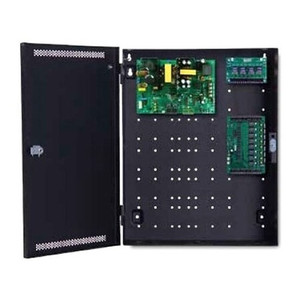
Lifesafety Power FPO150-C8D8E4M1 150W 8 Door
150W single-voltage power supply engineered to feed multiple door locking devices in access control deployments
- Distributes 150W across 8 independent door circuits, isolating faults per output.
- Single-voltage output suits uniform 12V or 24V lock deployments without extra conversion.
- Wall- or DIN-rail mountable design simplifies installation in IDF closets or control panels.
Usually Ships in 2-3 Weeks Free shipping over $499$1,175.00 $771.99 Save $403.01 -
Save $324.01

Lifesafety Power FPO150-C8D8E4S 150W 120 VAC 8 Lo
150W single voltage power supply rated for 120 VAC input, configured with eight lock outputs (C8D8E4S designation)
- Distributes 150W across eight lock outputs, eliminating individual wall adapters per door.
- Accepts 120 VAC input and delivers regulated 12 VDC or 24 VDC to access control loads.
- Compatible with UPS and redundant power architectures for enterprise access control sites.
Usually Ships in 2-3 Weeks Free shipping over $499$945.00 $620.99 Save $324.01 -
Save $1,421.01
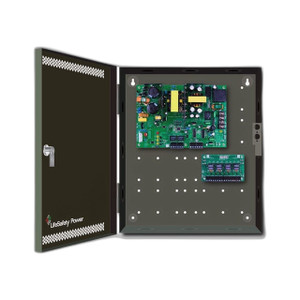
Lifesafety Power FPO150/250-2C82D8E8A/P16-A 16DR 400W
400W redundant power supply purpose-built for access control and surveillance integration environments
- 400W redundant supply delivers 12A at 12V and 10A at 24V for dual-voltage loads.
- 16 discrete relay outputs support up to 16 independently controlled doors or zones.
- Dual 8DBC Panduit connectors simplify terminal block wiring on large-scale installations.
Usually Ships in 2-3 Weeks Free shipping over $499$4,143.00 $2,721.99 Save $1,421.01 -
Save $1,437.01
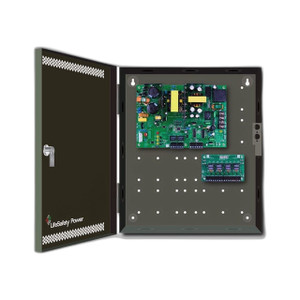
Lifesafety Power FPO150/250-2C82D8E8S-VZ04 400W
400W managed power supply designed for access control and surveillance infrastructure
- Delivers simultaneous 12V and 24V outputs across 16 independent circuits at 400W.
- Isolated voltage rails prevent a faulted 12V lock circuit from tripping 24V camera feeds.
- Integrates with iSTAR Ultra access control ecosystems in daisy-chain or parallel topologies.
Usually Ships in 2-3 Weeks Free shipping over $499$4,189.00 $2,751.99 Save $1,437.01